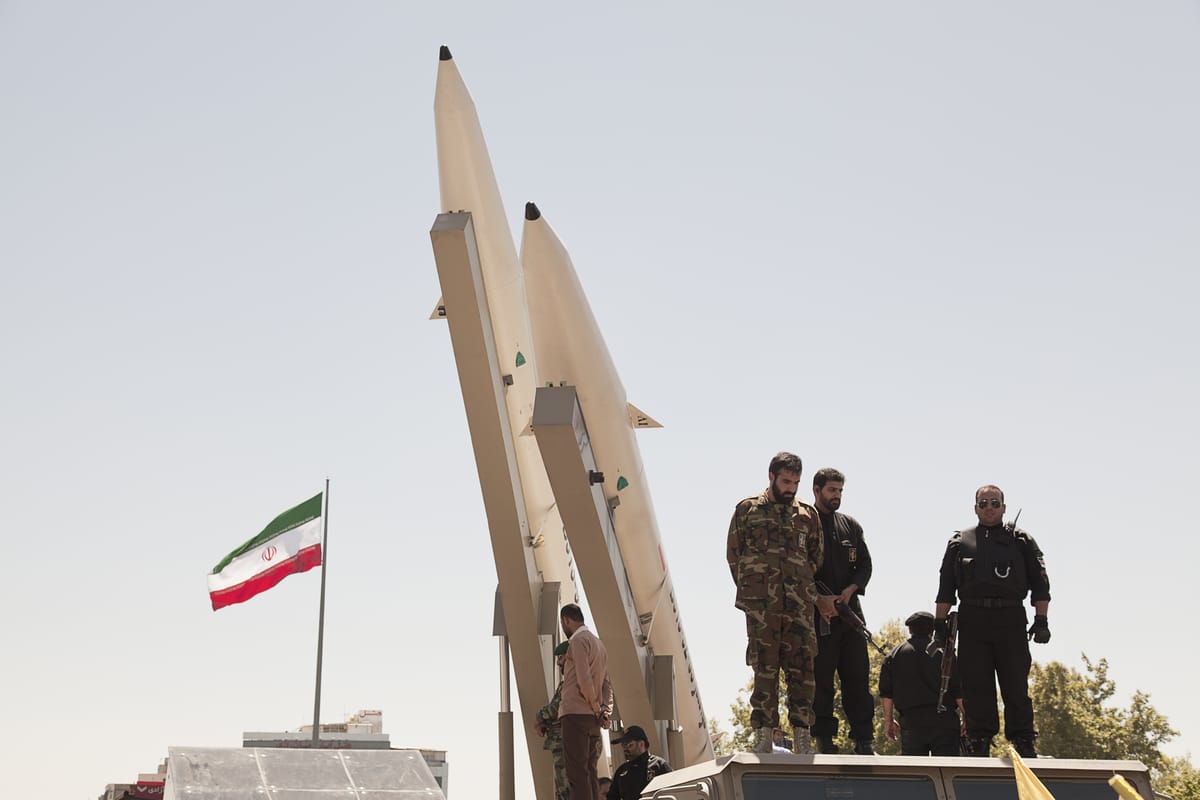
Iran has enacted what it calls a "structural decision" overhauling its national security architecture, establishing a new Defense Council and formally abandoning its longstanding defensive military doctrine in favor of an offensive posture.
The changes, announced through state-linked Nour News, which often serves as a mouthpiece for Iran's Supreme National Security Council, represent a significant reorganization of how Tehran coordinates military strategy between the Islamic Revolutionary Guard Corps (IRGC), the regular armed forces and the government.
On Feb. 2, Maj. Gen. Abdolrahim Mousavi, chief of staff of the armed forces, confirmed Iran has shifted to what officials call "active defense," allowing preemptive military action based on "objective signs of threat" rather than waiting to respond to attacks.
The newly established Defense Council aims to create unified strategic coordination across Iran's military apparatus, moving beyond what officials described as fragmented responses. The body represents a permanent restructuring rather than an ad hoc advisory group, according to Iranian statements.
The doctrine shift is tied to what Tehran calls the "13th Day" vengeancem a reference to unresolved retaliation for airstrikes on Iranian nuclear sites in June 2025. Iranian officials have signaled the structural changes prepare the country for potential sustained, multi-front conflict.
Analysts suggest the reorganization may integrate regional proxy forces into a more formal command structure, ensuring coordinated responses across multiple theaters in the event of hostilities. The moves come as nuclear talks are scheduled for later this week in Oman.
Tehran's announcements appear designed to signal to Washington that Iran has recalibrated its institutions for prolonged conflict, moving away from slower decision-making cycles that characterized previous crises.
Some analysts believe the structural decision may also include directives to Iran's nuclear program regarding rapid advancement if diplomatic efforts fail, though Iranian officials have not confirmed such measures.