
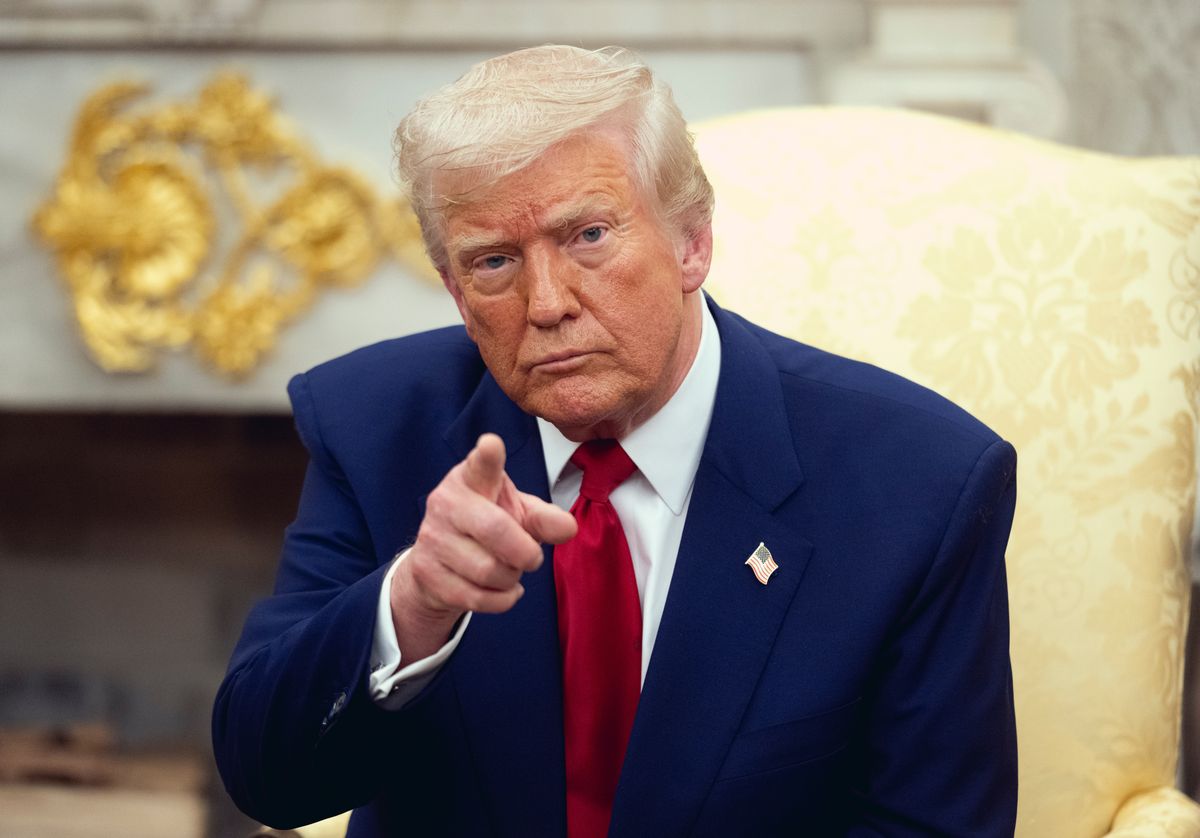
US President Donald Trump said he called off a planned military attack on Iran scheduled for Tuesday after leaders of Qatar, Saudi Arabia and the United Arab Emirates asked him to give negotiations more time.
In a post on Truth Social, Trump said “serious negotiations are now taking place” and that Gulf leaders had told him a deal could be reached that would be “very acceptable” to the United States.
He said any agreement must ensure “NO NUCLEAR WEAPONS FOR IRAN,” while warning that the US remains ready to launch a “full, large scale assault” on Iran “on a moment’s notice” if the talks fail.
Speaking later to reporters, Trump called the development positive, but said it was still unclear whether it would produce an agreement.
“We’ve had periods of time where we thought we were getting close to making a deal, and it didn’t work out,” Trump said. “But this is a little bit different.”
He said there appeared to be “a very good chance” of an agreement with Iran, adding that he would prefer to avoid renewed strikes if possible.
“If we can do that without bombing the hell out of them, I would be very happy,” he said.
Trump’s comments come amid growing pressure from Gulf states, which fear that any renewed US attack could prompt Iran to retaliate against targets across the region, including airports, petrochemical facilities and desalination plants. Iran still has drones and missiles capable of striking neighboring states.
The US and Israel launched major strikes on Iran on February 28, prompting Tehran to fire drones and missiles at Israel and US-linked targets in the Gulf. A ceasefire reached in April has largely held, despite occasional exchanges of fire.
Iran has continued to control the Strait of Hormuz, effectively closing the waterway through which around 20% of the world’s oil and liquefied natural gas normally passes. The closure has driven up global energy prices. The US has enforced a blockade of Iranian ports to pressure Tehran into accepting a deal.
Iran said Monday that it had responded to the latest US proposal through Pakistani mediators. Iranian media reported that Tehran’s demands include an immediate end to the war on all fronts, an end to the US naval blockade, guarantees against further attacks, compensation for war damage and recognition of Iranian sovereignty over the Strait of Hormuz.
US conditions reportedly include limiting Iran to one nuclear site and transferring its stockpile of highly enriched uranium to the United States.
Trump’s move comes as polling shows the war is increasingly unpopular in the US. A New York Times/Siena poll found that 64% of voters believe going to war with Iran was the wrong decision, while Trump’s approval rating stood at 37%.