Ridiculous
Iranian State Media Says Widespread Economic Protests are Failed Israeli-American "Chaos Project"
The coordinated media response reveals the regime's sensitivity to any signs of domestic unrest and its consistent strategy of attributing internal dissent to external enemies rather than addressing underlying economic grievances.

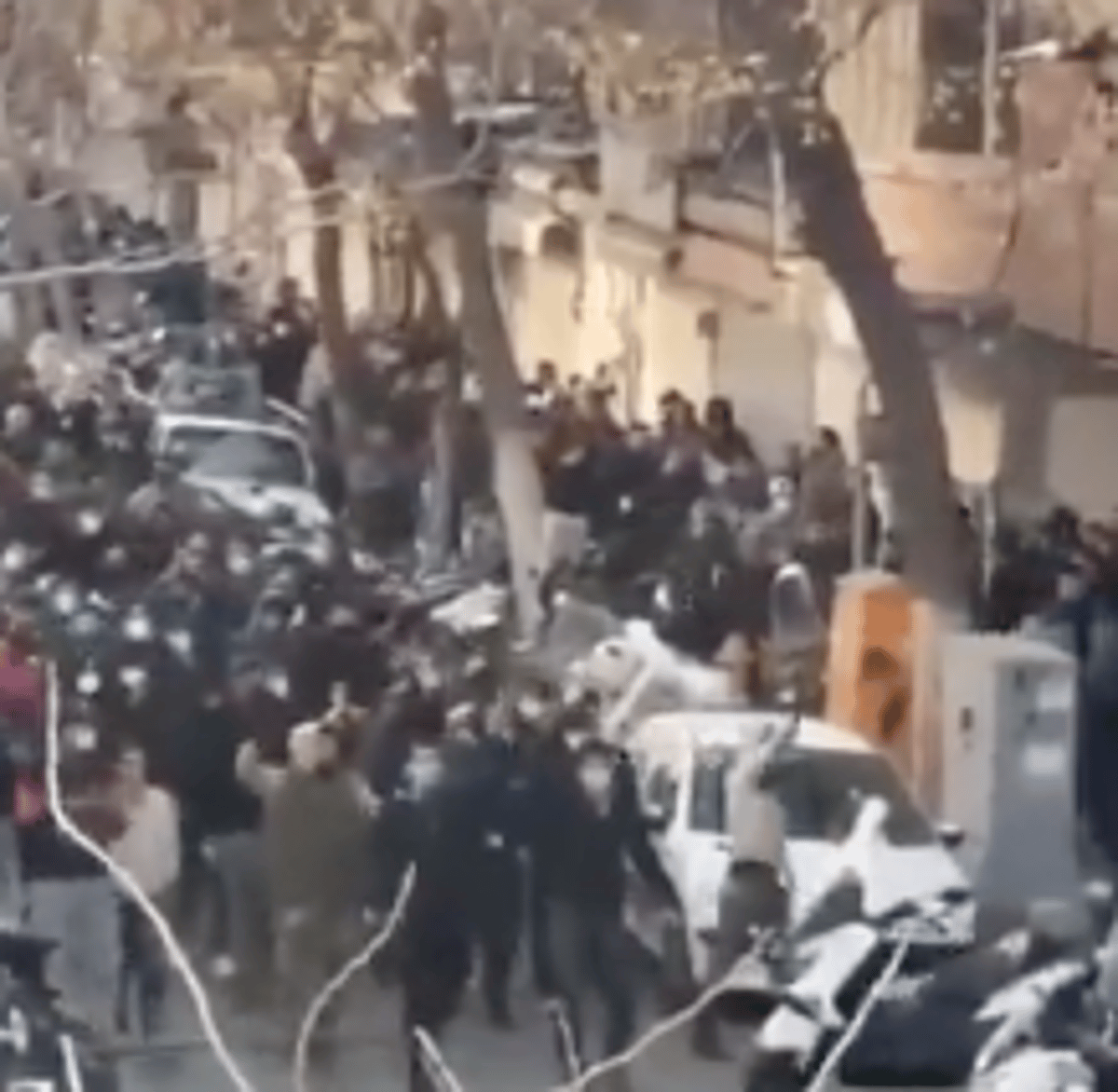
As protests erupted across Iran this week, state-aligned newspapers moved swiftly to characterize the demonstrations as a foreign-orchestrated plot that was rejected by the Iranian people. The coordinated media narrative presents the protests as an attempted destabilization campaign allegedly orchestrated by Israel and the United States, as reported by Mako.
The conservative newspaper Kayhan led with the headline: "The Chaos Project Did Not Take Off, The People Rejected Israeli and American Puppets." The paper argued that Iranian society "knows well the difference between protest and chaos and does not allow economic demands to become a tool for undermining stability in the country."
According to Kayhan, while currency fluctuations and inflation have created genuine economic pressure, this was expressed only through "limited and restricted gatherings" of workers' unions around Tehran's bazaar. The paper insisted these were not broad political protests but rather "a response to economic uncertainty and a clear demand for organizing the foreign exchange market and controlling inflation."
The newspaper claimed that attempts to divert these gatherings toward riots and chaos failed. "The people rejected the media and the field puppets of Israel and its allies, showing once again that Iranian society knows well the difference between protest and chaos and does not play on the enemy's field," Kayhan wrote.
Mako added that the paper alleged a multi-stage scenario was planned, with the bazaar, a historic economic and symbolic center, targeted as the ignition point. "The calculation was that if the market ignites, the wave of protest would spread to other social strata," the article stated. "The small protest was supposed to be fueled enough in cyberspace and the media to disguise itself as a national uprising, chaos, one could say."
The conservative newspaper Vatan-e Emrouz ran with the headline "The Front of Iranian People," emphasizing regime loyalty and opposition to its rivals. The paper accused "the opposition, exiles, and their foreign supporters" of immediately entering the scene after protests began, attempting to "turn this internal dissatisfaction into an opportunity to create insecurity and chaos against the government."
Vatan-e Emrouz claimed that a foreign influence operation was activated to inflate the scale of protests. "American and Israeli official and unofficial accounts on social networks widely published selective photos and videos of recent events, calling on people to continue and intensify actions," the paper alleged.
The newspaper specifically highlighted posts from the U.S. State Department's Persian-language account and the Mossad's Persian account, claiming they encouraged protesters with "provocative messages" stating: "We are with you, not only from afar, but also in the field."
"This message, published directly in Persian, went beyond simple support and indicated a kind of practical intervention," the paper argued. "This indicates an early readiness to exploit any internal opportunity in Iran, especially in a situation where economic protests can quickly become political and spread to other areas."
The conservative newspaper Jomhouri Eslami took a slightly different approach, criticizing the regime's delayed response. "Hearing the voice of the people in time is an art, and taking timely action to solve their problems is an even more important art," the paper wrote. It suggested that if "the people's voices had been heard earlier, they would not have needed to resort to gatherings in the streets."
The newspaper pushed back against those labeling the protests as riots. "Those who call the popular gatherings of recent days riots are still drowning in their illusions," it stated. "It is true that some people tried to ride the wave that set out to achieve their malicious goals, but our rulers must not make the mistake of thinking that the protesters were rioters."
The paper claimed the public rejected attempts by foreign entities, including the Mossad, which "promised to accompany them and tried to divert the path of popular protests."
While state media focuses on foreign interference theories, the protests reflect genuine economic hardships facing ordinary Iranians. Currency devaluation, high inflation, and economic sanctions have created significant pressure on Iranian households, particularly affecting the working class and small business owners who form the backbone of the traditional bazaar economy.