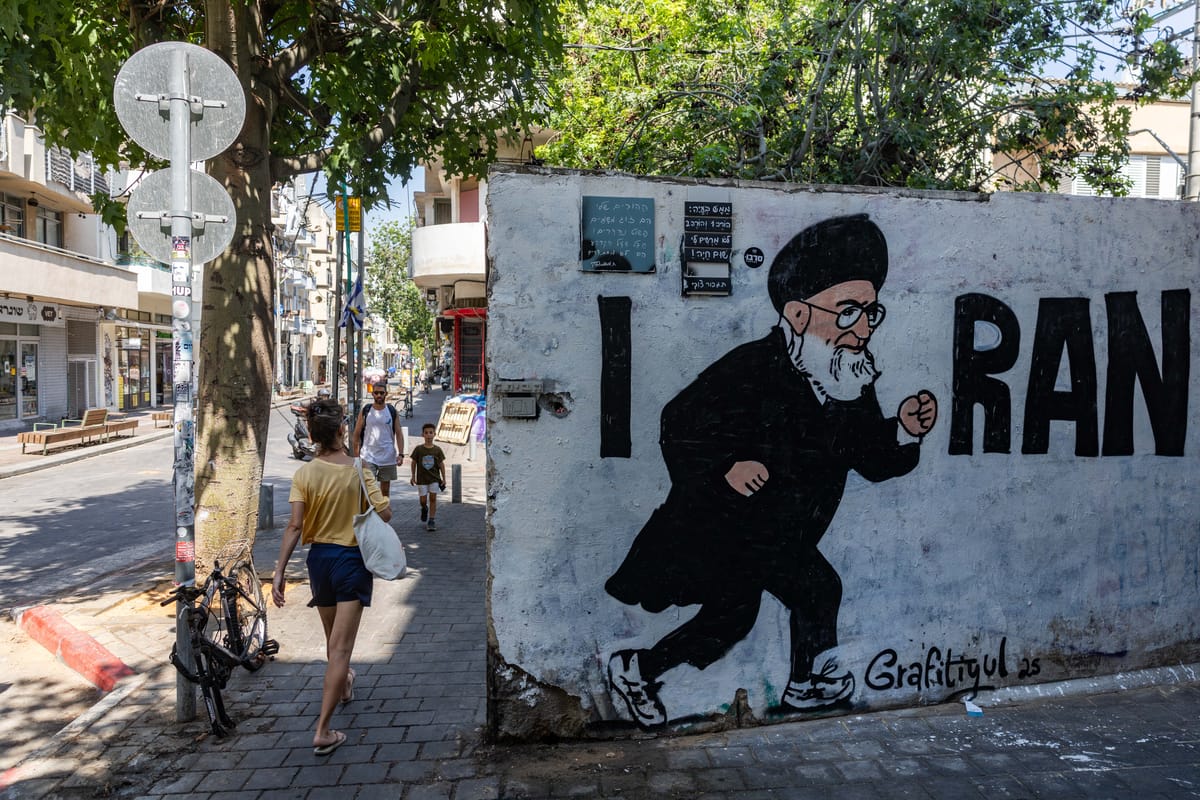
Iran’s president has openly declared what he described as a state of “total war” with the United States, Israel, and Europe, a stark escalation in rhetoric that comes as Tehran works to rebuild its damaged military and nuclear capabilities and deepen its ties with regional terror proxies.
In an interview published by Iranian state media over the weekend, President Masoud Pezeshkian said Iran now faces a conflict he considers more complex and dangerous than the Iran-Iraq war of the 1980s. Unlike that earlier war, he argued, today’s confrontation is being waged simultaneously on economic, political, cultural, and security fronts.
According to Pezeshkian, Western sanctions, diplomatic pressure, and military action are all part of a coordinated effort to weaken the Islamic Republic from within. He accused the United States, Israel, and European governments of seeking to bring Iran “to its knees,” framing the current moment as an existential struggle rather than a conventional military conflict.
The remarks come amid renewed international sanctions led by European powers, imposed in response to Iran’s continued pursuit of nuclear weapons capabilities. Those sanctions follow the brief but intense conflict earlier this year, when Israeli strikes, backed by US air power, severely damaged Iran’s nuclear infrastructure, air defenses, and missile production facilities.
Despite those losses, Pezeshkian claimed Iran has emerged militarily stronger, asserting that its armed forces are now better prepared to respond decisively to any future attack. Iranian officials have repeatedly signaled that reconstruction of air defense systems and ballistic missile capabilities is underway, even as international pressure mounts.
At the same time, Tehran’s influence within Hamas appears to be growing. Reports indicate that a Hamas leadership election could soon elevate Khalil al-Hayya, a figure considered closely aligned with Iran, to head the group’s political bureau. Such a result would further tighten Iran’s grip over Hamas at a moment when the fragile Gaza ceasefire remains under strain.
Against this backdrop, Israeli Prime Minister Benjamin Netanyahu is expected to meet with President Donald Trump in Florida in the coming days. Israeli officials are reportedly seeking American backing for renewed military action against Iran should intelligence assessments show Tehran nearing nuclear breakout capability again.
That meeting is also expected to touch on the Gaza ceasefire, which US officials privately worry Israel may be undermining. According to senior administration sources, Washington believes Jerusalem has shown growing reluctance to fully implement the agreement, complicating efforts to stabilize the region after months of war.
The situation reflects a broader strategic stalemate. Iran continues to test the limits of Western tolerance through nuclear advances and proxy warfare, while Israel and the United States signal they are prepared to act militarily to prevent Tehran from acquiring nuclear weapons. Europe, meanwhile, remains caught between sanctioning Iran and trying to prevent outright regional escalation.
Pezeshkian’s declaration of “total war” is unlikely to signal an imminent conventional conflict, but it underscores how Tehran views the current phase as one of sustained confrontation rather than temporary crisis. The language also suggests Iran is preparing its domestic audience for continued hardship, sanctions, and isolation, while positioning itself as a besieged power resisting foreign aggression.
With diplomacy faltering and military options back on the table, the risk of miscalculation remains high. As Iran rebuilds, Hamas realigns, and Israel weighs its next move, the region appears to be entering another volatile phase where rhetoric, deterrence, and force are increasingly blurred.