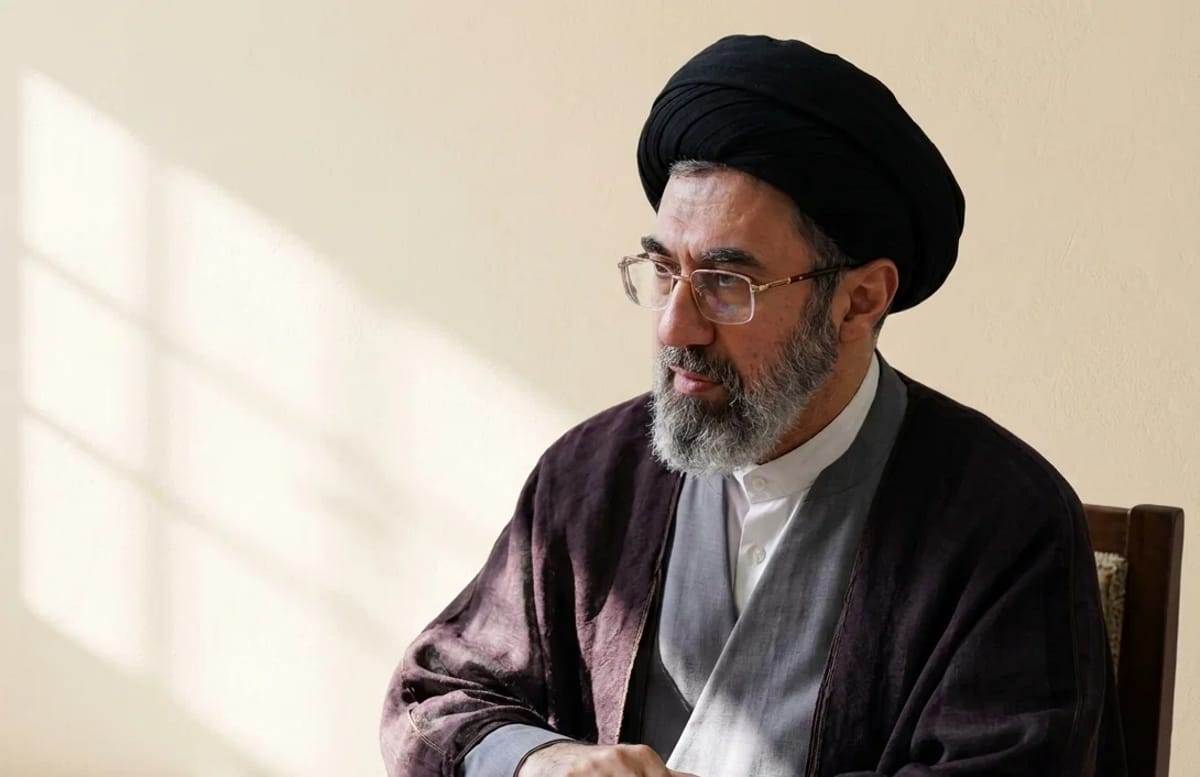
Iran's Hidden Leader

Mojtaba Khamenei Infuriates Trump

Mojtaba Khamenei issues rare statement targeting American military presence • Threatens control of Strait of Hormuz as economic pressure mounts | The audio message that signals Tehran's next move (World News)

Mojtaba Khamenei
Mojtaba Khamenei

Iran's Supreme Leader Mojtaba Khamenei emerged from weeks of silence Thursday with a combative audio statement targeting American military forces in the Persian Gulf, declaring that foreign powers operating in the strategic waterway "have no place there except in the depths of its waters."

The message marks another instance of Khamenei communicating solely through recorded audio rather than public appearances. Since assuming leadership following his father Ali Khamenei's death at the onset of the current conflict, the younger Khamenei has not been seen in public, reportedly due to severe injuries sustained during the transition of power and extreme security protocols.

According to reports from sources familiar with Iran's internal leadership structure, Mojtaba Khamenei now functions primarily as a figurehead providing religious legitimacy to decisions actually made by military commanders and security officials. The shift represents a fundamental transformation in how the Islamic Republic operates, moving from clerical authority to direct military control.
Targeting American Naval Presence

In his statement, Khamenei asserted that "foreigners who come from thousands of kilometers away, operating with greed and wickedness in the waters of the Persian Gulf and the Sea of Oman, have no place there." The remarks directly challenge the ongoing U.S. naval blockade that has paralyzed Iranian oil exports for two months.

The Supreme Leader emphasized that Iran shares "a common destiny with our neighbors in the waters of the Persian Gulf and the Sea of Oman," sketching a vision of regional autonomy free from Western military intervention. He declared that "with divine power, the bright future of the Persian Gulf region will be a future without America, serving the progress, comfort, and prosperity of its peoples."

Khamenei specifically blamed American military infrastructure for regional instability, stating that "the presence of American foreigners and their fortification in the lands of the Persian Gulf is the most important factor for insecurity in the region." He added that "America's shaky bases lack the ability to provide their own security, and certainly there is no hope of providing security for those dependent on America and its followers in the region."

United States vs Iran
United States vs Iran (Photo: Shutterstock / Andy.LIU)

The Strait of Hormuz Gambit

The most significant element of Khamenei's statement concerned Iran's intentions regarding the Strait of Hormuz, the narrow waterway through which approximately one-fifth of global oil supplies pass. The Supreme Leader announced that "the Islamic Republic of Iran, out of practical gratitude for the blessing of managing the Strait of Hormuz, will make the Persian Gulf region secure and eliminate the enemy's misuse of this waterway."

He indicated that Tehran plans to implement new regulations governing passage through the strait, stating that "the legal rules and implementation of the new management of the strait will establish comfort and progress for the benefit of all peoples of the region, and its economic benefits will gladden the hearts of the people." The statement strongly suggests Iran intends to demand transit fees from vessels passing through the strategic chokepoint.

The timing of Khamenei's message is significant. Intelligence assessments indicate that the U.S. naval blockade is costing Iran approximately $500 million daily in lost oil revenue, creating severe economic strain. Iranian President Masoud Pezeshkian recently condemned the blockade as "illegal" and "doomed to failure," though Tehran has been forced to reactivate tankers near its ports to manage a growing oil storage crisis.

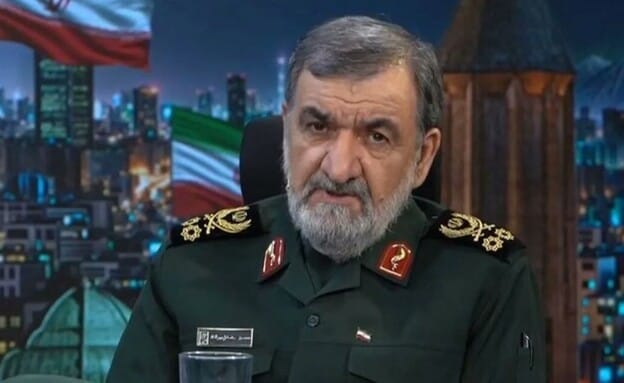
Mohsen Rezai, a radical former commander of the Revolutionary Guard

Defiance Amid Mounting Pressure

Despite the defiant rhetoric, Iran's actual position remains precarious. Mohsen Rezaei, a senior advisor to Khamenei and former Revolutionary Guard commander, recently claimed that "no country is capable of blocking Iran's oil exports," directly contradicting the reality on the ground where Iranian crude has been effectively shut out of global markets.

The Trump administration has shown no indication of easing pressure on Tehran. According to Reuters, U.S. intelligence agencies are conducting assessments examining potential Iranian responses if Washington declares victory and begins withdrawing forces. However, the analysis reveals deep concerns within the administration about whether ending the conflict prematurely would hand Iran a strategic victory despite its economic devastation.

Khamenei's continued reliance on audio messages rather than public appearances underscores the unusual nature of Iran's current leadership structure. While he retains the title of Supreme Leader, sources describe him as a consensus figure whose primary function is providing religious cover for decisions made by Iran's military elite. The transition from his father's clerical authority to what experts call "hard power" management represents one of the most significant shifts in the Islamic Republic's 47-year history.

As the standoff enters its third month, both sides appear locked in a test of endurance, with Tehran projecting strength through defiant statements while Washington weighs the political costs of an extended conflict that has become increasingly unpopular with the American public.

Ready for more?

Join our newsletter to receive updates on new articles and exclusive content.

We respect your privacy and will never share your information.