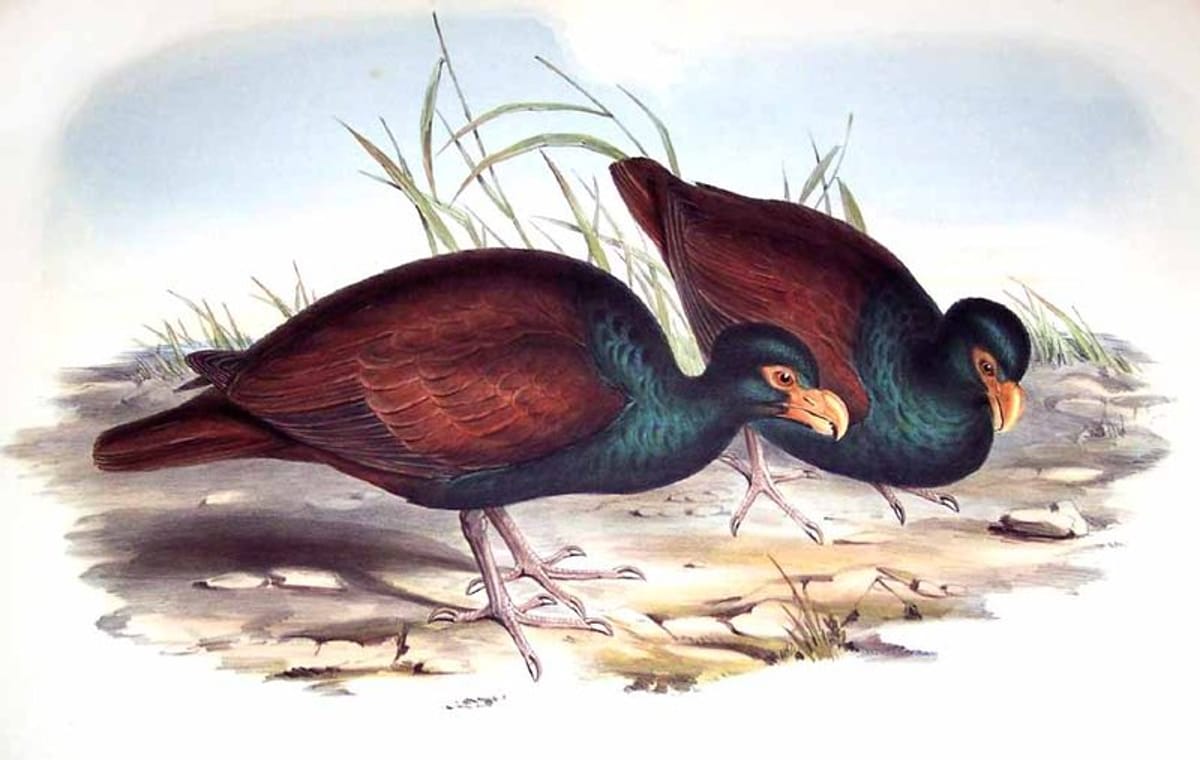
One of the closest living relatives of the extinct dodo has been sighted in the wild for the first time in years, offering a rare moment of hope for one of the world’s most endangered birds.
The manumea, a chicken-sized forest bird found only in Samoa, was recorded at least five times during a recent field survey conducted by the Samoa Conservation Society between mid-October and mid-November. While researchers could not confirm whether the sightings involved multiple birds or a single individual, all were believed to be adults, marking the most significant evidence of the species’ survival in years.
The last confirmed sighting of a manumea prior to this survey was in August 2020, and the last known photograph taken in the wild dates back to 2013. In the years since, conservationists feared the bird may have quietly slipped into extinction.
Researchers believe the sightings occurred in remote rainforest valleys near the village of Uafato, an area that may offer natural protection from cyclones and human disturbance. These valleys are thought to be among the few remaining habitats capable of sustaining the bird.
The manumea plays a critical ecological role in Samoa’s forests. It feeds on large native seeds that other birds cannot consume, helping disperse plant species essential to forest regeneration. Despite its cultural significance as a national symbol, many Samoans have never seen one.
In the early 1990s, surveys estimated the manumea population at around 7,000. Since then, habitat destruction, hunting, and invasive predators have devastated the species. Current estimates suggest as few as 50 to 150 birds remain.
Conservationists say invasive species, particularly feral cats and rats, pose the greatest ongoing threat. Cats prey on adult birds and chicks, while rats destroy eggs and nests. Hunting has been outlawed, shifting the focus of conservation efforts toward predator control and habitat protection.
The difficulty of studying the manumea has long hampered recovery efforts. The bird is fast-moving, elusive, and lives in dense rainforest. Researchers are now exploring the use of AI-based sound monitoring to detect its distinctive calls and better map its remaining population.
The recent sightings do not guarantee the manumea’s survival, but they do confirm that the species is not yet lost. Conservationists say the discovery underscores the urgency of action. With so few birds left, even modest delays could prove fatal.
For now, the manumea’s reappearance stands as a reminder that extinction is not always final until the last search is made, and that even in fragile island ecosystems, there is still a chance to save what remains.