Myanmar has begun voting in an election widely dismissed by critics and international observers as a sham, staged by the military nearly five years after it seized power in a coup that plunged the country into civil war.
Polling started on Sunday under heavy security, with voting set to take place in three phases across 265 of Myanmar’s 330 townships. Large swathes of the country will not vote at all, either because they remain under opposition control or are considered too unstable amid ongoing fighting. Observers estimate that as much as half the population may be excluded from the process.
The vote comes after the junta dissolved major political parties, jailed many of their leaders, and criminalised opposition to the election itself. More than 200 people have been charged under a new law targeting disruption of the polls, which carries severe penalties, including the death sentence. Among those already convicted are well-known artists and entertainers who criticised a government-backed film promoting the election.
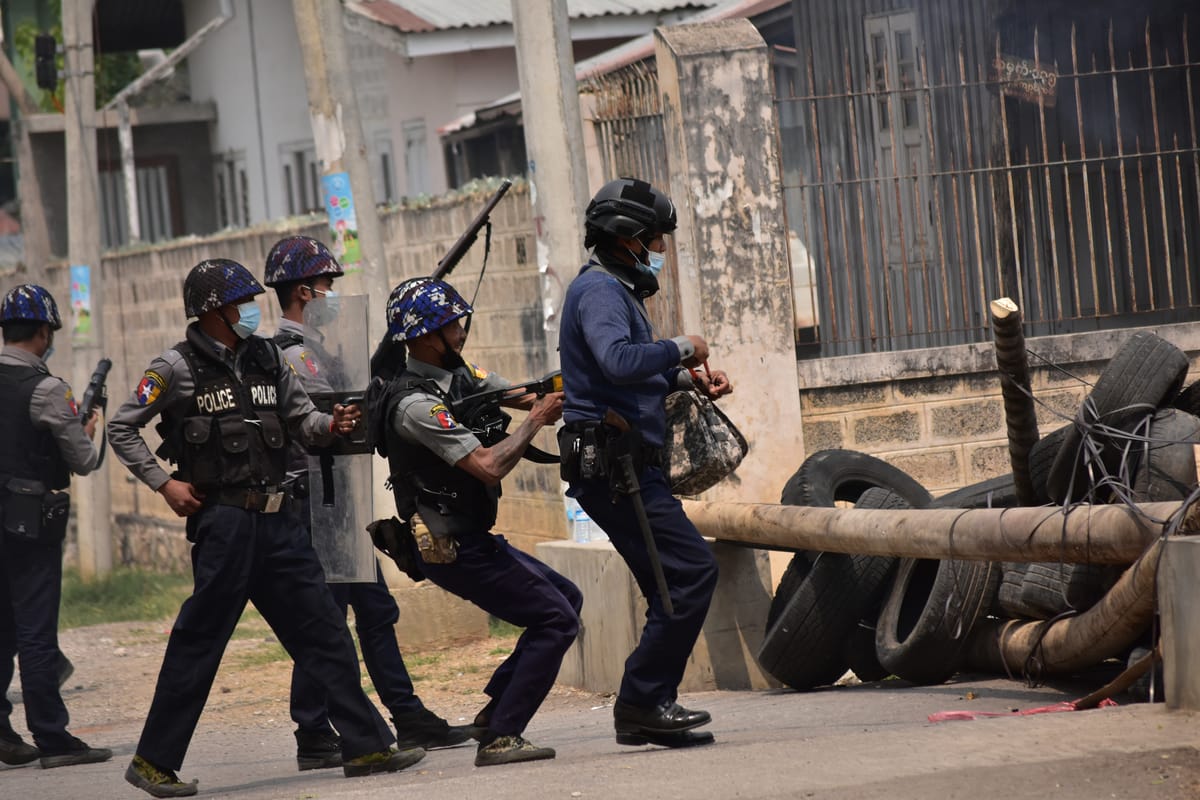
Violence accompanied the opening of polling. Explosions and airstrikes were reported in multiple regions as voting took place. In Mandalay region, three people were injured in a rocket attack on an uninhabited house, while separate explosions in Myawaddy township near the Thai border damaged more than ten homes. Local residents reported that a child was killed and several others critically wounded.
Despite the violence, some voters told the BBC that the process felt more controlled than previous elections. Others said they voted out of a sense of civic duty, hoping for economic relief as prices continue to soar. Such accounts stand in sharp contrast to the broader political reality surrounding the vote.
Junta leader Min Aung Hlaing rejected criticism and insisted the election would be free and fair, describing it as a step toward restoring a multi-party system. He warned earlier that refusing to vote amounted to rejecting “progress toward democracy.” His comments were met with scorn by critics, who point to the absence of meaningful political choice.
Six parties are fielding candidates nationwide, including the military-backed Union Solidarity and Development Party. Around 40 parties have been banned, among them the National League for Democracy, which won landslide victories in 2015 and 2020. Its leader Aung San Suu Kyi remains imprisoned, alongside many senior figures.
The United Nations Special Rapporteur on Myanmar urged the international community to reject the election outright, calling it “theatre performed at gunpoint.” Western governments have echoed that view, while regional leaders have called for dialogue before any vote.
For many inside Myanmar, the election offers little hope. As one elderly resident of Chin state put it, when democracy briefly existed, life improved. “Now,” he said, “all we do is cry.”