
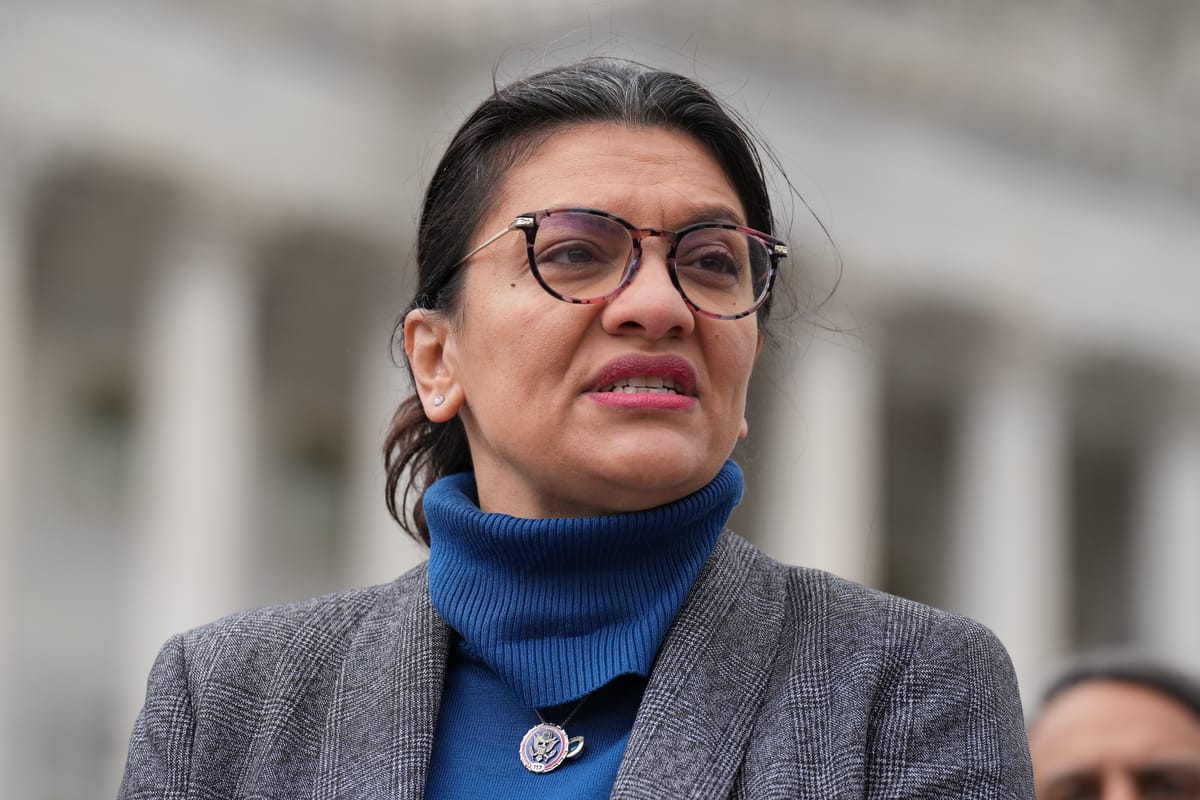
U.S. Rep. Rashida Tlaib (D-MI) has reintroduced a resolution recognizing the 78th anniversary of the “Nakba” - the Arabic term for “catastrophe” used by Palestinians to describe events surrounding Israel’s founding in 1948.
H.Res. 1289, titled “Recognizing the Ongoing Nakba and Palestinian Refugees’ Rights,” was introduced on May 14, 2026, and referred to the House Foreign Affairs Committee. It is co-sponsored by several progressive Democrats, including Reps. Ilhan Omar (D-MN), Alexandria Ocasio-Cortez (D-NY), Ayanna Pressley (D-MA), and Delia Ramirez (D-IL), among others.
Key Elements of the Resolution:
- Describes the Nakba as the mass expulsion and ethnic cleansing of Palestinians during the 1947-1949 war.
- Claims this displacement is “ongoing” through current conflicts, occupation, settlement expansion, and events in Gaza and Judea and Samaria.
- Calls for greater U.S. education about the Nakba and restored American funding for UNRWA (the UN agency for Palestinian refugees).
The resolution marks the 78th anniversary of the Nakba, observed around May 15.
Historical Context:
The 1948 Arab-Israeli War followed the UN Partition Plan for Palestine, which Jewish leaders accepted but Arab leaders rejected. After Israel declared independence, armies from several Arab states invaded. Israel ultimately controlled approximately 78% of the former British Mandate territory. Roughly 700,000 Palestinians fled or were displaced (the Palestinian narrative of the Nakba). Simultaneously, approximately 850,000 Jews were expelled or fled from Arab and Muslim countries in the years that followed.
The Arabs could likely have had their own state if the destruction of Israel wasn't their priority, but it was, and then they bemoaned the aftermath. How little has changed.
Reactions:
Supporters, including the Council on American-Islamic Relations (CAIR), praise the measure as acknowledging Palestinian suffering and rights.
Critics argue the resolution is one-sided. They contend it ignores Arab rejection of the 1947 partition plan, the context of the defensive war Israel fought against invading armies, and the parallel expulsion of nearly a million Jews from Arab countries. Pro-Israel groups and lawmakers have called such resolutions historically inaccurate and politically motivated.
This is the latest version of a resolution Tlaib has introduced in previous Congresses. It faces long odds of passing in the full House.