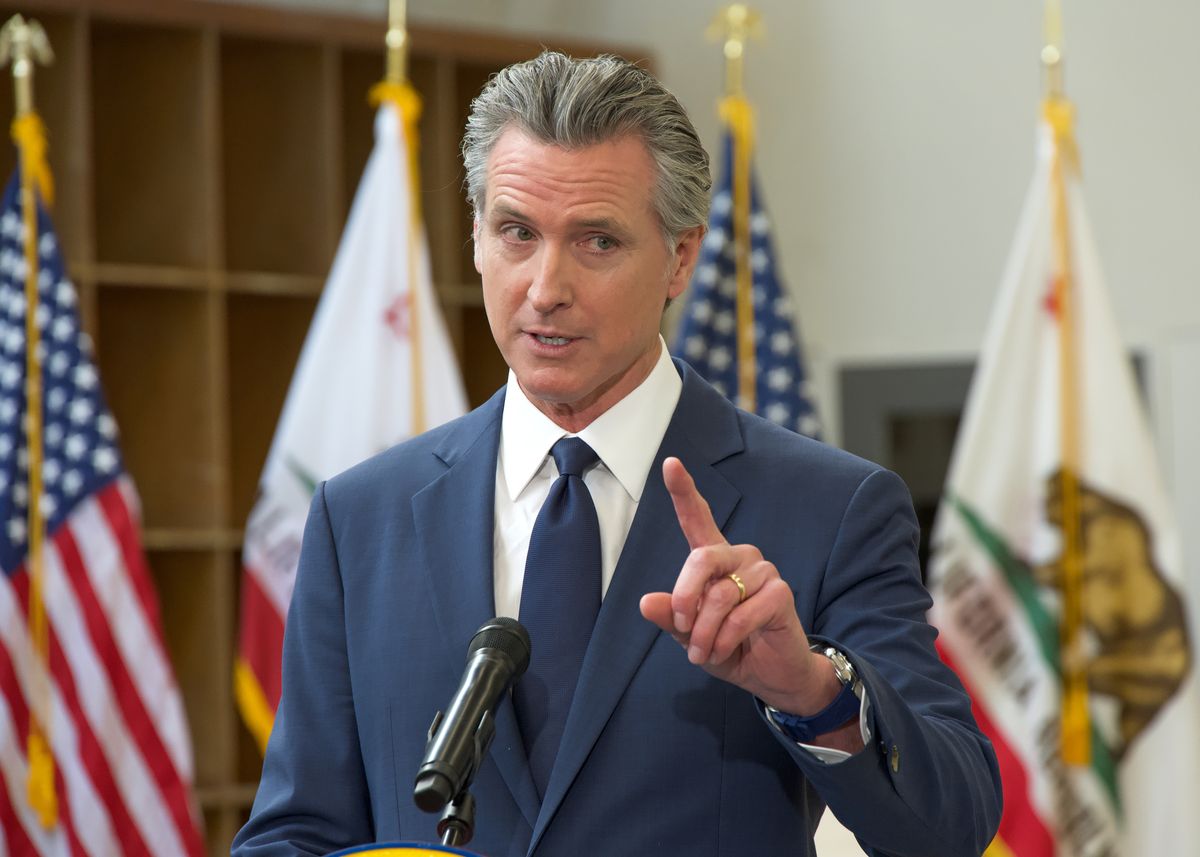
California Governor Gavin Newsom said he regrets comments earlier this month in which he appeared to agree with claims that Israel is an “apartheid state,” clarifying that he had intended to reference a warning about the country’s future rather than describe its current reality.
In an interview published Tuesday, Newsom said his remarks on a podcast were meant to echo a column by Thomas Friedman that cautioned Israel could move toward apartheid if political trends continue, not that it has already reached that point.
Israel and its supporters have consistently rejected allegations that its policies toward Palestinians constitute apartheid.
“I revere the state of Israel. I’m proud to support the state of Israel,” Newsom said in the interview. At the same time, he sharply criticized the current Israeli government, particularly Prime Minister Benjamin Netanyahu’s leadership and policies.
“I deeply, deeply oppose Bibi Netanyahu’s leadership, his opposition to the two-state solution, and deeply oppose how he is indulging the far-right,” Newsom said, referring in part to developments in Judea and Samaria.
The clarification follows backlash from Jewish organizations and community leaders, who raised concerns after his initial comments were interpreted as endorsing the apartheid label. Several Jewish leaders met with Newsom shortly after the controversy and said at the time they believed he did not view Israel as currently meeting that definition.
The Politico interview marked Newsom’s first public effort to clarify his remarks.
While he did not directly answer whether he identifies as a Zionist, Newsom stressed that his criticism is directed at specific government policies rather than the legitimacy of the state itself.
His comments are being closely watched in US political circles, as he is widely viewed as a potential Democratic presidential candidate in 2028. The issue of Israel has become increasingly contentious within the Democratic Party, where support has shown signs of erosion among parts of the electorate.
Newsom also reiterated that he has not accepted and would not accept funding from pro-Israel lobbying groups such as AIPAC, though such organizations have historically played a limited role in state-level races like those he has contested.
The episode highlights the political sensitivity surrounding Israel-related discourse in the United States, particularly as debates over policy, terminology, and future direction continue to intensify.