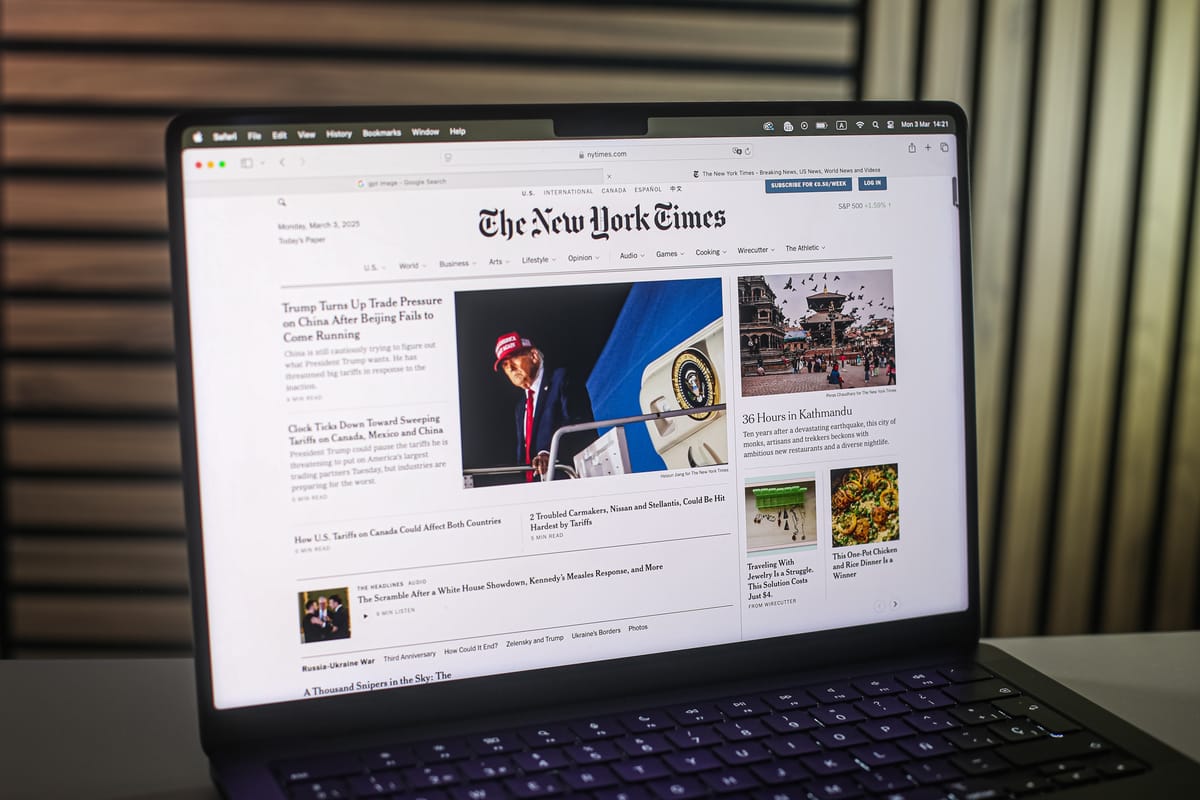
The New York Times is facing one of the sharpest internal crises in its recent history. A May 11 opinion column by veteran journalist Nicholas Kristof, titled "The Silence That Meets the Rape of Palestinians," has split the paper's newsroom from its opinion section, drawn a defamation lawsuit threat from the Israeli government, sparked protests outside the Times building, and ignited a debate about editorial standards that shows no sign of dying down.
The Revolt Inside the Newsroom
According to Puck News, whose reporting was subsequently confirmed by the New York Post, the reaction inside the Times has been fierce. Journalists on the news side, who operate under strict verification standards, are furious that claims of this severity, including the dog-rape allegation, cleared the opinion section's editorial process.
One anonymous Times journalist told Puck bluntly: "I am sick of being embarrassed by the Opinion section."
The tension reflects a structural fault line that has been widening at the paper for years: the news division prizes rigorous, multi-source verification, while the opinion section operates with considerably more latitude. Critics inside the building argued that the column relied overwhelmingly on Palestinian testimonies and reports from organizations with documented anti-Israel positions, without independent corroboration sufficient to sustain allegations of this magnitude.
Israel's Response: "Blood Libel"
The Israeli government did not hold back. Prime Minister Benjamin Netanyahu and Foreign Minister Gideon Sa'ar jointly condemned the piece as "one of the most hideous and distorted lies" published about Israel, calling it a modern blood libel, a term that carries deep historical resonance for Jewish communities. Both announced plans to pursue defamation action against the Times and Kristof personally.
Pro-Israel groups staged protests outside the newspaper's New York headquarters. Jewish organizations and analysts were particularly pointed in attacking the dog-rape claim, calling it biologically implausible and accusing Kristof of laundering a piece of anti-Israel propaganda through the veneer of mainstream journalism.
The Paper Stands Firm — For Now
The Times defended the column, describing it as "deeply reported opinion journalism" grounded in on-the-record accounts and corroborated by United Nations and NGO reports. The paper rejected calls for a retraction.
But the defense has done little to quiet the storm. Critics noted the column's timing — it appeared just days before a major report on Hamas's systematic use of sexual violence during the October 7 massacre was set to be released, prompting accusations that the piece was designed, consciously or not, to muddy the waters and create a false moral equivalence between Israeli detention practices and Hamas's documented atrocities.
What It All Means
The Kristof controversy has exposed something that was already visible to anyone paying attention: the New York Times is not a monolith. Its opinion section and its newsroom operate by different rules, hold different instincts, and increasingly embarrass each other in public.
What makes this episode different is the stakes. These are not allegations about tax policy or foreign trade. They are allegations, some of them without biological plausibility, according to critics, of systematic, orchestrated sexual violence by the military and intelligence services of a close American ally, published in the most influential newspaper in the world, at a moment when that ally is fighting a war.
The Times says it stands by the column. Its own journalists say they are ashamed of it. And the argument about who is right is almost certainly going to get louder before it gets quieter.