Echoes of today

History: 1956 Memo from Lubavitcher Rebbe to President Eisenhower Unearthed

Chabad and the entire Jewish community are still working to pick themselves up from the tragic massacre on Bondi Beach. Just in time, a memo from the Lubavitcher Rebbe to President Dwight Eisenhower was discovered this week that could have been written today.

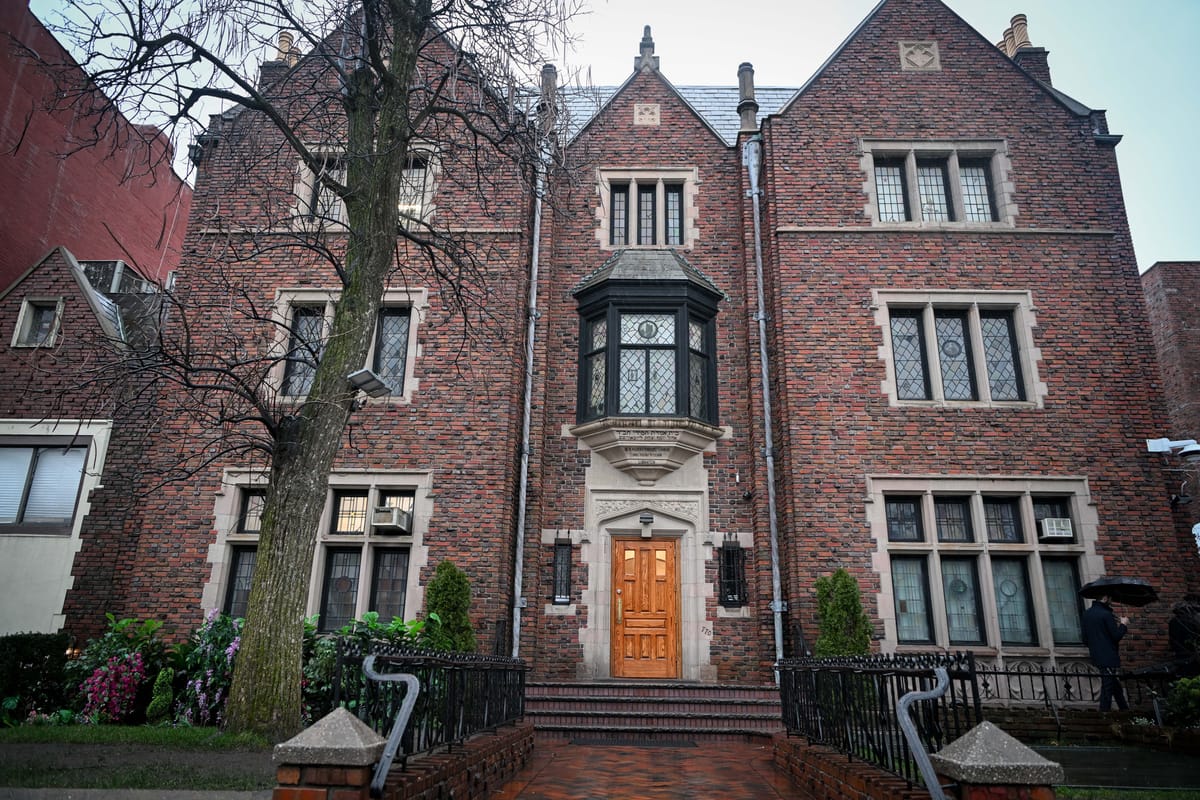
Ultra orthodox jewish men walking outside "Ohel" (Chabad-Lubavitch) Seminary, in the "770" International Chabad Center in Brooklyn, NY, on January 9, 2024, after a secret tunnel was found in the compound.
Ultra orthodox jewish men walking outside "Ohel" (Chabad-Lubavitch) Seminary, in the "770" International Chabad Center in Brooklyn, NY, on January 9, 2024, after a secret tunnel was found in the compound. (Photo: Arie Leib Abrams/Flash90)

A newly discovered telegram sent by the Lubavitcher Rebbe, Rabbi Menachem Mendel Schneerson, to US President Dwight D. Eisenhower following the 1956 terror attack in Kfar Chabad is drawing renewed attention amid a week of deadly antisemitic violence, including the mass shooting at a Chanuka celebration at Sydney’s Bondi Beach.

The telegram, dated April 16, 1956, was written five days after Arab terrorists opened fire on a Chabad school in Kfar Chabad during evening prayers, killing five students and their teacher. The message had not previously been widely circulated.

In the telegram, the Rebbe described the attack as a “cold-blooded massacre of Jewish children at prayer” and appealed directly to Eisenhower to use American influence to prevent further attacks and to protect Jewish religious and educational institutions in Israel. Writing on behalf of the global Chabad movement, the Rebbe framed the attack as a moral issue that “must arouse every decent human being,” calling for immediate and effective action rather than expressions of sympathy alone.

The document has resurfaced at a time when Jewish communities worldwide are facing renewed security concerns. Over the past week, 15 people were murdered in an Islamist terror attack targeting a Chanuka event at Bondi Beach. In the United Kingdom, police announced stricter enforcement against chants such as “globalize the intifada,” citing recent attacks in Sydney and Manchester that underscored the real-world consequences of incitement.

Loading...
The Rebbe's telegram (Photo: Anash.org)

Historians and Chabad figures note that the telegram illustrates the Rebbe’s early approach to antisemitic violence: engaging world leaders directly and urging concrete preventive measures. The Rebbe’s appeal to Eisenhower came at a time when Israel was still a young state and Jewish institutions were frequent targets of cross-border attacks.

While the telegram reflects the geopolitical realities of the 1950s, its language and concerns have taken on new relevance amid current debates over how governments respond to antisemitic terror and protect Jewish communities. The rediscovery adds historical context to contemporary calls for stronger action, as Jewish leaders again urge political authorities to move beyond condemnation and address security threats before further attacks occur.

Ready for more?

Join our newsletter to receive updates on new articles and exclusive content.

We respect your privacy and will never share your information.

Enjoyed this article?

Yes (154)
No (6)
Follow Us:

Loading comments...