Republican candidates in several states have made Islam and Muslim politicians part of their campaign messaging ahead of the November 3 midterm elections, in a pattern that spans races for the Senate, for governor and further down the ballot.
The trend was documented Tuesday in a Reuters report by Richard Cowan and David Hood-Nuño, which drew on races in Michigan, Texas and Alabama. The elections will determine whether Democrats can take control of Congress from President Donald Trump's Republican Party.
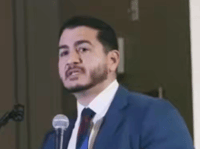
In Michigan, Vice President JD Vance described Abdul El-Sayed, the Muslim Democrat running for the Senate, as "very, very evil" at a rally in Sterling Heights on August 31, accusing him of defending terrorism over remarks he made following the March attack on a synagogue outside Detroit. Vance hosted a rabbi from the targeted synagogue and members of its security team as guests at the event, and urged voters to back Republican nominee Mike Rogers.
In Texas, Governor Greg Abbott, who is in a close race for another term, attacked a proposed Muslim-led residential development and called for an investigation into what he described as an effort to establish sharia courts. The developers and civil rights groups dispute that characterization. Abbott campaign spokesman Eduardo Leal said the governor's actions concerned alleged illegal conduct rather than religious belief.
In Alabama, Senator Tommy Tuberville, who is running for governor, warned that the enemy is inside the gates, a reference to what he called radical Islam. Muslims make up less than half a percent of the state's population. Aides to the Tuberville campaign did not respond to requests for comment from Reuters.
Republicans involved say they are raising legitimate concerns about security, extremism and the role of religion in public life. Critics say the rhetoric unfairly targets Muslims as a group.
The spending behind the messaging has been substantial. Stateline reported in April, citing the ad tracking firm AdImpact, that Republican campaigns had spent roughly 12 million dollars since last year on advertising that referred negatively to Islam, Muslims or Shariah.
According to the Pew Research Center, about 5.5 million Muslims live in the United States, roughly 1.6 percent of the population, up from 2.4 million in 2007. Reuters noted that Muslim political representation has grown over the past year to its highest level in recent memory.
The Michigan race carries particular weight for Jewish voters in the state. In March, a man drove a truck into Temple Israel in West Bloomfield Township and injured a security guard in what authorities described as a deliberate attack on Jews. The attacker, Ayman Mohammad Ghazali, died by suicide. He had lost four relatives in an Israeli airstrike in Lebanon the previous week.
In a video response at the time, El-Sayed condemned the attack and said there was never a justification for attacking innocent people, but also said that violence is a cycle and used the phrase "hurt people hurt people." Critics said the framing amounted to justification.
El-Sayed apologized on August 29 before the Michigan Democratic Jewish Caucus at the state party convention in Lansing, telling the gathering that he had made a mistake and should have condemned the attack and stopped there. He said he had been trying to offer context but that it had not been the moment for it. Rogers responded that the apology came six months late.
El-Sayed has also faced criticism over his earlier appearances with the streamer Hasan Piker, who has drawn scrutiny for comments about Hamas and the October 7 attacks, and from whom El-Sayed has since distanced himself.