The race for the White House begins: the Republican Party’s primaries will officially begin tonight (Monday), with five candidates competing over the coming months to be the party’s official candidate for the Presidency of the United States in the elections taking place November 5 of this year.
The state of Iowa will be the first to pick, with primaries set to happen in all 50 states and the district of Columbia, as well as the territories controlled by the United States – American Samoa, Guam, the Mariana Islands, Puerto Rico, and the American Virgin Islands.
One of the most important moments in the primaries will come on March 5, when primary elections will take place in 15 different states that day. Many candidates tend to consider this “Super Tuesday” to be a significant test of whether they can win – and some candidates may indeed leave the race if the results show they have no chance.
Delegates, Caucuses, and More: How Does the Voting Work?
In most states, primary elections are held by secret ballot like a regular election. In some states, election caucuses are held, in which caucus goers convene to discuss the different candidates, followed by a public vote on the winning candidate. The final primaries will happen on June 4, and two months later the Republican National Convention will convene in Milwaukee to confirm the results and officially declare the party’s nominated candidate for the presidency.
Like the general election, which is based on winning a majority of electors, the winner of the primaries is determined according by a majority of delegates, divided proportionately among the states based on the number of registered voters in each one. All in all, there are 2,469 delegates, with all candidates aiming to reach the needed 1,235 to secure the majority. The state of Iowa will award just 40 delegates, but because it is the first state to vote, it is particularly important – high numbers or a victory can serve as a predictor for what’s coming next in the primary.
Who are the candidates?
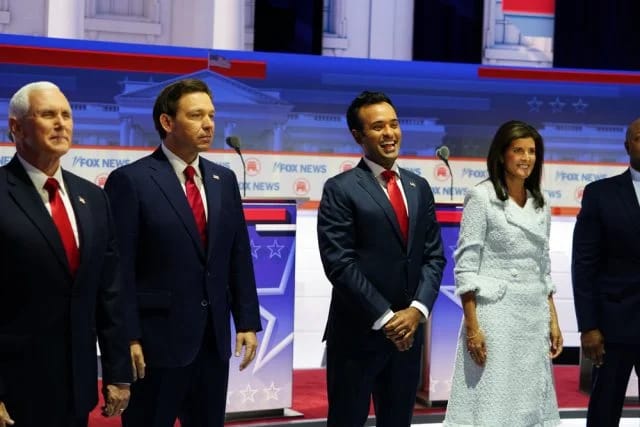
12 Republicans announced their intention to run in the primaries, but most candidates have since bowed out after failing to take off in the polls. Among the most prominent of these are former Vice President Mike Pence, as well as former New Jersey Governor Chris Christie, who left the race a week before the vote in Iowa.
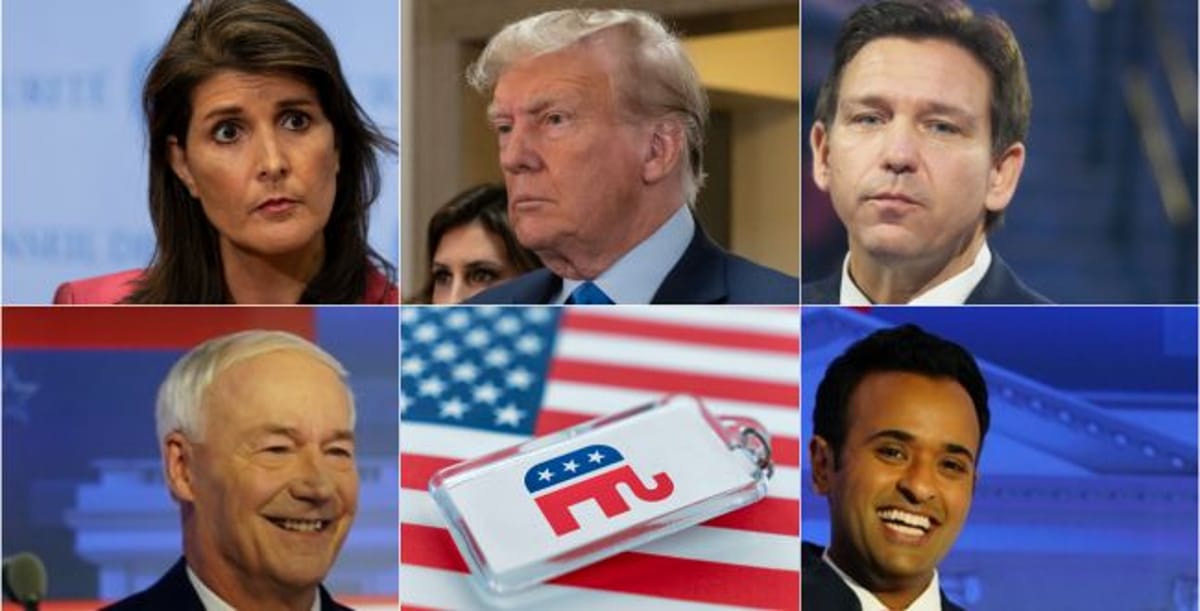
The first vote will put five candidates against each other – headed by former President Donald Trump. He will be running against former American UN Ambassador Nikki Haley, Florida Governor Ron Desantis, hitech entrepreneur Vivek Ramaswamy, and former Arkansas Governor Asa Hutchison.