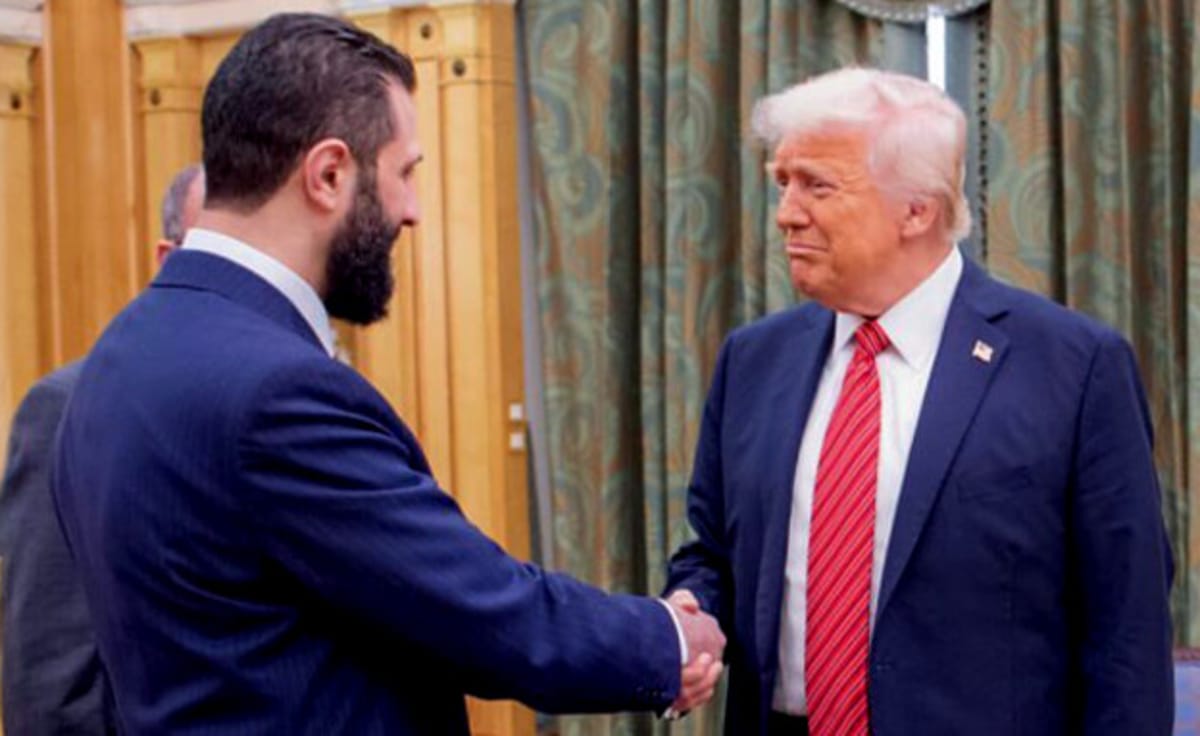
In an unprecedented diplomatic move, Syrian President Ahmad al-Sharaa, who until recently was designated a terrorist commander and leader of the formerly Al-Qaeda-linked HTS, met with US President Donald Trump at the White House on Monday. This historic visit, the first ever by a Syrian president to the White House, marks a dramatic shift in US-Syrian relations and follows the removal of al-Sharaa's name from global terrorism lists.
Al-Sharaa, whose forces seized control of the fractured nation in December 2024, ending Bashar al-Assad’s 24-year rule, arrived in Washington on Saturday for a series of meetings before his sit-down with President Trump. The core agenda item for the White House meeting was the signing of an agreement to formally join Syria to the US-led international coalition against ISIS.
Low-Profile, High-Stakes Diplomacy
The meeting was treated with notable discretion by the White House, remaining closed to the press, unlike visits by other world leaders. Al-Sharaa entered the building through a side entrance, and President Trump did not greet him publicly at the door, nor was a joint photo released of the two leaders.
This low-profile approach was likely intended to manage the political blowback, as al-Sharaa was only recently removed from the UN and US global terror lists. This de-listing was approved by the UN Security Council and subsequently by the Trump administration to ensure al-Sharaa could arrive in Washington "clean."
President Trump, however, offered a positive assessment of the new Syrian leader last week, stating, “I think Al-Sharaa is doing a very good job. It’s a tough neighborhood, and he’s a tough guy, but I get along with him very well.”
Domestic War and Security Deals
The diplomatic thaw faces significant headwinds within the US Congress. The Trump administration is pushing for the permanent lifting of US sanctions on Syria, which were imposed largely due to the Assad regime’s atrocities. However, the most severe penalties, tied to the Caesar Act, require congressional approval for permanent removal.
Leading the resistance is House Foreign Affairs Committee Chairman Brian Mast, who has been outspoken about his deep concerns regarding the situation in Syria. Al-Sharaa met with Mast on Monday in what appears to be an effort to soften the resistance to sanctions removal. The debate in Congress is focused on whether to remove sanctions unconditionally, as proposed by Senator Jeanne Shaheen, or conditionally with six-month reviews, as suggested by Senator Lindsey Graham.
On the security front, a crucial discussion point in the White House meeting was a new security agreement between Syria and Israel. The US is pushing for a finalized deal on the border by the end of the year. Furthermore, the two leaders were expected to discuss the placement of a planned US military presence at the Damascus airbase, signaling deeper security cooperation.
Compounding the focus on security, reports surfaced on Monday revealing that the Syrian security services recently foiled two ISIS assassination attempts against President al-Sharaa, making the war against the terrorist group a highly personal matter for the new Syrian leader and increasing his motivation for cooperation.