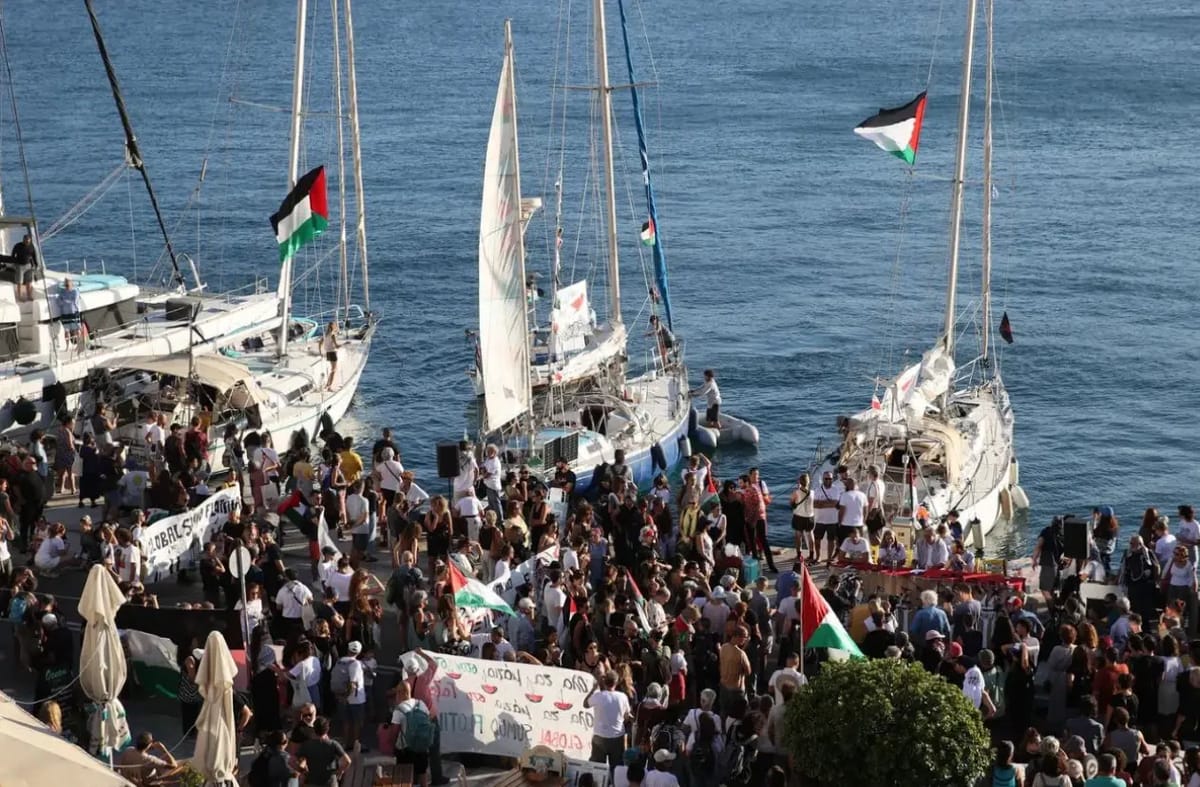
The vessels participating in "Freedom Flotilla II" officially departed the Port of Barcelona this week, embarking on a high-profile mission aimed at breaking the maritime blockade on the Gaza Strip. The departure was marked by a rally of thousands of supporters who gathered to see off the activists involved in the humanitarian initiative.
According to organizers, the ships from Barcelona are expected to rendezvous with additional vessels sailing from Italy as soon as weather conditions permit. The participants stated that their primary objective is to "amplify the voice of Gaza," demand an end to the blockade, and call for urgent international intervention to address what they describe as a humanitarian crisis.
A History of Interception
Despite the festive atmosphere in Barcelona, the flotilla faces a steep challenge. Historically, similar attempts by European activists to reach the Gaza coast have ended in failure. In previous years, the Israel Defense Forces (IDF) Navy has consistently intercepted such vessels at sea.
During those encounters, Israeli forces typically boarded the ships, confiscated the vessels, and detained the passengers. In almost every instance, the activists were subsequently processed by immigration authorities and deported back to their home countries without reaching the Gaza shoreline.
Israeli Criticism: Ignoring the Post-Oct. 7 Reality
The launch of this latest flotilla has sparked sharp criticism within Israel. Many officials and citizens express outrage that such pro-Palestinian provocations continue even after the brutal Hamas massacre of October 7 and the subsequent war that reshaped the region.
Critics in Israel argue that the protesters are intentionally ignoring the current reality on the ground. Despite the activists' claims of an ongoing "humanitarian disaster," Israel points to the extensive, multi-national efforts—led by the United States and global aid organizations—to rehabilitate and stabilize the Gaza Strip following the end of the conflict.
Jerusalem views these flotillas not as genuine humanitarian missions, but as political maneuvers designed to challenge Israeli sovereignty and maritime security protocols while overlooking the security concerns that necessitated the blockade in the first place.