Get our mobile app
Download on the App StoreGet it on Google Play

Peak Tensions in Middle East

Trump Flees Camp David After Air Incident

President cuts short weekend retreat following unauthorized aircraft intrusion over presidential compound; simultaneously, Iran-backed Houthis launch first attack on Saudi capital since latest escalation

Houthis | Bin Salman

A security drama unfolded over the weekend in the Middle East as President Donald Trump abruptly cut short his stay at the Camp David presidential retreat in Maryland, in close temporal proximity to an unusual security incident in the area. At the same time, Houthi rebels in Yemen carried out an extensive attack on the Saudi capital Riyadh, marking the first such strike since the latest round of escalation.

Trump had arrived at Camp David intending to remain through the weekend, with the visit's primary purpose being a series of security discussions on options for military action in Yemen. However, the president's stay was cut short when he decided to return to the White House without any official statement explaining the reason for the hasty departure.

The sudden exit occurred in troubling proximity to an unusual security incident. A fighter jet from the North American Aerospace Defense Command (NORAD) was scrambled and forced to intercept an aircraft that penetrated the restricted airspace over Camp David. The U.S. Air Force confirmed that during the interception, the fighter jet was forced to deploy flares.

Despite the suspicious timing between the aircraft intrusion and the president's departure, official American sources have so far refrained from directly linking the two events.

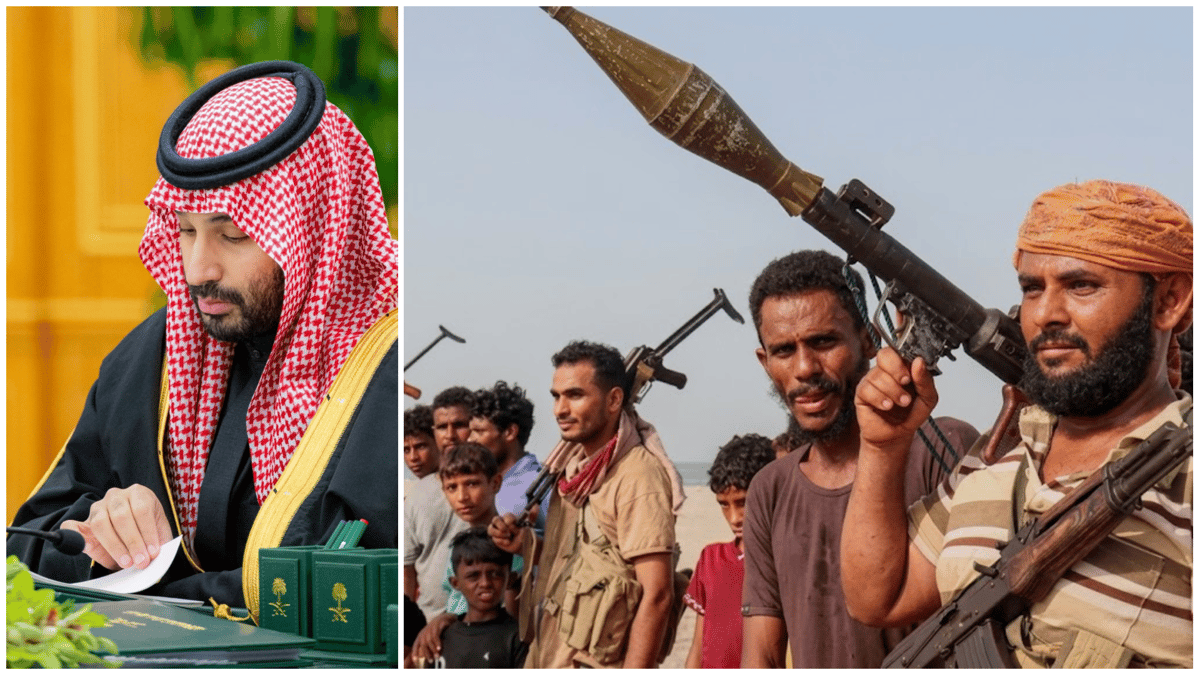
The drama in the United States occurred just hours after Houthi rebels in Yemen carried out an extensive attack on the Saudi capital. The Saudi coalition confirmed that the Houthis attempted to strike the capital with a ballistic missile, in the first attack attempt on the city since the latest escalation in the war with the Iran-backed organization.

According to the official statement, the missile was successfully intercepted in the early morning hours. Residents in Riyadh reported hearing an explosion, and later a column of smoke was seen near the airport. No casualties or damage were reported. The coalition added that the Houthis also attempted to attack civilian infrastructure in the Red Sea port city of Yanbu—where a major Saudi oil pipeline terminates—as well as in the cities of Taif, Bisha, and Farasan, but the attempts were thwarted.

The Houthis claimed earlier, without presenting evidence, that they had attacked "sensitive sites" in Riyadh and facilities belonging to Saudi oil giant Aramco in Yanbu, causing "massive fires." Aramco, the world's largest oil company, did not respond to requests for comment. Houthi military spokesman Brigadier General Yahya Saree stated that the organization attacked using cruise missiles, ballistic missiles, and drones.

Mecca
Mecca

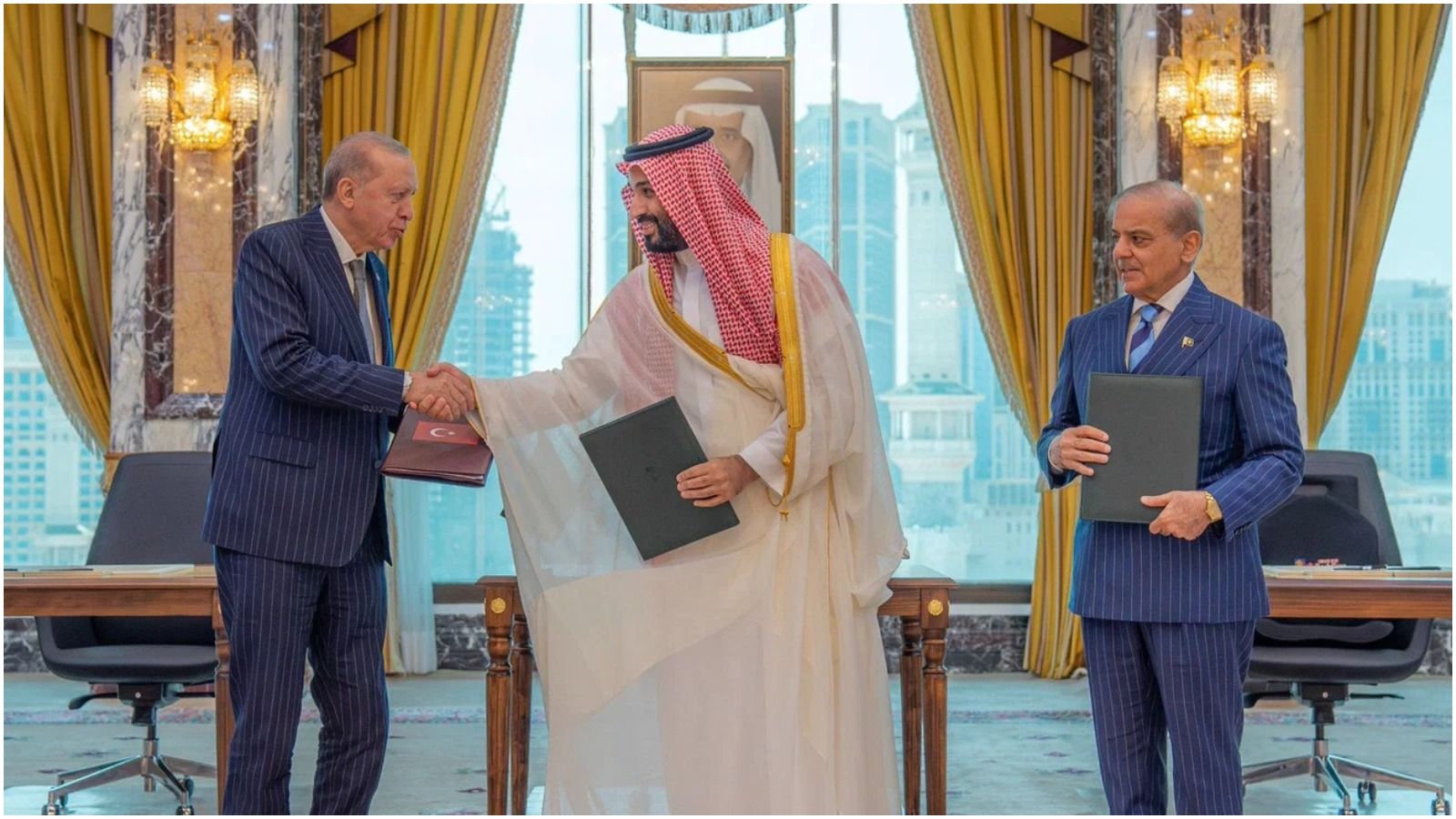
Meanwhile, a senior figure in the Houthi leadership spoke dismissively of Turkey and Pakistan, members alongside Saudi Arabia in the "Mecca Alliance," and issued an explicit threat toward them: "We will strike them with an iron fist. Just as we are teaching Saudi Arabia today, so we will teach them as well."

Against the backdrop of regional escalation, the U.S. State Department and the U.S. Embassy in Israel issued severe warnings to their citizens around the world, particularly those in the Middle East. The distributed statements emphasized that American citizens should reconsider any travel to the region, and that the security environment remains "complex with potential for unexpected and rapid escalation."

The guidelines called on travelers to exercise heightened vigilance and closely monitor updates regarding airport and airline activity, due to concerns about sudden flight cancellations, airspace closures, and widespread disruptions to travel. American authorities specifically noted that "the Iran-backed Houthis are engaged in hostile actions against Saudi Arabia, including attacks targeting civilian airports."

Beyond the local threat in the Middle East, the American warning also extended to global threats from the radical axis. The statement clarified that the Revolutionary Guards and pro-Iranian groups may direct their hostile activity toward American interests overseas as well. "U.S. diplomatic missions, even outside the Middle East, have been targeted for attacks in the past," the warning stated, adding that sites identified with the United States and its citizens worldwide, including private institutions and businesses, are under potential threat.

Photo: Ministry of Foreign Affairs of the Kingdom of Saudi Arabia

In recent days, the Houthis have managed to record a series of significant achievements. The organization's forces advanced along the Red Sea coast, seized control of the city of Mocha and the strategic island of Perim at the entrance to the Bab el-Mandeb Strait, thereby increasing the threat to one of the world's most important shipping routes.

A Saudi source close to the royal house revealed in a conversation with Channel 12 News the depth of frustration at the kingdom's leadership: "There is deep disappointment in Saudi Arabia with the American position and a growing sense of helplessness." According to him, the absence of a firm American policy allows the Houthis to expand their influence unimpeded.

Ready for more?

Join our newsletter to receive updates on new articles and exclusive content.

We respect your privacy and will never share your information.

Enjoyed this article?

Yes
No
Follow Us:

Unmissable content


Loading comments...

Also of Interest