
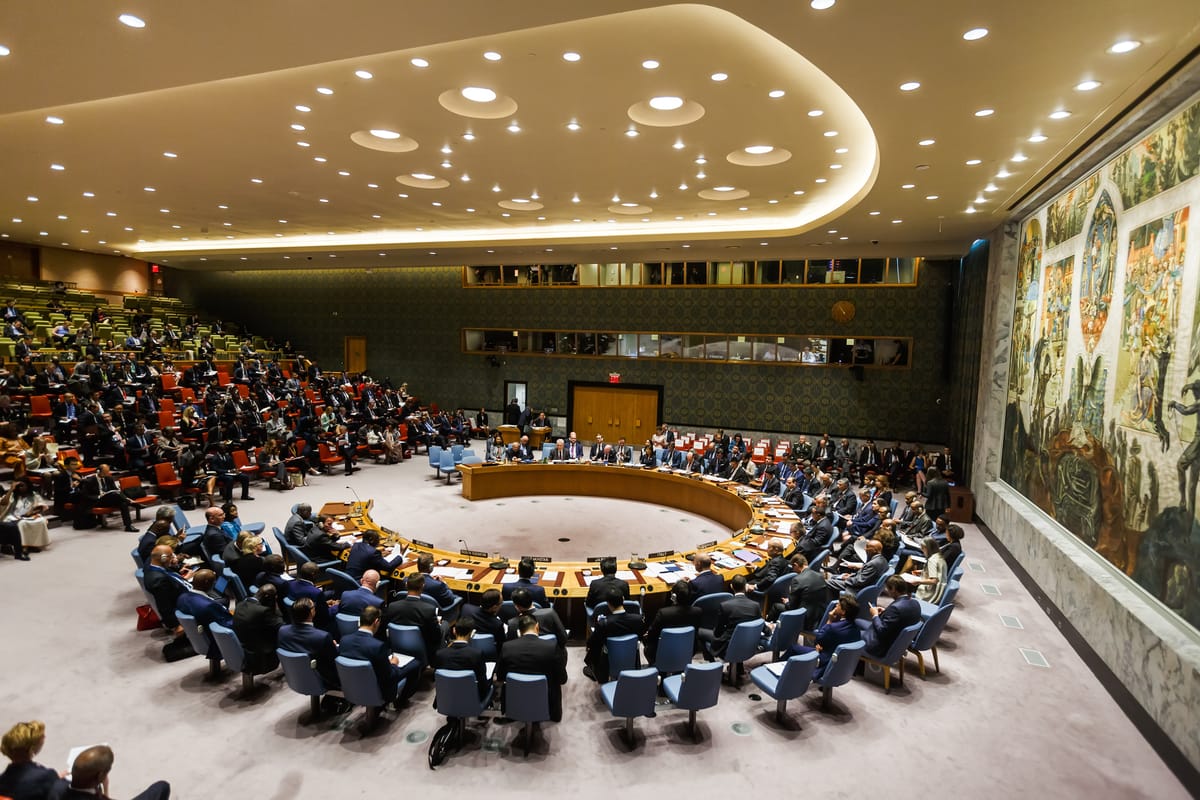
A proposed UN Security Council resolution would threaten Iran with sanctions or other measures if it does not halt attacks on ships in the Strait of Hormuz, stop imposing what the draft calls “illegal tolls,” and disclose the location of all mines in the waterway.
The draft resolution, co-sponsored by the United States and Gulf nations and obtained by The Associated Press, also demands that Iran immediately cooperate with UN efforts to establish a humanitarian corridor through the strait. The corridor would allow the passage of aid, fertilizer and other essential goods.
Iran has blocked the Strait of Hormuz since the start of the US-Israeli war with Iran on February 28 and has not reopened the waterway despite the ceasefire that began on April 8. The United States is also maintaining a blockade on Iranian ports.
The strait is one of the world’s most important shipping routes, normally carrying roughly 20 percent of global oil and gas supplies. Its closure has disrupted energy markets and increased pressure on governments seeking to prevent the ceasefire from collapsing.
The US this week began an operation to escort commercial vessels through the strait, but the effort quickly led to exchanges of fire with Iranian forces. The US sank several small Iranian boats, while Iran launched missiles and drones at Gulf states. The escalation raised fears of renewed fighting, though US Defense Secretary Pete Hegseth said Tuesday that the truce was “not over.”
The proposed resolution represents the latest attempt by Washington and its Gulf allies to use the Security Council to pressure Tehran over the strait. A previous resolution aimed at reopening the waterway was vetoed by China and Russia shortly before the US and Iran announced their ceasefire nearly a month ago.
US Ambassador Mike Waltz said he believes the narrower draft can win enough support in the 15-member council without drawing another veto from Iran’s allies.
The resolution was drafted under Chapter 7 of the UN Charter, meaning it could be enforced militarily. It threatens “effective measures that are commensurate with the gravity of the situation, including sanctions,” if Iran does not comply.
The draft also reaffirms the right of countries to defend their vessels from attacks and provocations, and orders other states not to help Iran close the strait or impose tolls.
At the same time, the text welcomes efforts to coordinate safe transit through Hormuz and encourages regional dialogue aimed at securing a more durable peace.