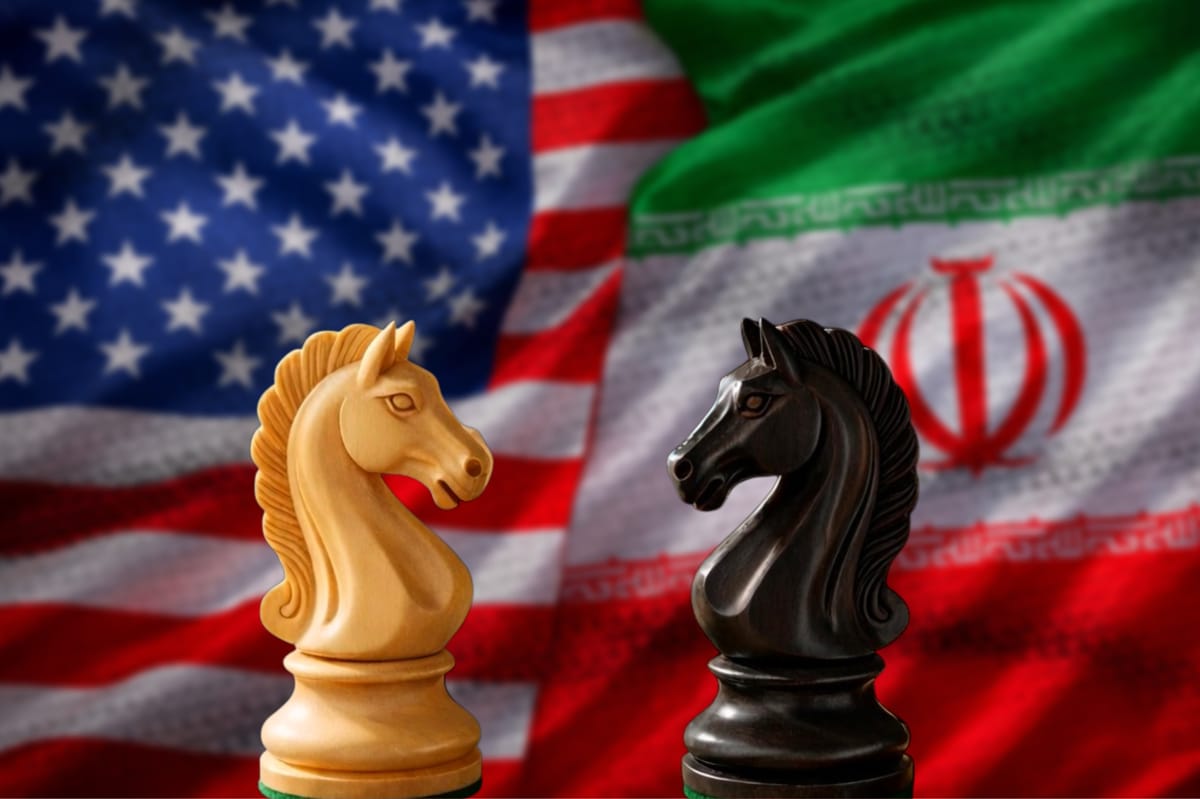
The United States has handed Iran a comprehensive nuclear framework that would trigger 30 days of detailed talks if accepted and officials on both sides say this is the closest the two countries have come to an agreement since the war began in February.
The White House believes it is getting close to an agreement on a one-page memorandum of understanding to end the war and set a framework for more detailed nuclear negotiations, according to two U.S. officials and two other sources briefed on the issue.
What Washington Is Demanding
The U.S. framework is sweeping and unyielding in its core demands. Steve Witkoff and Jared Kushner have told Iranian counterparts that Iran must destroy its three main nuclear sites, at Fordow, Natanz, and Isfahan, and hand over all remaining enriched uranium to the United States.
On enrichment, the gap between the two sides is stark. Iran proposed a 5-year moratorium on enrichment while the U.S. demanded 20 years. Three sources say the current negotiating range is at least 12 years, with one putting 15 as a likely landing spot. One idea being discussed, per the Wall Street Journal, is halting enrichment for 12 to 15 years before allowing Iran to enrich up to 3.67 percent purity, compared to the 60 percent Tehran currently holds in stockpile, with 90 percent required for a weapon.
The U.S. also wants to insert a provision whereby any Iranian violation on enrichment would automatically extend the moratorium period.
On inspections, Iran would agree to UN nuclear inspections under the framework, while the U.S. would gradually lift sanctions and release billions in frozen Iranian funds.
The Strait of Hormuz: The Economic Tripwire
The Strait of Hormuz has become perhaps the most urgent pressure point in the negotiations. Washington wants Tehran to give up its stockpile of more than 400 kilograms of highly enriched uranium, which the U.S. says could be used to make a bomb, but it is also under intense domestic pressure to break Iran's hold on the Strait of Hormuz, which has choked off roughly 20 percent of the world's oil and gas supplies and pushed up U.S. gasoline prices.
Under the proposed memorandum, Iran's restrictions on shipping through the Strait and the U.S. naval blockade would be gradually lifted during the 30-day negotiation window. If talks collapse, U.S. forces would be able to restore the blockade or resume military action.
Trump's Republican Party faces the risk of a voter backlash over higher prices ahead of midterm congressional elections in November, giving the administration a political clock as well as a military one.
Iran's Counteroffer and the Widening Gaps
Tehran has not been passive. Iran submitted a 14-point response to the U.S. proposal, with key demands including a resolution of all issues within 30 days rather than a two-month ceasefire, guarantees against future military aggression, the withdrawal of U.S. forces from Iran's periphery, an end to the naval blockade, the release of frozen assets, reparations, the lifting of sanctions, an end to fighting in Lebanon, and a new mechanism governing the Strait of Hormuz.
Iran also pushed back on the sequencing of nuclear talks. A senior Iranian official said Tehran envisions ending the war and resolving the shipping standoff first, while leaving talks on Iran's nuclear program for later, an approach that appears at odds with Washington's repeated demand that Iran accept stringent nuclear restrictions before the war can formally end.
Trump, for his part, has not hidden his impatience. He warned Iranian officials early Wednesday that "if they don't agree, the bombing starts, and it will be, sadly, at a much higher level and intensity than it was before."
A Fragile Diplomatic Moment
Secretary of State Marco Rubio framed the U.S. position bluntly. "They could have a civilian nuclear program if that's what they wanted, but they're not acting like that's what they wanted," Rubio told reporters at the White House. "They're acting like they want a military nuclear program. That's unacceptable."
The reported framework consists of a one-page, 14-point memorandum of understanding designed to trigger an immediate ceasefire and launch a 30-day negotiation window. Under these terms, Iran would reportedly agree to a short-term pause in nuclear enrichment, while the United States would initiate the removal of sanctions and the unfreezing of billions of dollars in Iranian assets.
Many of the terms laid out in the memo would be contingent on a final agreement being reached, leaving the possibility of renewed war or an extended period of uncertainty in which the hot war has stopped but nothing is truly resolved.
Talks are expected to be held in either Islamabad or Geneva. Iran is expected to deliver its response today.