US President Donald Trump said American forces will remain positioned in and around Iran until what he described as a “REAL AGREEMENT” is fully implemented, underscoring Washington’s intent to maintain military pressure alongside ongoing negotiations.
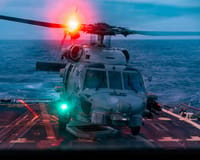
In a post on Truth Social, Trump stated that US ships, aircraft, and personnel, along with additional weapons and ammunition, would stay in place until Iran complies with key conditions set by the United States.
“All U.S. ships, aircraft, and military personnel… will remain in place… until such time as the REAL AGREEMENT reached is fully complied with,” he wrote.
The statement signals that, despite the current ceasefire and diplomatic efforts, the US is not scaling back its military posture in the region. Instead, it is using continued deployment as leverage to enforce compliance with its core demands, which Trump has defined as preventing Iran from obtaining nuclear weapons and ensuring the Strait of Hormuz remains open and secure.
Trump also warned that failure to meet those conditions could trigger renewed and intensified military action, indicating that US forces are effectively on standby.
“If for any reason it is not [complied with]… then the shooting starts,” he said.
The decision to keep forces in place reflects ongoing uncertainty around the negotiations. Conflicting versions of proposed agreements have emerged, with Iranian and US accounts differing on key issues, including nuclear policy and regional ceasefire terms.
By maintaining a large military presence, the administration appears to be signaling both deterrence and readiness, aiming to pressure Iran while preserving the option of rapid escalation if talks break down.
The posture suggests that even if a diplomatic framework is reached, implementation and enforcement will be closely tied to continued US military positioning in the region.