The United States military has announced that a naval blockade of Iran will take effect Monday at 10:00 a.m. Washington time, 5:00 p.m. Israel time, in a dramatic escalation that military experts warn carries significant and unpredictable consequences.
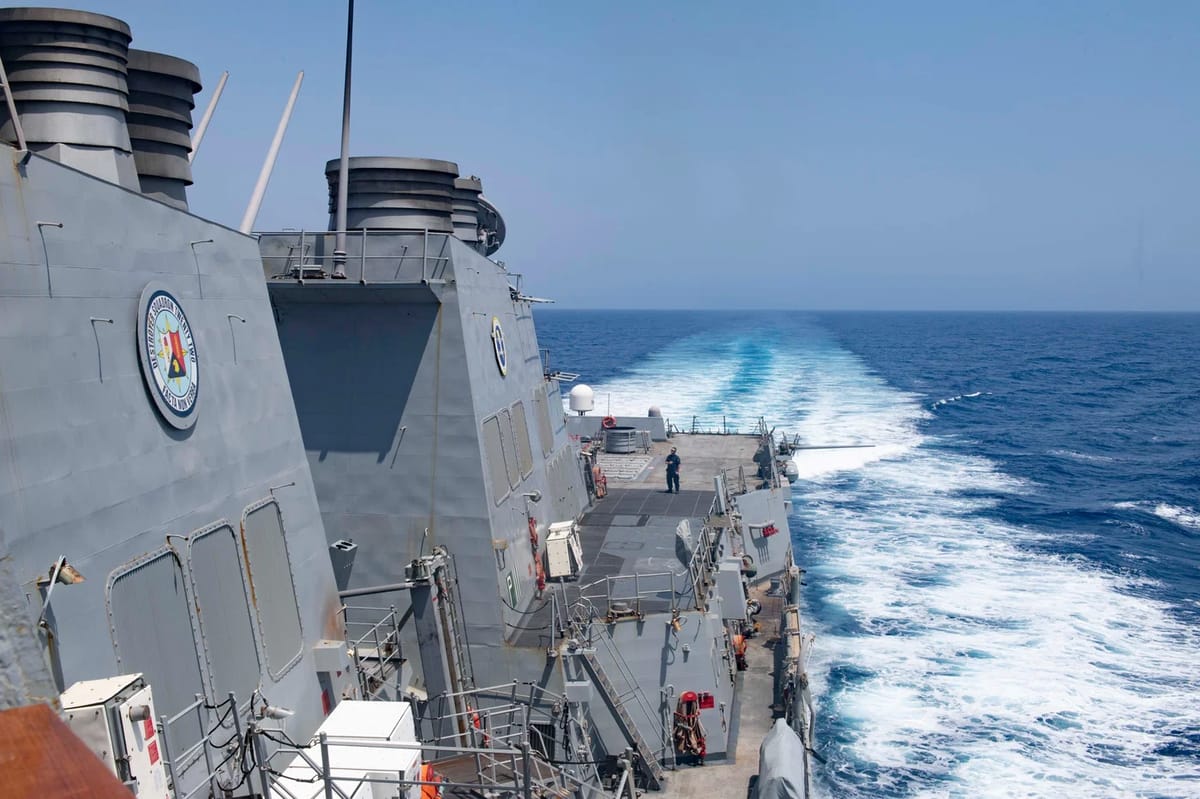
U.S. Central Command announced the blockade will cover all Iranian ports in the Arabian Gulf and Gulf of Oman, as well as the country's entire coastline, applying to any vessel traveling to or from Iran. Ships with no intention of reaching Iranian ports will be granted free passage, the military said.
President Donald Trump had declared that the U.S. Navy would "begin the process of blocking every ship trying to enter or exit the Strait of Hormuz," adding that vessels that have paid transit fees to Iran would also be intercepted. "No one who pays an illegal toll will be guaranteed safe passage on the open sea," Trump warned.
Iran's Revolutionary Guards responded swiftly, stating that any approach by military vessels to the strait would be considered a violation of the ceasefire and would be met with a "decisive response." Trump sharpened his own language in reply, warning that "any Iranian who fires on us, or on peaceful vessels, will be blown to hell," and raising the possibility of resuming airstrikes inside Iran, with missile production facilities named as potential targets.
Military experts told Reuters that imposing a blockade is effectively an act of war requiring a large and sustained deployment of warships. Dana Stroul, a former senior Pentagon official, said Trump wants a quick resolution but warned that "this mission is difficult to execute alone and will likely not be sustainable over the medium to long term," adding that the crisis ultimately requires a diplomatic solution backed by international political will.
Retired Admiral Gary Roughead, former Chief of Naval Operations, predicted Iran would respond with force. "I honestly believe that if we start doing this, Iran will have some kind of response," he said, warning of potential strikes on Gulf state infrastructure hosting American forces, as well as a possible resumption of missile fire toward Israel.
The economic impact is already being felt. Oil prices have surged roughly 50% since the conflict began in late February. Trump acknowledged fuel prices could remain elevated through November's midterm elections, but said his ultimate goal is to break Iran's leverage over the Strait of Hormuz, through which approximately 20% of global oil consumption passes.
The Israeli security cabinet convened last night (Sunday) at the Prime Minister's residence to discuss the developments.