The Trump administration has announced a sweeping withdrawal from dozens of international organizations, accelerating a broader retreat from multilateral cooperation and signaling a sharp redefinition of how Washington engages with global institutions.
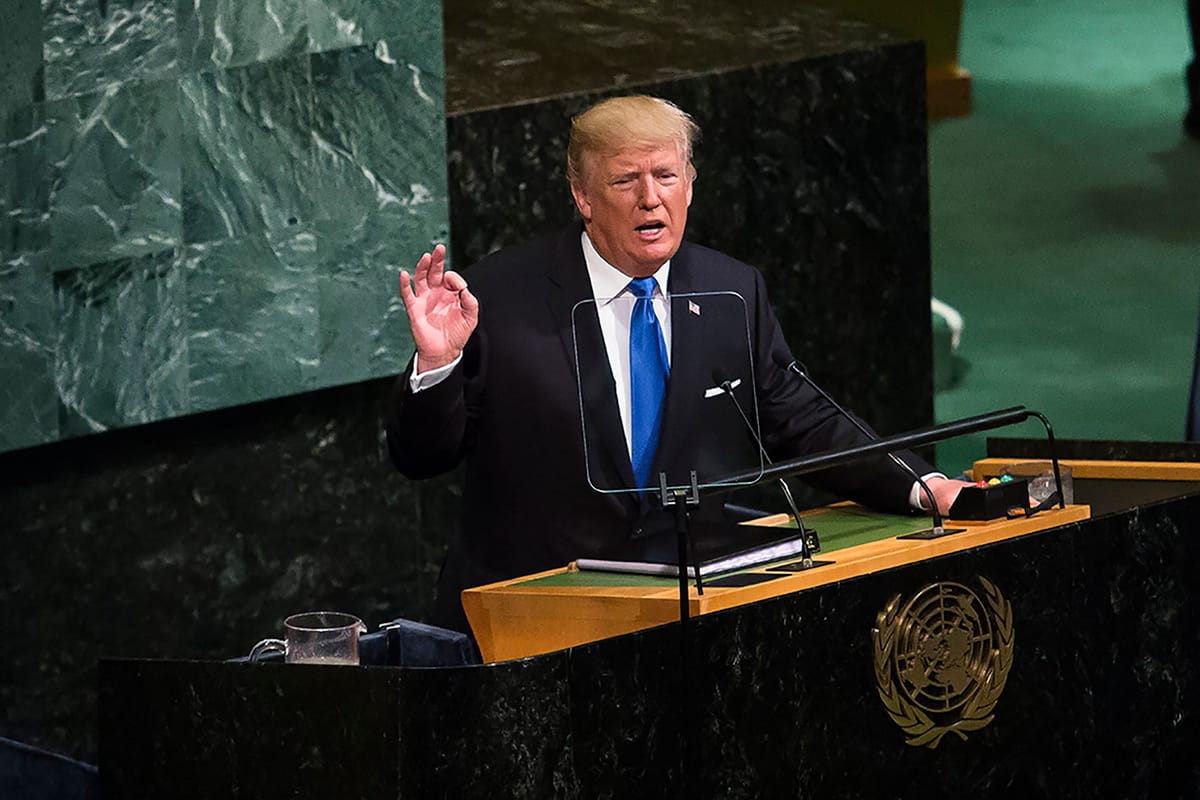
On Wednesday, President Donald Trump signed an executive order directing the United States to suspend participation in and funding for 66 international bodies following a State Department review of U.S. involvement in global organizations. According to the White House, the review concluded that continued engagement with many of these institutions no longer serves American interests.
The order applies to 31 United Nations-affiliated entities and 35 non-U.N. organizations. Among those targeted are agencies and frameworks dealing with climate policy, population and reproductive health, migration, labor standards and democratic governance. Non-U.N. groups affected include the Partnership for Atlantic Cooperation, the International Institute for Democracy and Electoral Assistance, and the Global Counterterrorism Forum.
Secretary of State Marco Rubio said the administration determined the organizations were “redundant in their scope, mismanaged, unnecessary, wasteful, poorly run, captured by the interests of actors advancing their own agendas contrary to our own, or a threat to our nation’s sovereignty, freedoms, and general prosperity.” He added that the United States would no longer commit taxpayer resources to institutions that conflict with the administration’s “America First” agenda.
The move builds on earlier decisions by the Trump administration to suspend or end support for bodies such as the World Health Organization, the U.N. Human Rights Council, UNESCO, and the U.N. agency for Palestinian refugees, UNRWA. Rather than withdrawing wholesale from the United Nations, officials have adopted a selective approach, choosing which agencies to fund based on alignment with U.S. priorities.
One of the most consequential withdrawals is from the UN Framework Convention on Climate Change, the 1992 treaty that underpins international climate negotiations, including the Paris Agreement. Trump withdrew the U.S. from the Paris accord during his first term and has repeatedly dismissed climate change as a hoax.
Former White House National Climate Adviser Gina McCarthy criticized the decision, calling it shortsighted and damaging to U.S. influence. Climate scientists warned that U.S. disengagement could undermine global efforts to reduce greenhouse gas emissions, noting that meaningful progress is difficult without cooperation from one of the world’s largest economies and emitters.
The administration is also ending U.S. participation in the UN Population Fund, an agency long opposed by Republican administrations. Trump cut funding to the agency during his first term, citing allegations of coercive abortion practices, claims that were later rejected by a State Department review under President Joe Biden.
Despite the withdrawals, administration officials argue they are not abandoning international engagement entirely. They say the U.S. will continue to invest in standard-setting bodies where strategic competition with China is most pronounced, such as the International Telecommunications Union, the International Maritime Organization and the International Labor Organization.
Critics, however, see the decision as a fundamental break with decades of bipartisan U.S. policy that viewed multilateral institutions as tools to project American influence and stabilize the global order. Analysts warn the move will force further cuts across U.N. programs and could reduce Washington’s ability to shape international rules, even as global crises multiply.
The White House said reviews of additional international organizations are ongoing, suggesting that further withdrawals could follow.