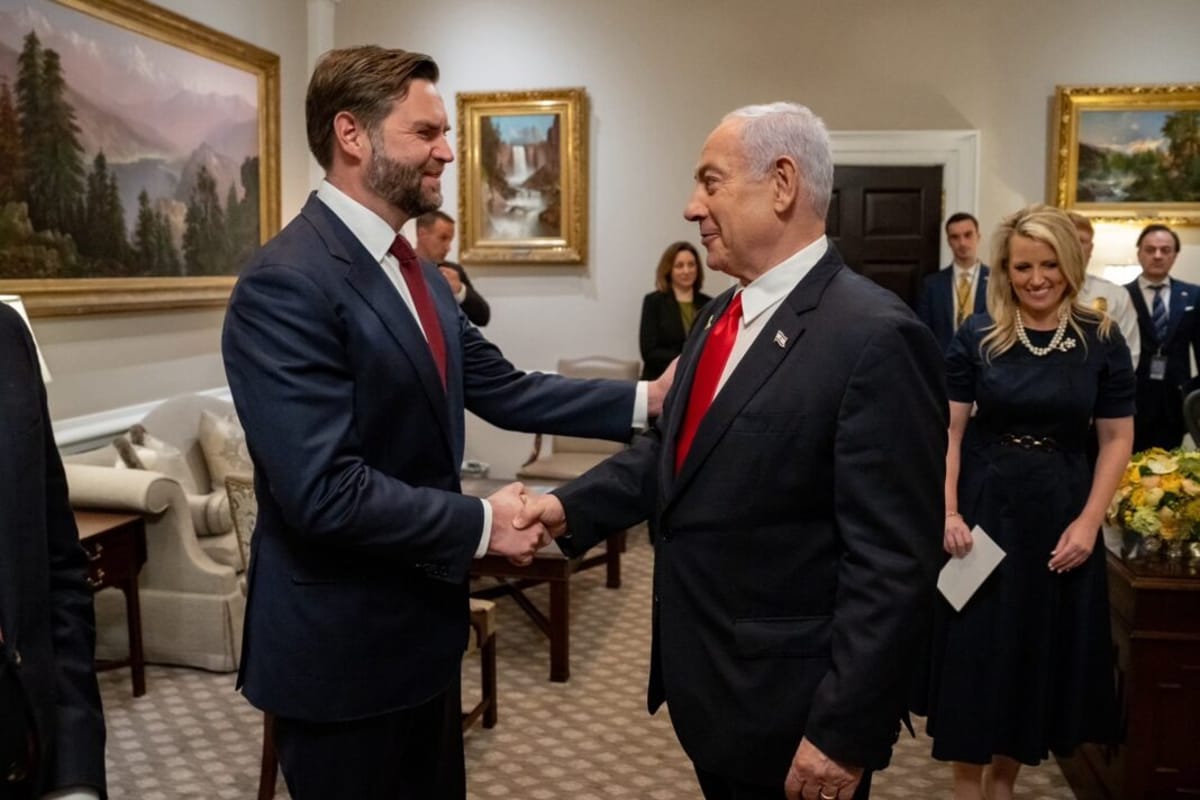
In a significant escalation of diplomatic hierarchy, President Donald Trump has reportedly decided to replace his primary envoys with Vice President J.D. Vance to lead the upcoming negotiations with Iran. While Steve Witkoff and Jared Kushner have managed the initial channels, the administration has concluded that a higher level of authority is required to move the process from simple messaging to hard decision making. The move to send the Vice President to Islamabad, Pakistan, signals to the Iranian leadership that the United States is viewing these talks as a definitive path toward ending the war, rather than a mere exploratory exercise.
The Rise of the Vice President
The choice of J.D. Vance as the lead negotiator represents a strategic shift in the American approach. Vance occupies a unique position within the administration, he is a fierce loyalist who understands the President's political language, yet he is also one of the most prominent voices within the conservative movement advocating against prolonged military interventions. This combination of loyalty and restraint makes him the ideal "broker" for a deal that requires both a display of American strength and a genuine desire for an exit ramp. By placing the Vice President in the room, Trump is providing a form of political insurance, ensuring that any agreement reached is handled by someone who shares his vision for a reshaped Middle East.
Despite the promotion of Vance to lead the delegation, the obstacles to a deal remain immense. Senior officials in both Washington and Jerusalem remain deeply skeptical that the Iranian regime will agree to the core American demands, specifically the total dismantling of their nuclear and ballistic missile components. For Tehran, these weapons are the very tools that have allowed them to resist military pressure thus far. Furthermore, the influence of the Islamic Revolutionary Guard Corps (IRGC) within the Iranian decision making process has only hardened since the war began. Reports from Tehran suggest that their demands have actually increased, now including not just a ceasefire, but also massive financial reparations, a permanent guarantee against future strikes, and continued control over the Strait of Hormuz.
The skepticism in Israel is particularly acute, as officials there view the Iranian "minimum" for survival as fundamentally incompatible with the security requirements of the West. There is a deep seated lack of trust, with Tehran remembering that even during previous diplomatic windows, operations in Lebanon and against terrorists in Gaza continued unabated. For Vance, the challenge will be to bridge this massive gap in trust and objectives. His presence in Islamabad is intended to prove to the Iranians that this channel has real weight, but in a war where the rhetoric of "total victory" clashes with the reality of a cornered regime, the identity of the man in the room may be the only thing keeping the possibility of peace alive.