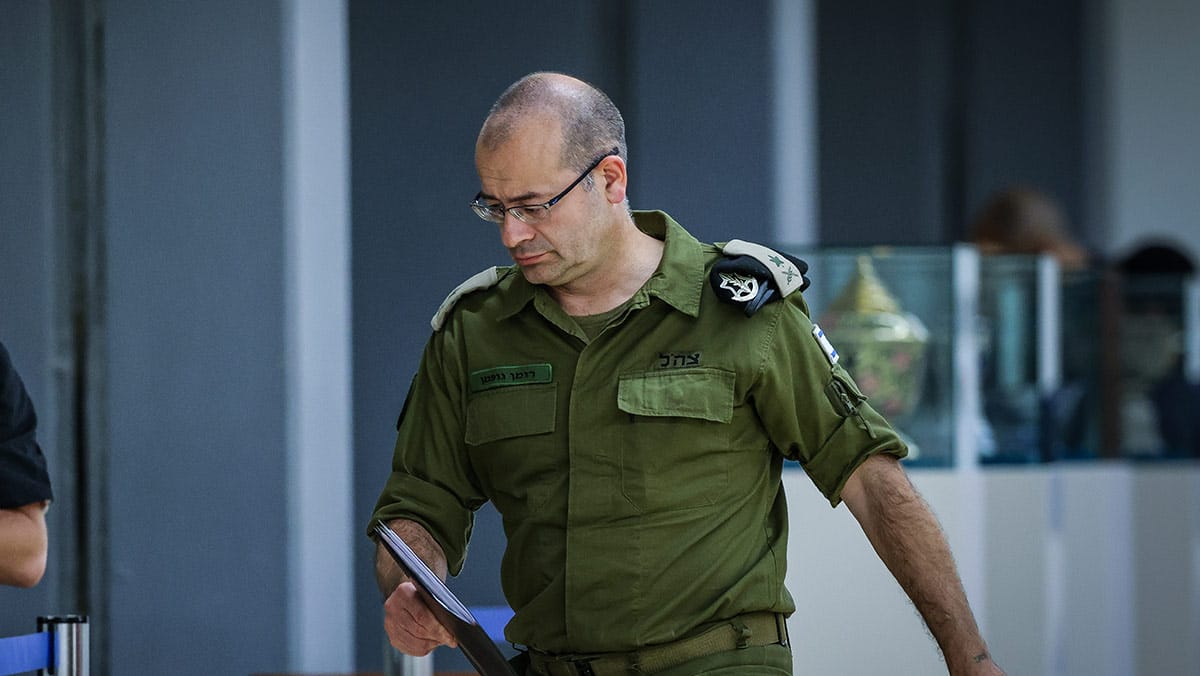
The potential appointment of Roman Gofman to the directorship of the Mossad has been thrown into turmoil following a harrowing public testimony by a former intelligence asset.
Uri Elmakayis has come forward with grave allegations regarding his past service, claiming that a senior security official is personally responsible for a profound operational and moral failure that resulted in his torture and wrongful imprisonment when he was a 17-year-old minor serving in Israeli intelligence.
Elmakayis warns that Gofman constitutes a genuine threat to national security and is fundamentally unfit to lead Israel’s clandestine services.
According to the testimony provided by Elmakayis, the events in question began when he was recruited at the age of seventeen for a series of high-stakes intelligence operations initiated by Gofman.
The young operative describes being deployed for complex missions that included intelligence gathering, the handling of agents within enemy states, and influence operations targeting terror organizations. These missions were conducted under significant risk to his life, allegedly under the direct orders and oversight of Gofman.
However, the core of the accusation centers on the aftermath of these operations. Elmakayis asserts that when the situation deteriorated, Gofman engaged in a complete disavowal of his agent. The former asset claims that Gofman denied any connection to the operation and shirked all responsibility for the young man he had sent into the field.
This alleged abandonment had catastrophic consequences for Elmakayis, who reports that he was subsequently incarcerated under false charges.
During his detention, which lasted over eighteen months, he describes enduring severe physical and mental torture alongside intensive interrogations, all while the handler who sent him there refused to intervene.
Elmakayis argues that this incident is not merely a personal tragedy but a glaring indicator of Gofman's lack of command integrity.
He describes a commander who knowingly destroyed the life of a teenager acting for the security of the state and then turned his back when that loyalty was tested. In his statement, Elmakayis poses a chilling question to the decision-makers in Jerusalem regarding the safety of current Mossad personnel. He asks who will ensure the safety of agents in future complications if the man at the top has a history of abandoning his subordinates to their fate.
The testimony concludes with an urgent plea to block the appointment, labeling Gofman as a man who is unworthy of serving as a commander or an officer, let alone as the head of the Mossad. Elmakayis insists that the appointment of a leader who evades responsibility for human life would be a crossing of a red line and a tangible danger to the security of the State of Israel.