In a significant tightening of vetting procedures for foreign labor, the US State Department announced on Tuesday that all applicants for H-1B specialty occupation visas, along with their dependents, will be subject to a mandatory review of their online presence starting December 15th.
Under the new directive, foreign professionals seeking to work in the United States must make their social media profiles public to facilitate government screening. The policy brings H-1B applicants in line with student visa holders and exchange visitors, who are already subject to similar scrutiny. The State Department framed the decision as a critical measure to protect American citizens and national interests.
“Every visa adjudication is a national security decision,” the department stated in its official announcement. “A U.S. visa is a privilege, not a right.”
The administration emphasized that the goal is to ensure that “all applicants credibly establish their eligibility for the visa sought.”
While the department did not publicly release the specific algorithms or criteria that will be used to evaluate an applicant's online history, the move signals a broader shift toward more rigorous background checks for those entering the U.S. workforce.
The social media vetting requirement is the latest in a series of measures by the Trump administration aimed at overhauling the H-1B program. The visa category, designed for roles requiring specialized knowledge and a bachelor’s degree, has long been a point of contention. Critics argue it is often used to undercut American wages, while tech and engineering sectors argue it is vital for innovation.
On September 19th, President Trump issued a proclamation introducing a one-time $100,000 fee for H-1B visa applications.
The administration described the fee as a necessary deterrent to curb the abuse of the program by companies seeking to replace American workers with "lower-paid, lower-skilled labor."
Furthermore, on September 24th, the Department of Homeland Security (DHS) proposed replacing the current random lottery system for H-1B selection with a weighted system. This new approach would prioritize higher-skilled and higher-paid foreign workers when demand exceeds the statutory cap of 85,000 visas. The DHS stated this change would “better serve Congressional intent” by ensuring the program attracts top-tier talent rather than entry-level labor.
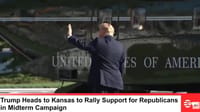
Despite the tougher restrictions, President Trump has acknowledged the economic necessity of foreign labor in specific high-skill sectors. Speaking to Fox News, the President noted the administration's goal is to balance strict immigration controls with the needs of industries facing labor shortages.
Trump cited a recent enforcement operation at a South Korean-owned battery plant in Georgia to illustrate the complexity of the issue.
“In Georgia, they raided because they wanted illegal immigrants out,” Trump said. “They had people from South Korea that make batteries all their lives. You know, making batteries [is] very complicated. It’s not an easy thing, and very dangerous. A lot of explosions, a lot of problems.”
The anecdote highlights the administration's nuanced stance: while enforcement against illegal immigration and abuse of legal avenues remains a priority, there is a recognized need for "the theoretical and practical application of a body of specialized knowledge" that the H-1B visa was originally designed to facilitate.