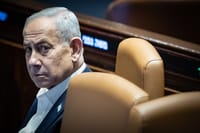
In Western political debate, particularly among leaders like Donald Trump and Benjamin Netanyahu, there is a common assumption: that ordinary Iranians are desperate to overthrow the Islamic Republic and replace it with a pro-Western democracy. But the reality inside Iran is far more complicated.
Public anger toward the regime is real. It erupted globally after the death of Mahsa Amini in 2022, a 22-year-old Iranian Kurdish woman who died after being detained by Iran’s morality police for allegedly wearing her hijab improperly. Her death sparked nationwide protests under the slogan “Woman, Life, Freedom,” exposing deep frustration with repression, economic hardship and political control.
But anger does not automatically translate into unanimous support for regime change. Iranian society remains deeply divided. The Islamic Republic still retains loyal constituencies among religious conservatives, sections of rural Iran and millions whose livelihoods depend on the state.
Institutions such as the Islamic Revolutionary Guard Corps are not simply security forces; they are vast political and economic networks that bind large segments of society to the regime. For many supporters, the Islamic Republic represents national sovereignty and resistance to foreign pressure.
As one pro-government demonstrator told Iranian state media during counter-protests in Tehran: “The Islamic Republic protects our religion and our independence. We will not allow enemies to divide our country.” Another supporter declared: “We support our leadership because Iran must stand against foreign interference.”
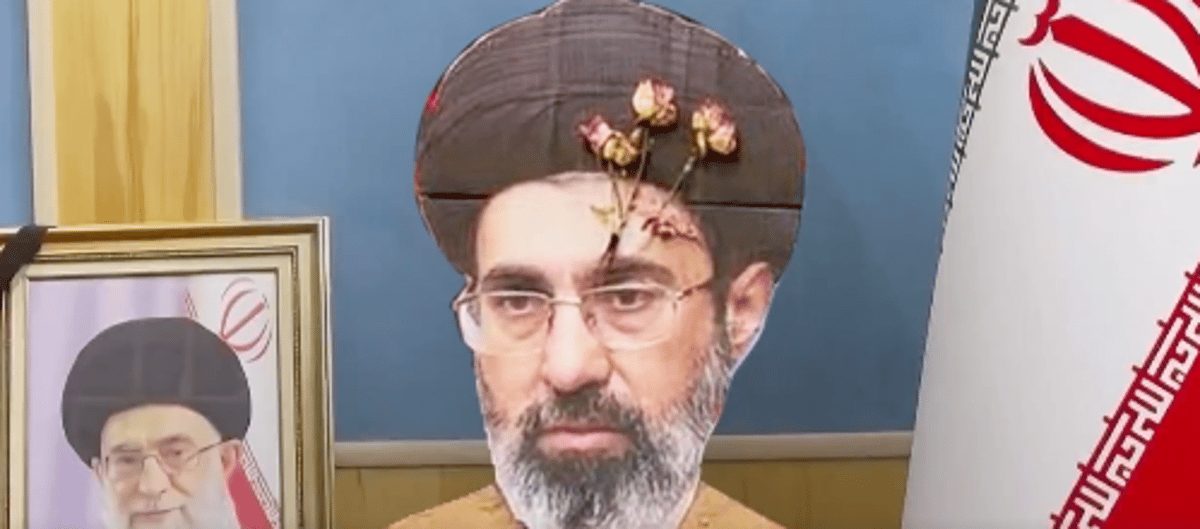
Recent developments reinforce how unlikely democratic reform from within truly is. The elevation of Mojtaba Khamenei, the son of Ali Khamenei, signals continuity of hardline rule rather than reform. The consolidation of power within the same ideological and security establishment that has governed since the 1979 revolution underscores a regime determined to preserve itself.
Even among those who oppose the current system, there is little agreement about what should replace it. Reza Pahlavi, the son of Iran’s last monarch Mohammad Reza Pahlavi, remains a prominent exile figure, but memories of his father’s rule remain deeply contested. The Shah’s regime, enforced through the feared SAVAK secret police, was itself marked by political repression and documented human-rights abuses.
For leaders like Trump and Netanyahu, this creates a stark strategic reality. Weakening the regime through massive military bombardment and offensive warfare may achieve their stated goals, but the collapse of the Islamic Republic does not automatically guarantee the emergence of a stable democratic alternative.
For those of us in the Australian Jewish community, the stakes are not merely a matter of foreign policy debate. In Australia alone, 1,654 antisemitic incidents were recorded between October 2024 and September 2025, down from 2,062 the previous year, but still dramatically higher than the pre-2023 annual average of around 342 incidents. In an environment where many feel the Albanese Government has failed to adequately confront rising antisemitism, global tensions surrounding Iran and Israel inevitably spill into our own society.
The lesson is clear: the Iranian regime will not voluntarily transition into a moderate democracy. If change is to occur, it will likely require sustained external pressure. For leaders such as Trump and Netanyahu, confronting Tehran is not simply strategic, it is necessary to counter a regime whose rhetoric and actions threaten Israel and embolden hostility toward Jews globally.
As Trump himself declared in defence of the Jewish people and the State of Israel: “The Jewish people deserve safety, security and a future free from hatred and the United States will always stand with Israel and with the Jewish community around the world.”