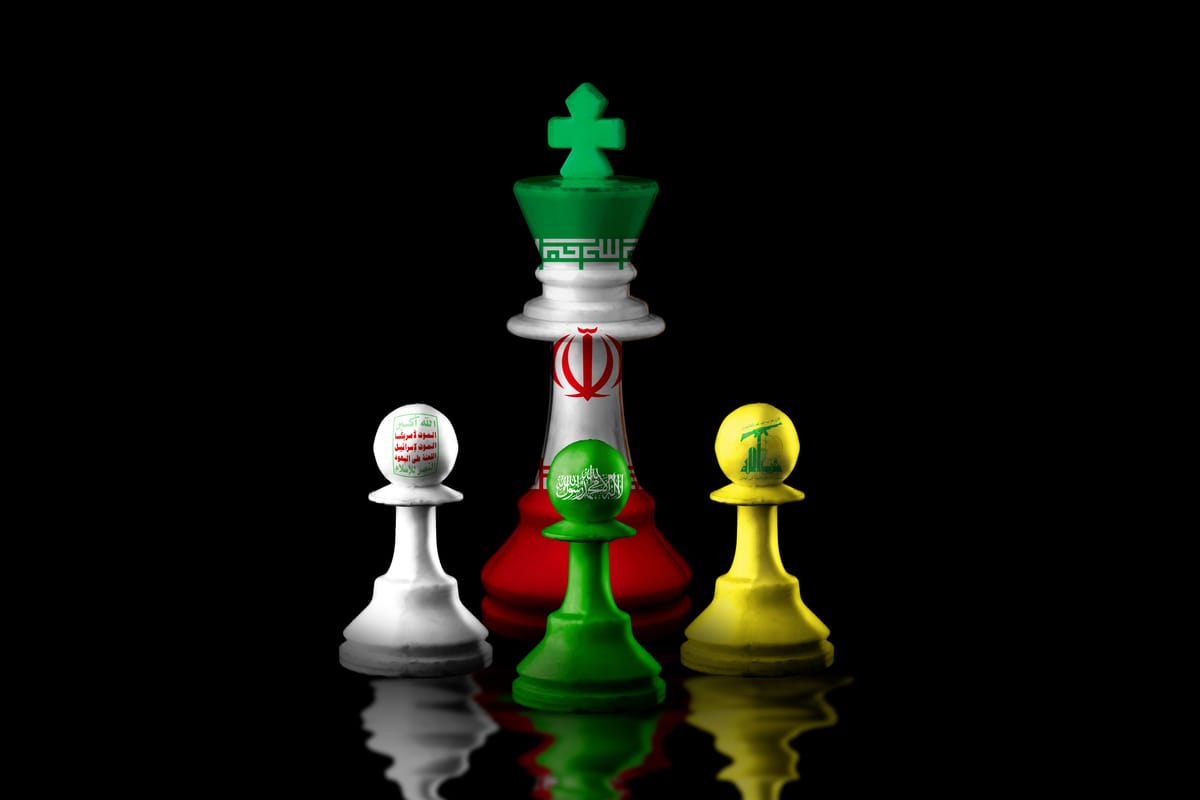
As the Trump administration races toward a potential nuclear deal with Tehran, a leading Israeli strategist is sounding the alarm: Washington may be about to declare victory on the wrong battlefield.
Maariv reports that Iran's leadership could bend on its nuclear program in negotiations with the United States, according to Prof. Amazia Baram, an expert on strategy and the Middle East at the University of Haifa. But Tehran will draw an absolute red line on what it views as its true lifeline, the sprawling network of proxy forces across the region.
"Trump needs to show a written, signed achievement that can be presented as a more significant victory than the agreement President Obama achieved in 2015," Baram told Maariv. The problem? Iran may give him exactly that, while quietly preserving the arsenal of threats that most endanger Israel.
The Deal Israel Fears
Baram's assessment presents a nightmare scenario for Jerusalem: a headline-grabbing nuclear agreement that leaves Iran's Revolutionary Guards, Hezbollah, the Houthis, and Iraqi militias untouched and fully armed.
"It's very possible the Americans will go for a dramatic nuclear agreement but in practice give up on the tougher demands regarding missiles, proxies and the Iranian opposition," Baram warned. "From their perspective, an achievement in the nuclear field may be enough, but from Israel's perspective it means the other threats will remain."
The regime's calculus, he explained, is coldly strategic. Nuclear concessions damage Tehran's prestige but don't immediately threaten the core of its power. The proxy network? That's existential.
"Iran cannot under any circumstances agree to meaningful concessions on limiting missile range or stopping support for proxy organizations, Hezbollah, the Houthis, Iraqi militias, or even Hamas," Baram said. "These are fundamental components of the concept of spreading the revolution and also the concept of defending Iran, and giving them up could undermine the regime's stability."
President Masoud Pezeshkian, whose election was engineered by Supreme Leader Ali Khamenei, could help sell nuclear compromises to the Iranian public. But the Revolutionary Guards and senior clerics are already pushing back hard.
The 50-50 Gamble
Current talks through an intermediary in Oman are moving slowly. Baram placed the odds of a limited U.S. military strike at slightly above 50 percent if Iran doesn't accelerate negotiations with real concessions.
"The American military threat is part of the pressure mechanism designed to bring the Iranians to concessions," he said. "But if there are none, the threat will become a strike."
Even if a nuclear deal succeeds, Baram said, Israel faces years of defending against missile barrages and proxy attacks. Prime Minister Benjamin Netanyahu should be negotiating compensation from President Trump now—expanded missile defense cooperation, deeper intelligence sharing, more military aid.
"The existential threat will decrease significantly, but it's possible the missile threat and proxy threat will remain," he said.
The Lebanon Opening No One's Taking
Meanwhile, an unprecedented opportunity is slipping away in Lebanon, according to Baram. For the first time, more than two-thirds of Lebanon's parliament opposes Hezbollah's armed status. But neither Israel nor the West is pushing hard enough to exploit the political opening.
Baram proposed a pressure campaign: force Lebanon's parliament to pass a law requiring all organizations except the army and police to disarm. When Hezbollah refuses, declare them a rogue organization.
"This would be a very hard blow to their claim that they are Lebanese patriots and need weapons to defend Lebanon," he said. Additional steps could include cutting Hezbollah's illegal banks off from the central bank and shutting down their communications network.
"Since the war, a majority of more than two-thirds has formed in the Lebanese parliament against Hezbollah," Baram said. "Political processes in Lebanon could be almost as significant as military activity."
The Bigger Threat Coming
But Baram's most striking warning concerns a threat most Israelis aren't yet thinking about: Turkey.
"If Iran is dismantled from its nuclear potential, in the long term this will be more dangerous than Iran," he said flatly. Turkey is militarily stronger than Iran, anchored in NATO, connected to Washington and hungry for regional dominance.
Ankara has been quietly building what Baram calls "networks of influence" across the Middle East. Turkey already wields deep influence in Syria and is expanding in Iraq and Lebanon. It's working through the Muslim Brotherhood to gain leverage in Egypt and Jordan. And it's building bridges with Qatar and Saudi Arabia that could create a powerful new regional bloc.
"This is not military conquest, but creating political, economic and ideological networks of influence that create long-term dependence," Baram said.
The danger isn't immediate. But looking a decade ahead, a Turkish-led regional bloc could fundamentally reshape the Middle East balance of power and Israel could find itself without the luxury of American attention.
"Regional processes don't happen in one day but are built gradually," Baram said. "And when you understand their strength, it's often very difficult to stop them."
His message to Israeli planners: Iran and its proxies are today's crisis. But the next crisis is already taking shape and no one's watching.
Maariv contributed to this article.