Why is a two-state solution treated as the only legitimate option for the State of Israel? Why is it presented as the sole moral position in diplomatic and political discourse?
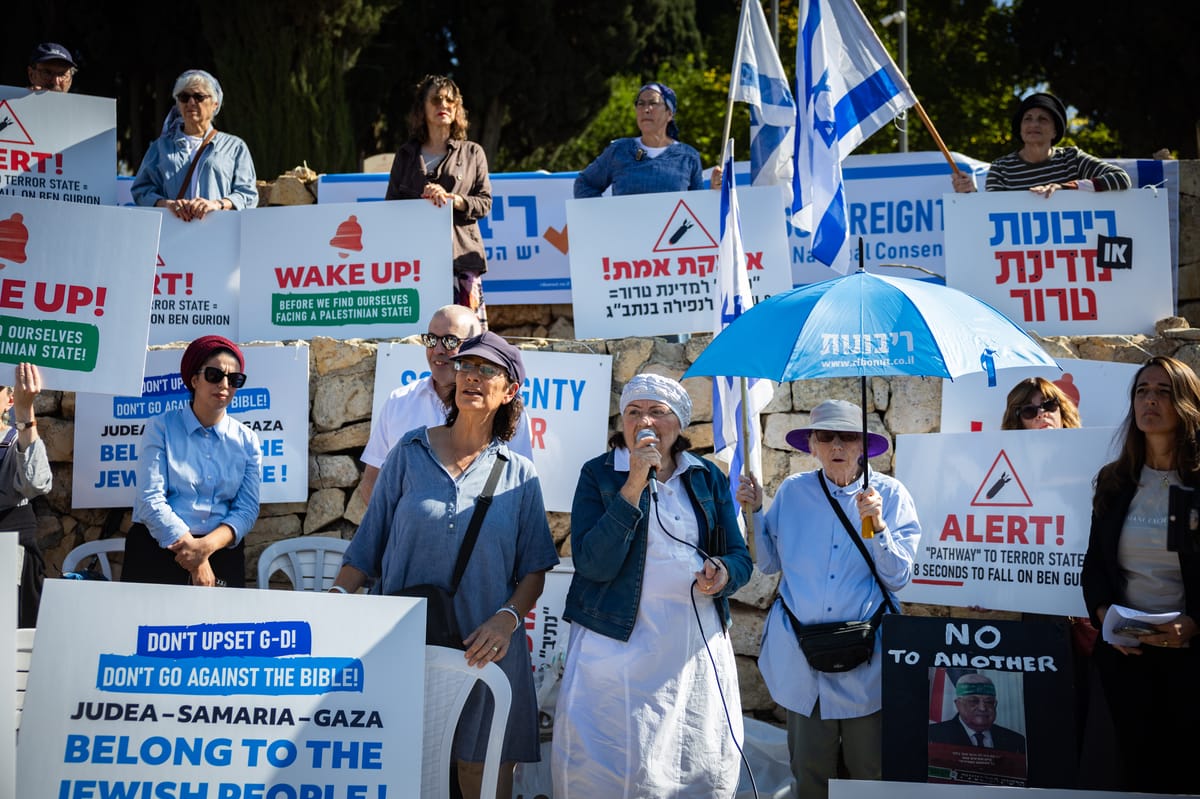
There are many Australian Jews (myself included) who fervently believe that we possess an inherent, biblical right to sovereignty across what many Jews call Judea and Samaria. This represents a vision of Greater Israel explicitly rooted in the Old Testament. To be clear, this position rejects the creation of a Palestinian state in the heartland of ancient Jewish civilisation.
Geographically, the West Bank lies west of the Jordan River and east of Israel’s pre-1967 border. Israel captured it from Jordan during the 1967 Six-Day War. The area holds deep religious and historical meaning for many Jews both in Israel and around the world. Judea was the heartland of the Kingdom of Judah, centred on Jerusalem, where “David captured the stronghold of Zion” (Divrei HaYamim Alef 11:5), and Tehillim declares, “For the Lord has chosen Zion.” To the north, Samaria became the capital of the Kingdom of Israel under King Omri (Melachim Alef 16:24). For many Jews, these passages ground modern political claims in biblical continuity.
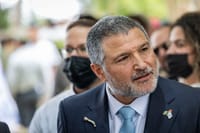
Bezalel Smotrich, leader of the Religious Zionist Party and finance minister in Benjamin Netanyahu’s coalition, has become one of the most influential voices shaping Israeli policy toward this territory. In a global climate where a two-state outcome is treated as inevitable, often repeated by leaders such as Anthony Albanese, Smotrich offers an unapologetic alternative.
His argument is theological and explicit. Bereshis records the covenant: “To your descendants I give this land” (Bereshis 15:18), describing it as “an everlasting possession” (Bereshis 17:8). Smotrich states plainly, “My life’s mission is to thwart the establishment of a Palestinian state.” In 2024 he declared, “We will apply sovereignty over the West Bank, first on the ground and then through legislation and formal recognition.” Visiting settlements, he described Judea and Samaria as “the cradle of our homeland… We are here to stay,” and refers to Jerusalem as the “eternal and indivisible capital of the Jewish people.”
Yet this position is not grounded solely in scripture. It is reinforced by security reality. The October 7, 2023 Hamas massacre profoundly altered Israeli public consciousness, forcing many Jews to question their commitment to “giving up land for peace”. As reported by Le Monde, Rabbi Yosef Artziel of Kedumim described that day as the dawn of a “new age,” calling it a “revolutionary moment.” He argued that nations grow through hardship, noting that it took the trauma of the 1973 Yom Kippur War for Israel to begin reclaiming land in Judea and Samaria. In this reading, October 7 was not only an atrocity, it was a turning point. For many passionate advocates of Religious Zionism like myself, we passed the point of no return on that fateful day.
Repeated waves of terrorism, failed negotiations, and the rise of militant Islamist movements have eroded faith in the promise of “two states living side by side in peace.” Many Jews argue that without a credible and stable peace partner, creating a Palestinian state in the strategic highlands overlooking Israel’s population centres represents risk, not reconciliation.
In Australia, there is a growing sense, often expressed quietly, that advocating full Jewish sovereignty invites immediate moral condemnation. Many feel that supporting Israel within what they see as its rightful borders (with Jerusalem as the eternal Jewish capital) results in being branded racist or extremist. Yet after centuries of persecution and dispossession, supporters argue that the Jewish state’s primary obligation is survival and security, not compliance with prevailing political fashion.
Tamar Adelstein, Coordinator of Crown Heights Women for the Safety and Integrity of Israel, captures this clarity succinctly. She notes that rather than penning endless justifications, the Lubavitcher Rebbe, Menachem Mendel Schneerson, advised simply quoting Rashi’s opening commentary on Parshas B’reishis: “G-d created the world. He gave Israel to the Nations and then took it from them and gave it to the Jewish People as an eternal inheritance.” For believers, this is not symbolic rhetoric, it is a statement of enduring legitimacy and religious truth.
In this context, growing support for Smotrich reflects a synthesis of biblical covenant, historical narrative, security calculation, and skepticism about diplomatic optimism. For Smotrich’s supporters like myself, sovereignty over Judea and Samaria should be proudly framed not as expansion, but as restoration, and as strategic necessity. We should be proud of our belief in a Greater Israel and full Jewish sovereignty, not ashamed or apologetic for claiming what is rightfully ours.