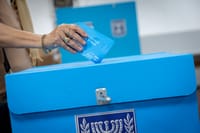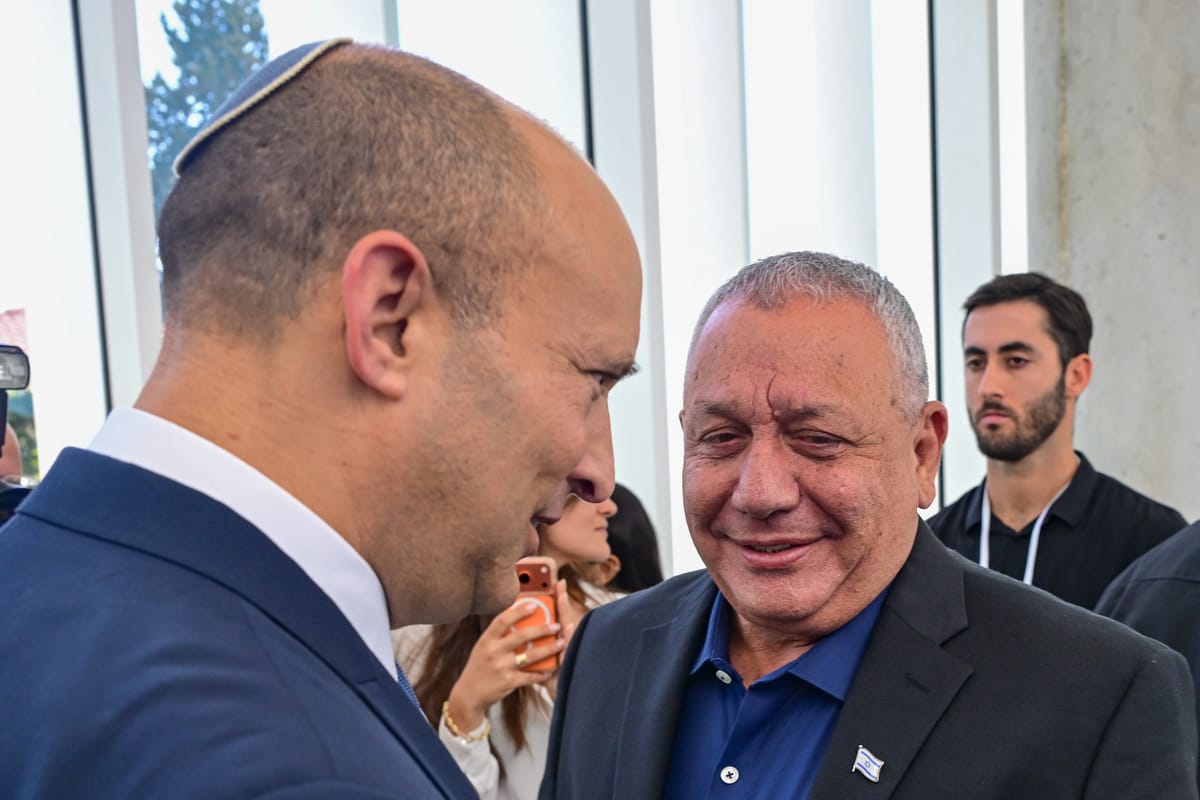
The emerging election results put a simple test before the opposition: decide who leads it and what it plans to do with the mandate the public has given it. After months of promising to replace the government, the time has come to stop speaking in slogans and start making decisions. No more declarations of victory, no more score-settling with Netanyahu, and no more waiting for reality to sort itself out.
If Gadi Eisenkot, Yair Lapid, Naftali Bennett and Avigdor Liberman lead this bloc, then we wish them success. Now is the time for them to prove they can see beyond narrow party calculations, show national responsibility and seriously consider a real unity government with Likud and Netanyahu, alongside Smotrich's Religious Zionism. That would not be a government born of political maneuvering, but one built on clear understandings on security, the economy, military service and governance, able to face the challenges ahead.
A unity government is not a surrender of principles. It is a test of the ability to tell the essential from the secondary. Leadership is measured not only by the willingness to fight for every position, but also by knowing when the national interest demands compromise. Anyone who wants to lead the country must be able to make decisions even when some of his own supporters dislike them.
This is exactly where the real question arises. Do Eisenkot, Bennett, Lapid and Liberman actually set the direction, or do they need approval from the bloc's radical voices? If Yair Golan and the Kaplan Street protesters are the ones drawing the lines, the public deserves to be told. You cannot appeal to the Israeli center in the name of statesmanship while being dragged along by those who see every compromise as surrender and every attempt at understanding as betrayal.
There is also a basic political reality the opposition cannot ignore. If Netanyahu remains at the head of a transitional government, he may find himself in a comfortable position: free of coalition commitments and of the need to answer every demand from his partners. While the opposition argues over its identity and the limits of compromise, he may gain time and wide freedom of action. That outcome is not inevitable, but the opposition's leaders must take it into account.
The question, then, is not only what Netanyahu will do, but what his rivals will do. Their next steps will show whether they can rise above political calculation, negotiate and offer a real governing alternative, or whether they prefer to preserve the bloc's illusory unity by avoiding hard decisions.
The public is under no obligation to keep extending credit to those who promise change but cannot agree on how to achieve it. A bloc that abandons voters looking for responsibility, stability and statesmanship in order to please its extremes risks losing the very voters it needs to reach power. In the next election, it may find that the price of indecision is far higher than it expects.
The people have chosen. Now the opposition must prove it is worthy of their trust, not in another election campaign, another round of accusations or another explanation of why agreement was impossible.
If Eisenkot, Bennett, Lapid and Liberman are the leadership, let them take responsibility and lead. If Yair Golan and the Kaplan activists are setting the direction, let them say so. Anyone who wants to lead the country must first prove he can lead his own camp.