

Get our mobile app
Download on the App StoreGet it on Google Play

Tech visionaries in Hollywood

Star Trek predicted AI and Zoom decades ago

The Next Generation, starring the late Sir Patrick Stewart, showed tablets, voice assistants and video calls in the 1980s, long before they became everyday tools in our homes and labs.

Sir Patrick Stewart

The death of Sir Patrick Stewart z"l at 87 this past weekend brought back to public memory the science-fiction series best remembered for the British actor's starring role, a serious stage performer who became a beloved Hollywood icon until his final days.

When we look today at floating screens, ask artificial intelligence to draft a letter for us, or print replacement parts on a 3D printer, it is easy to forget that a few decades ago, the technological future looked entirely different.

The legendary science-fiction series Star Trek: The Next Generation, created by Gene Roddenberry, who conceived the original Star Trek but did not live to see the sequel completed, leaving the legacy to his successor Rick Berman, depicted the continuing voyages of the starship Enterprise-D under the command of Captain Jean-Luc Picard (Sir Patrick Stewart z"l). The show predicted the future with remarkable accuracy by presenting advanced technologies as a natural, simple, everyday human interface, many of which have since become an inseparable part of our lives.

Unlike the mechanical, bulky technology loaded with physical switches and buttons of the original 1960s Star Trek, which became a cult series with a devoted and passionate fan following that endures to this day, The Next Generation (which aired from 1987 to 1994 and was known among fans as "Star Trek TNG") presented a digital, clean, smooth and wireless vision of tomorrow's world. The show's designers did not merely dream up cool gadgets; they brought to the screen their vision of how human beings would operate advanced technology in the 21st century (while the series itself was set in the 24th century).
Here are some of the key technologies that Star Trek: The Next Generation predicted with striking accuracy.

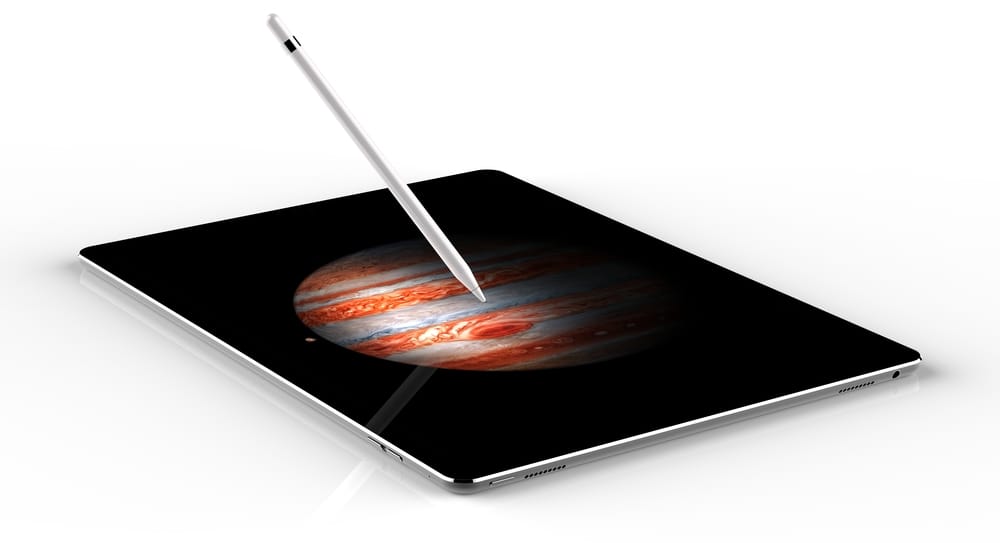
PADD tablets: the original iPad

The PADD devices (Personal Access Display Device) used by crew members on the Enterprise bridge to read reports, display engineering graphs and sign official documents are the direct spiritual and design ancestors of modern tablets and iPads. The flat screen, clean interface and ability to pull up information with a finger tap looked like science fiction at the time, and today they are our most basic work tools.

Voice command or manual search — both work
Voice command or manual search — both work (Photo: Shutterstock)

Voice assistants and artificial intelligence: "Computer, open file"

In the series, crew members did not need to type on a keyboard; they simply addressed the empty air and said "Computer..." to request information, activate complex ship systems or analyze data in real time. This voice interface accurately predicted the revolution of Siri, Alexa, Google Assistant and today's large language models (AI), which have made natural conversation with machines an everyday reality.

Video calls and wide screens: Zoom in the heart of space

The massive main screen on the Enterprise command bridge was frequently used for full-size interstellar video calls with aliens and fleet commanders. Today, platforms like Zoom and Teams, along with the giant OLED and LED screens in living rooms and conference rooms, have made video calls displayed on wide screens a routine matter.

3D printers: the replicator that made everything from nothing

The series' Replicator could produce food, beverages (such as Captain Picard's hot Earl Grey tea) and physical objects from subatomic particles at the push of a button. While we still cannot create matter directly from pure energy, today's 3D printers already print mechanical components, entire houses and even biological tissues and cell-based food.

Biometrics and medical monitoring devices

The medical Tricorder used by Dr. Crusher to scan a patient's body and diagnose diseases remotely without surgery closely resembles modern smartwatches and portable medical devices. Today's devices monitor pulse, blood oxygen levels, ECG and sleep quality at every moment, just like in the Enterprise sickbay.

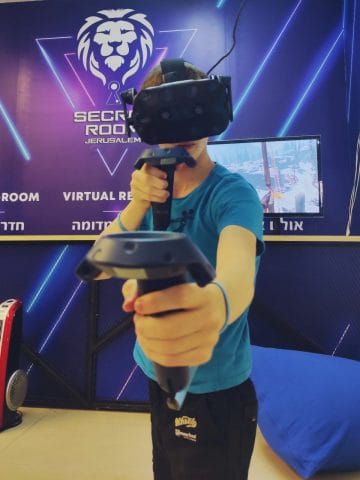
Virtual reality headset
Virtual reality headset (Secret Room)

Virtual and augmented reality: the Holodeck comes to life

The Enterprise's legendary simulation room, the Holodeck, allowed the crew to enter completely realistic virtual worlds for training or recreation. Today, the VR (virtual reality) and AR (augmented reality) industries are advancing rapidly with sophisticated glasses and interactive environments, bringing us one step closer to a full simulation room.

The bottom line: next time you ask your phone to turn on the lights at home or read a document on a tablet, remember that this is not just modern technology, but a vision woven on a Hollywood set of Star Trek: The Next Generation back in the late 1980s. As a tribute to the memory of Sir Patrick Stewart z"l, we close with Captain Picard's command: "Engage!"

Ready for more?

Join our newsletter to receive updates on new articles and exclusive content.

We respect your privacy and will never share your information.

Enjoyed this article?

Yes
No
Follow Us:

Unmissable content


Loading comments...

Also of Interest