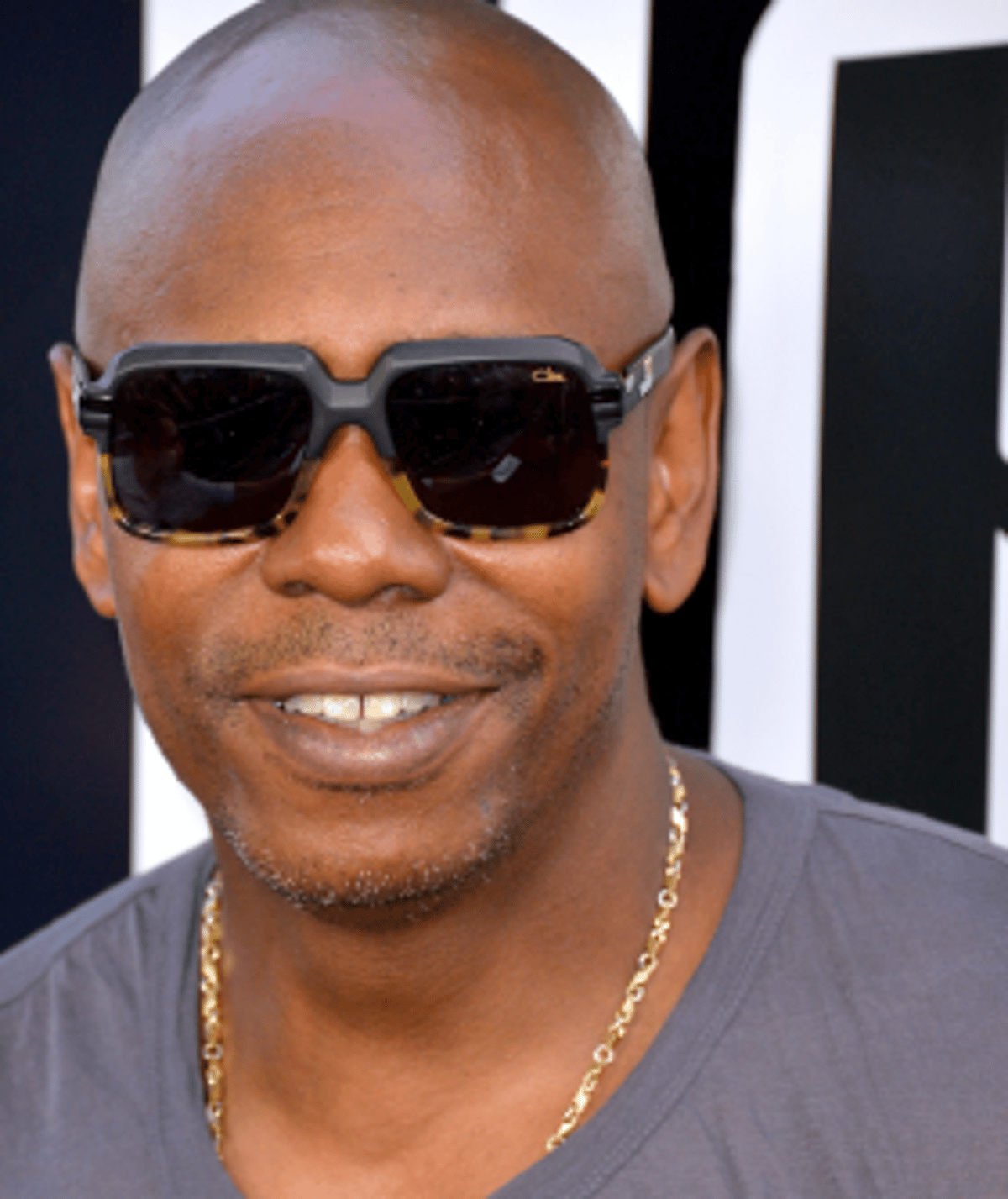
Anyone who has been following Chappelle's career will know that his shocking Israel-hating comment on his surprise Netflix special The Unstoppable is not all that shocking.
In the special’s closing moments, Chappelle, expressing paranoia about being “co-opted” by shadowy forces (in a riff tied to the assassination of conservative activist Charlie Kirk), proposes a secret “code phrase” to signal if he’s been compromised: “I stand with Israel.” The implication, that unconditional solidarity with the Jewish state is so antithetical to his authentic voice that it could only emerge under duress, drew immediate backlash, with many viewing it as the culmination of a years-long downward spiral into material that traffics in harmful stereotypes.
But it wasn't born in a vaccuum. In fact, Chappelle first debuted a version of the “code phrase” joke during his controversial appearance at Saudi Arabia’s Riyadh Comedy Festival in early October 2025, where he similarly framed “I stand with Israel” as something he would “never say” naturally.
Indeed, his trajectory into this bigoted territory traces back to November 2022, when he hosted Saturday Night Live amid Kanye West’s (Ye) overt antisemitic outbursts. In a lengthy monologue, Chappelle acknowledged the taboo: “Early in my career, I learned there are two words you should never say together... ‘the’ and ‘Jews.’” He quipped about the preponderance of Jewish executives in Hollywood - “It’s a lot of Jews. Like, a lot” - and suggested that criticizing it could end careers.
Although he read a prepared statement denouncing antisemitism, the routine was widely condemned by the Anti-Defamation League for “popularizing” tropes of Jewish control rather than dismantling them. Critics argued it lent legitimacy to Ye’s conspiracies under the guise of satire.
The pattern intensified in May 2024 during a performance in Abu Dhabi. Chappelle explicitly labeled Israel’s military campaign in Gaza a “genocide,” earning cheers from the crowd. He tied rising antisemitism in the West to Jewish support for Israel, urging Americans to combat Jew-hatred so that diaspora Jews wouldn’t feel compelled to back “a country committing genocide” for safety. While he called for fighting antisemitism, the framing, equating Israeli policy with genocide and linking it to Jewish vulnerability, blurred criticism of Israel with broader insinuations about Jewish loyalty and influence.
In The Unstoppable, these threads converge more aggressively.
Defending his Saudi gigs against critics like Bill Maher, Chappelle contrasts the kingdom’s killing of journalist Jamal Khashoggi with what he claims are 240 Palestinian journalists killed by Israel, sneering, “I didn’t know y’all were still counting.” The line minimizes tragedy while invoking moral equivalence, a tactic that echoes classic antisemitic deflection.
Chappelle’s defenders portray this as equal-opportunity offense, he roasts everyone from transgender activists to Saudi royals, and insist it’s anti-Zionism, not antisemitism. His conversion to Islam in 1998 and advocacy for Palestinian causes are cited as context. Yet the recurring motifs, Jewish power in media, paranoia about coercion, sarcastic disavowal of Israel, form a pattern that normalizes suspicion toward Jews as a group.
When a figure of Chappelle’s stature, with sold-out arenas and Netflix dominance, repeatedly deploys these tropes, the laughter risks masking real-world harm, especially in an era of heightened threats against Jewish communities.
Jewish comedy has long thrived on self-awareness and critique, but external voices wielding similar stereotypes carry greater risk. Chappelle once insisted many Jews had been “nothing but kind” to him personally, which begs the question, What has actually gone wrong with him that he thinks its okay to bash Jews and israel while antisemitic rhetoric claims more and more Jewish blood?
That nuance has increasingly given way to material that feels less like fearless truth-telling and more like a slide into conspiracy-adjacent (and antisemitic) rhetoric.
As The Unstoppable dominates streaming charts, the Jewish world watches warily. Comedy can illuminate uncomfortable truths, but when it repeatedly casts Jews and Israel as punchlines for shadowy control or hypocrisy, it doesn’t elevate discourse, it erodes it.
Whether Chappelle recognizes this shift in his legacy remains unclear, but the impact on audiences grappling with rising hatred is undeniable. True genius challenges power without reinforcing ancient prejudices. One hopes Chappelle might yet reclaim that balance.