The Architect of the "Condition"
The transition from the Hebrew Bible to Pauline Christianity represents a fundamental shift in the mechanics of civilized humanity.
In the original Israelite framework, sin is an Action (Act), a discrete, external event that is addressed through the mechanisms of Law (Torah), repentance, and sacrifice.
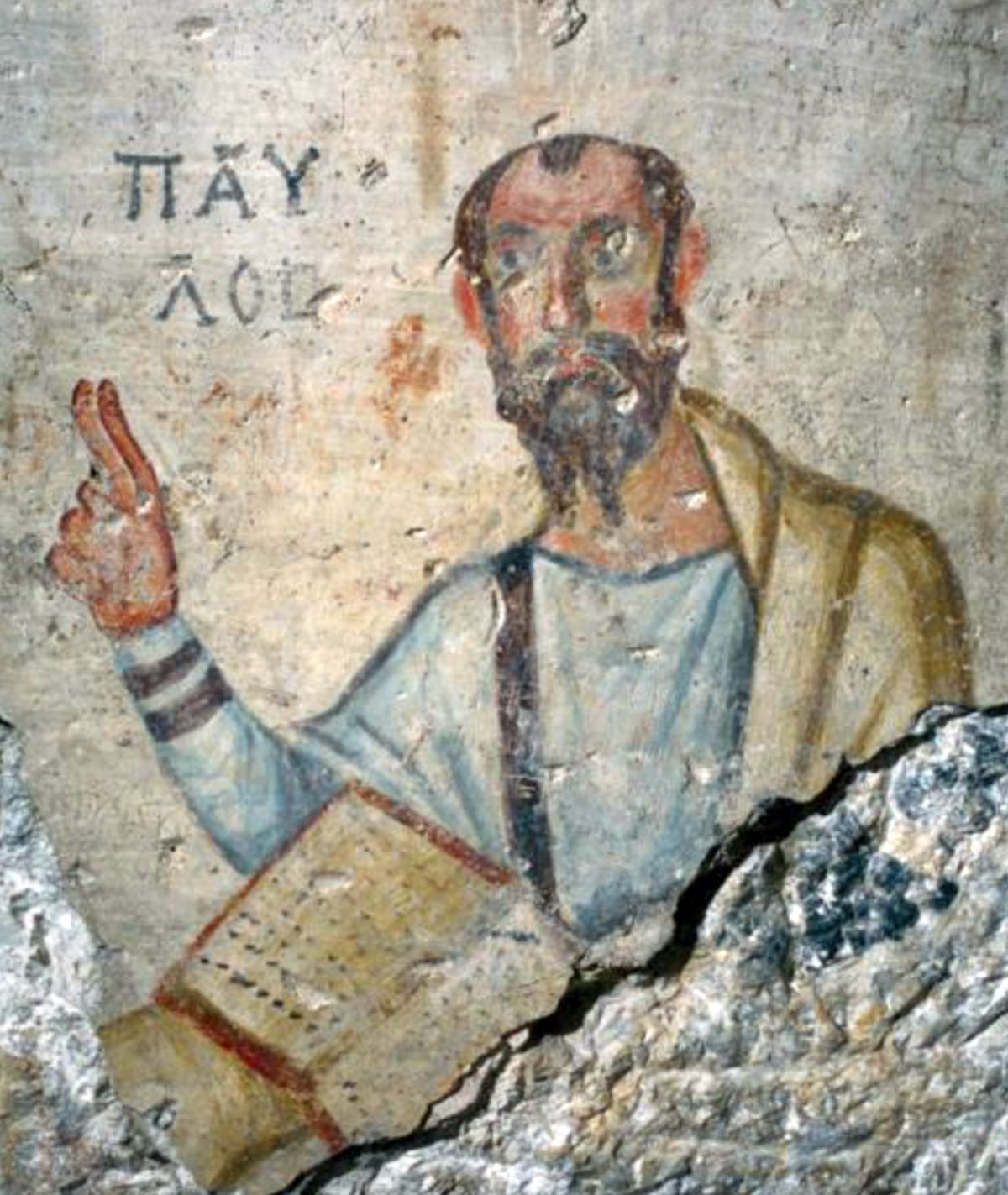
Paul of Tarsus performed a theological "hostile takeover" of this concept, transforming sin from a temporary action into a permanent Condition (State of Being).
By shifting the focus from what one does to what one is, Paul created a theological deadlock. If sin is an ontological state (Original Sin), the Law becomes a "bug" in the system, a mirror that reveals a sickness but offers no cure.
He framed the "Sin-Punishment-Salvation" cycle of the Prophets not as a dynamic process of growth, but as a "failed demo" meant to prove the futility of human agency.
II. The Destruction of Property and the Economic Rationale
A critical, often overlooked element of Paul's move is the destruction of the sacrifice as Tangible Property. In the Mosaic Law, a sacrifice is a legal and economic act; it involves a real cost, a measurement, and a physical exchange within a framework of justice. It is a "Work" that grants the individual a rational, proprietary grip on their relationship with the Societal and the Divine.
Paul dismantled this rationale. By claiming that Jesus replaces all legal action, he replaced Work, Law, and Property with an abstract Faith in a Man-God.
Paul’s hostility toward the Law is, at its core, an animosity toward Economics and Jurisprudence, the pillars of Moses. When you remove the "measurement" of the Law, you remove the individual’s ownership of their moral standing, handing it over to an amorphous "Grace" controlled by a Church. Very circular.
III. The Psychology of the "Good Time"
This was achieved by creating a psychological marketing loop: a "Good Time" predicated on a manufactured "Bad Time."
1. The Bad Time: Impose a cosmic, unsolveable guilt (Original Sin) that makes the individual feel fundamentally "broken."
2. The Good Time: Offer "Jesus" as the instant emergency exit.
Because this salvation is internal and "spiritual" rather than external and legal, it turns religion from a civilizational commitment to a form of theological consumption. The individual no longer seeks to repair the world through Law but to experience*l their own "rebirth" through emotions.
IV. The Modern Pivot: Anglo-Law vs. German Gnosis
The most striking causal sequence in this thesis is the "secularization" of these roles in modern history. The struggle did not end; it merely changed its vocabulary:
The Anglo-American Model (The "Israelite" Spirit): John Locke and Thomas Jefferson represent the restoration of the "Mosaic" framework. Locke, specifically, used the concept of Property to reclaim what Paul had stolen and the Church had usurped. By defining property as the individual’s ownership of their own life, labor, and body, Locke restored the "Jewish" idea of the rational, measured agent. This is the "Law of Reason", the measurable, constitutional boundary that protects the individual from the "Spirit" of the collective.
The German Idealist Model (The "Pauline" Spirit): Hegel and Marx represent a secularized Pauline Gnosticism. They moved away from the proprietary individual toward the Collective Condition (the State or the Class). For them, "Sin" is an historical stage (alienation), and "Redemption" is found in the immersion of the individual into the "Geist" (Spirit) or the Collective. Like Paul, they despise the "Huckster" (the economic/legal individual) and seek a "New Man" through a totalizing, amorphous transformation.
The Parasitic Cancellation of the Law
Beyond the theological shift lies a mechanism of parasitic cancellation. Just as Paul latches onto the Law only to arbitrarily negate its internal mechanism, utilizing the very same Bible he uses to justify this cancellation in an illogical manner, so too do Marx and Hegel speak in the name of British human liberty only to ultimately abolish it. Paul moves from the Israelite loop of Law and sin toward a universality based on faith. Instead of a Law where one violates through sin or rectifies through repentance, he introduces an inherent, prior sin to which the individual is enslaved, and from which one exits only through a relief in external non measurable sacrifice.
The fundamental problem is that he accepts the biblical consciousness of sin and sacrifice but abandons the legal questions without which these concepts are rendered arbitrary. This is all predicated on faith in a man to whom he attributes qualities capable, apparently, of simultaneously preserving biblical concepts and apostatizing from them, utilizing only whatever remains.
The Mirror of Sickness and the Invention of Point Zero
Paul’s argument is that the Law (Torah) was not intended to make us righteous, but rather to expose the depth of our sin. Naturally, there is no evidence for this within the text. There is no proof that this equation, is rooted in the Bible itself; it is simply his singular interpretation. He claims the Law is the mirror showing we are ill, but it is not the cure. According to this logic, as long as there is Law, there is transgression, and thus the cycle never ends. Therefore, sin is made eternal and the sacrifice is made eternal, while the Law is rendered temporary, simply because Paul decided to create this nexus.
He essentially uses the perceived failure of Israel as the foundation to justify the new religion he creates. Original Sin is the way of stating: "The game is rigged from the start," with the Jews serving as the display window for this failure. It is a profound form of ingratitude to claim there is no need for property, sacrifice, standards, or Law simply because the people who utilized them were, according to the interpreter, not "pure" enough. Similar to the lack of gratitude Marx showed Adam Smith.
Jesus as the Last Adam: The Cancellation of Divine Decree.
Paul positions Jesus as a counterweight to the First Adam, whose alleged sins cause even the People of Israel to fail time and again. The logic dictates that if Adam entered humanity into a loop of sin and death, Jesus leads it out through the crucifixion. The falsehood in this argument is the implication that God subjected the People of Israel to extreme punishments and demands for sins He supposedly knew from the start could not be rectified. This is a purely human, interpretive concept aimed at canceling a Law that the Torah itself defined as divine, all for the sake of faith in a man as a god in total negation to the Bible.
The Transmutation of Worship and the Catholic Vacuum
This move represents a total transmutation of worship: replacing the mechanisms of sacrifices and obedience to laws with one sacrifice "once and for all." The center of gravity shifts from an external action (circumcision, fringes, sacrifice) that requires constant maintenance, to an internal state (faith/grace) that is static and absolute. This was the maneuver that abolished "worship" in its ancient sense and turned it into a "religion of the heart."
By attempting to end the mechanism that creates a need for laws, Paul effectively broke the cycle of sin, but at a terrible cost. By removing the Law, he destroyed the ability to verify truth or conduct between people. This created a profound lack of trust and a structural void, allowing for the arbitrariness and whim that the Catholic Church eventually filled. Paul attempted to break the circularity of the Law, but he merely created a new mechanism for "system maintenance", replacing laws with "dogmas" and deeds with a church hierarchy that determines who is "in" or "out" based on words alone.
The Irony of the "Anti-Law"
Paul’s attempt to break the "cycle of the Law" resulted in a far more rigid and invisible mechanism of control. While the Mosaic Law is transparent, external, and debatable (Halakha), Pauline "Dogma" is internal and totalizing. The transition from "External Action" to "Internal Faith" replaced the clear boundaries of the Commandment with the invisible whip of Ideological Purity.
The conflict of the modern world is a direct continuation of this theological rupture. It is a battle between the Measured Law of Property and the Individual (the Anglo-Israelite spirit) and the Amorphous Grace of the Collective (the German-Pauline spirit). One offers a framework for living in reality; the other offers an escapist "rebirth" that inevitably leads to the dissolution of the individual into the State.