Two Deadly Incidents in 24 Hours: Hezbollah’s Hidden Explosives Exact Heavy Toll on IDF Troops
Deadly 24 hours in Lebanon: Two IDF soldiers killed by Hezbollah explosives despite the ceasefire. Details on the fallen, the investigation into Kfar Kila, and the IDF's continued operations in the 10km security buffer.
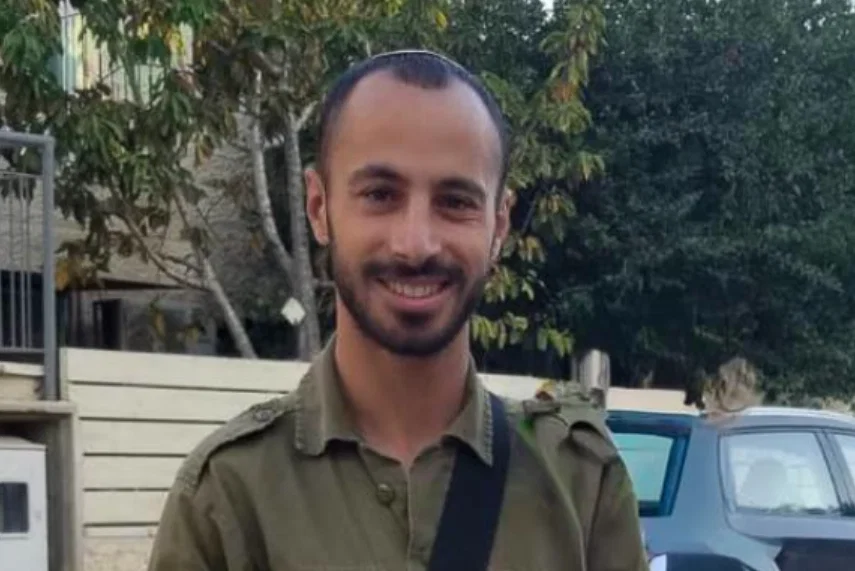
Two fatal incidents in Southern Lebanon within less than 24 hours have underscored one of the most complex threats facing IDF soldiers: hidden explosive devices planted by Hezbollah. Despite the official ceasefire recently announced by U.S. President Donald Trump, the terror organization’s pre-positioned IEDs remain a central component of its strategy of attrition.
The Human Cost: Falling in the Line of Duty
The IDF confirmed this morning the death of Sgt. First Class (Res.) Lidor Porat, 31, from Ashdod. A fighter in the 7106th Battalion of the 769th Brigade, Porat was killed in the village of Kfar Kila, near Metula, when a D-9 armored bulldozer struck an explosive device. Five other soldiers were injured in the blast: one seriously, and four others with moderate to light wounds.

This tragedy follows the death of Master Sgt. (Res.) Barak Kalfon, 48, from Adi. A paratrooper in the 7056th Battalion of the 226th Brigade and a senior employee at Rafael, Kalfon succumbed to wounds sustained during combat in Southern Lebanon on Saturday night. Two other soldiers were moderately injured in that incident.
"Not Local Initiatives"
Defense officials emphasize that these are not spontaneous actions by lone insurgents. Instead, they represent a systematic, long-term preparation by Hezbollah. The explosives are strategically embedded deep within access routes, inside the walls of civilian buildings, and beneath floors. They are triggered via pressure plates or remote detonation by operatives monitoring troop movements.
Investigation into Ceasefire Violations
According to Channel 12 News, the IDF is investigating exactly when the device that killed Sgt. Porat was planted. A key focus of the inquiry is whether the placement or activation of the mine constitutes a direct violation of the ceasefire agreement that went into effect just days ago.
Lessons from Gaza Applied to Lebanon
The IDF notes that the threat mirrors the "booby-trap" tactics encountered in the Gaza Strip. Military sources describe a continuous "technological arms race" to detect these devices. Despite advanced engineering tools, the dense vegetation and urban layout of Lebanese villages make total neutralization an extreme challenge.
The "Yellow Line" Security Zone
Following the ceasefire declaration, Jerusalem clarified that the IDF does not intend to withdraw from captured positions immediately. Instead, the military has established a security buffer known as the "Yellow Line," extending up to 10 kilometers into Lebanese territory.
Within this zone, the IDF continues to:
Since the beginning of the campaign, the Israeli Air Force has carried out over 2,000 support strikes for ground forces, maintaining constant communication between fighter pilots and troops on the ground to mitigate the risk of hidden "honey pot" traps and ambushes.