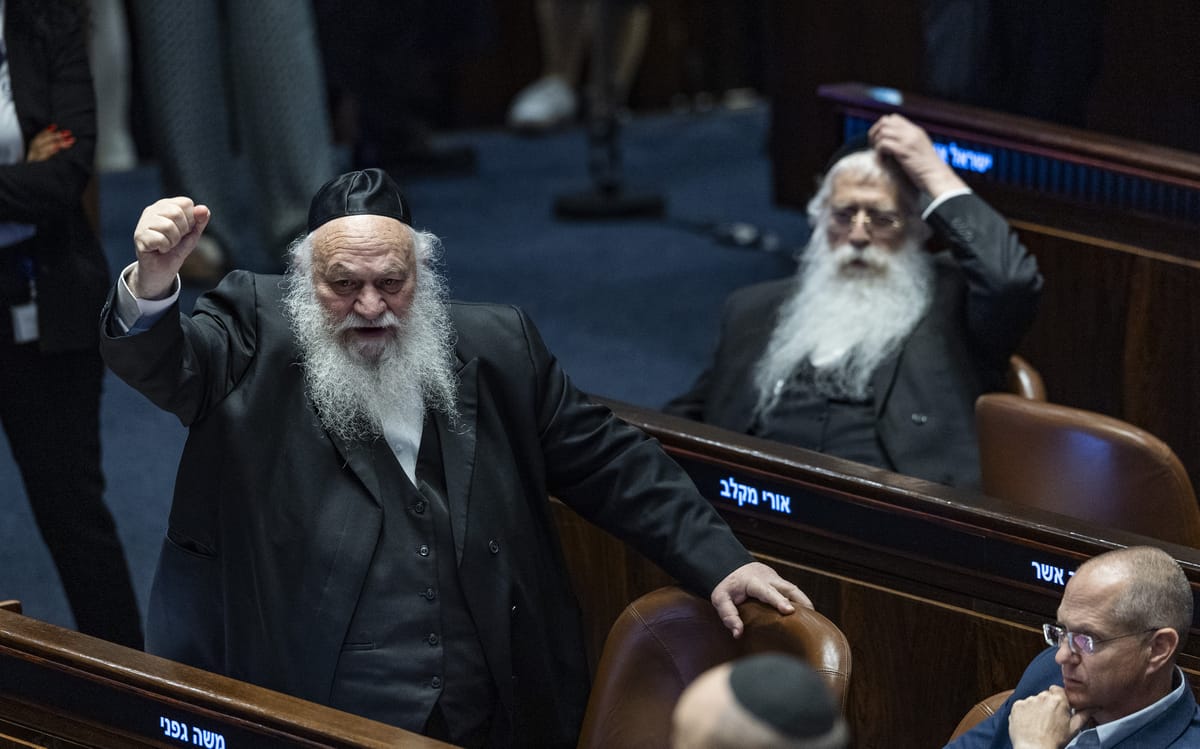
A deepening internal conflict within Agudat Yisrael, one of Israel's two main haredi (ultra-Orthodox) political parties, is threatening to reshape the party's structure ahead of upcoming elections. The crisis erupted during a Monday evening meeting of the party's council, when representatives of the Ger Hasidic dynasty demanded the removal of Moshe Shimon Roth, a representative of the Sanz Hasidic community, from the fifth position on the party's electoral list.
A senior Agudat Yisrael official told Kikar Hashabat that the party is now considering dramatic alternatives, including running jointly with Degel HaTorah without Ger's participation, or even forming an entirely separate electoral bloc. "Ger doesn't represent us," the official said, expressing frustration with the dominant Hasidic group's approach.
The confrontation came to a head when Roth, a former Knesset member representing Sanz, attended the council meeting only to discover during the discussion that Ger was seeking his removal. The underlying issue centers on Ger's demand that whoever holds the fifth spot must commit to voting in lockstep with the party's central faction. Sanz has refused this condition, pointing to the previous Knesset term when Roth voted on certain issues according to directives from the Sanz Rebbe rather than party leadership.
Meanwhile, two other haredi factions—Shlomei Emunim and Machzikei Hadath—have informed Degel HaTorah's negotiating teams that they should delay signing any joint-running agreement with Agudat Yisrael in light of the council meeting's developments. Sources within both groups have expressed support for Meir Porush's position that the fifth spot should remain with Sanz rather than transfer to Ger.
Separately, details have emerged about the proposed agreement between Degel HaTorah and Agudat Yisrael. According to the framework taking shape, if the Knesset dissolves within the first year and a half, the agreement would carry over to the subsequent Knesset. The parties are also aligning on supporting a military draft law without sanctions, refusing to back other legislation before securing protections for yeshiva students, and committing that their representatives will not accept government positions before such legislation passes.