Get our mobile app
Download on the App StoreGet it on Google Play

End to Years-Long Conflict?

Ger and Rabbi Alter Sign Peace Agreement

In dramatic settlement brokered by Jerusalem court president, Ger hasidic representatives accept responsibility for past violence, commit to ending harassment of Rabbi Shaul Alter's community; plaintiffs agree to drop financial claims

The Ger Rebbe - Rabbi Shaul Alter

A dramatic legal and community breakthrough has emerged from years of bitter conflict within Ger hasidism. For the first time since the painful split that led to the establishment of the 'Pnei Menachem' community under Rabbi Shaul Alter, head of the yeshiva, a historic settlement agreement has been signed between the parties.

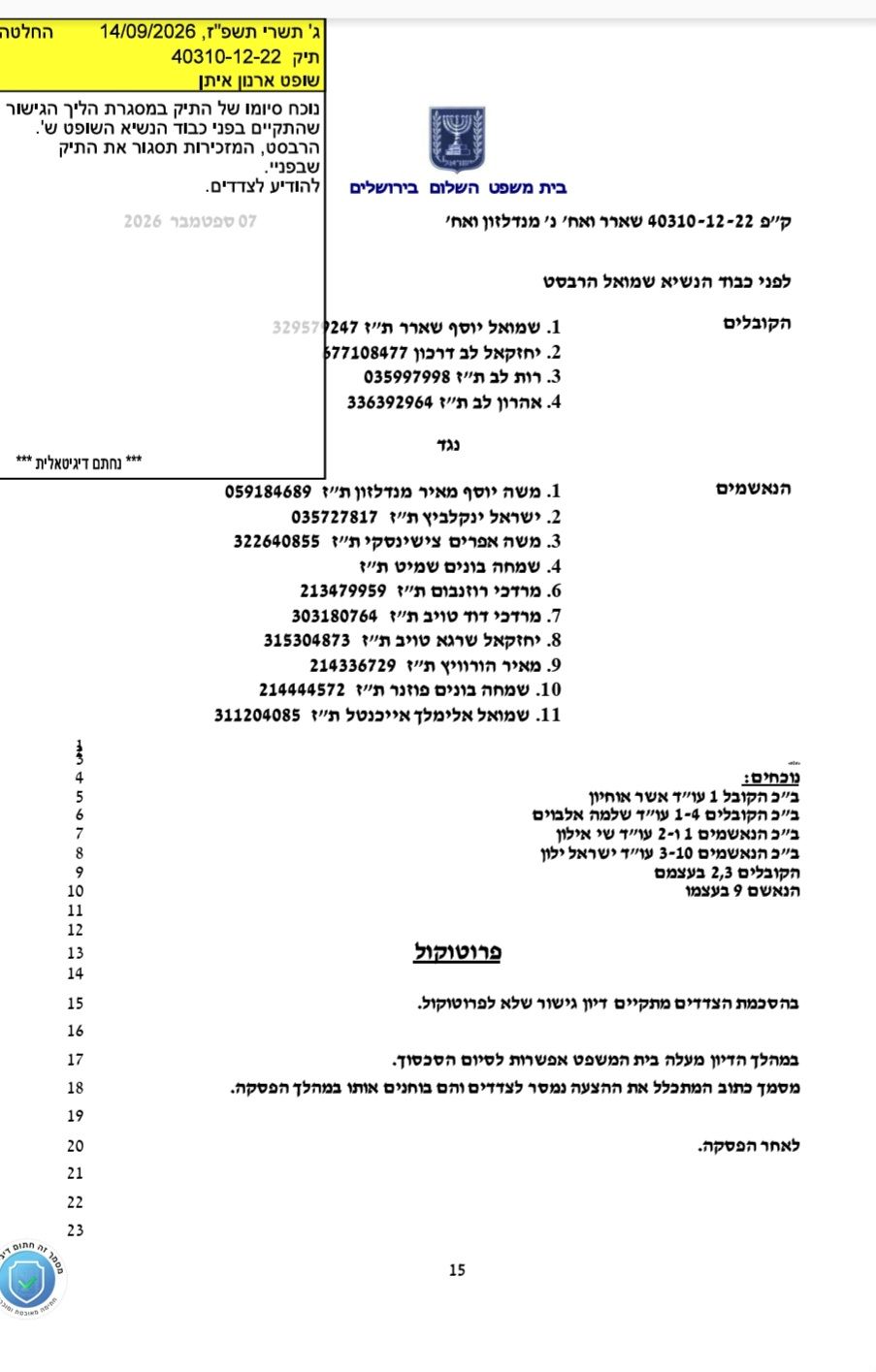
The unprecedented compromise, formalized just before the recent holiday, centers on representatives of Ger hasidism accepting responsibility for past events and committing explicitly to maintain peace and prevent similar incidents in the future.

The legal settlement emerged from a civil lawsuit filed by three victims of the violence, including Yechezkel Lev, represented by attorney Shlomo Elboim, a member of the Bnei Brak city council, and attorney Asher Ochion.


Shlomo Elboim
Shlomo Elboim (Photo: Archive)

The lawsuit targeted members of the 'Responsible Committee' within Ger hasidism and Rabbi Moshe Mendelson, rabbi of the Komemiyut settlement. The case stemmed from a telephone announcement broadcast on hasidic hotlines on the eve of Shabbat Parshat Bechukotai 5782, which triggered a wave of riots, severe violence, and caused extensive property damage to institutions and individuals associated with Rabbi Shaul Alter's community.

After dozens of complex hearings in the district and magistrate courts in Jerusalem and Tel Aviv, with the case already at the evidence and testimony stage, an unexpected development occurred.

Rabbi Moshe Mendelson
Rabbi Moshe Mendelson (Photo: Archive)

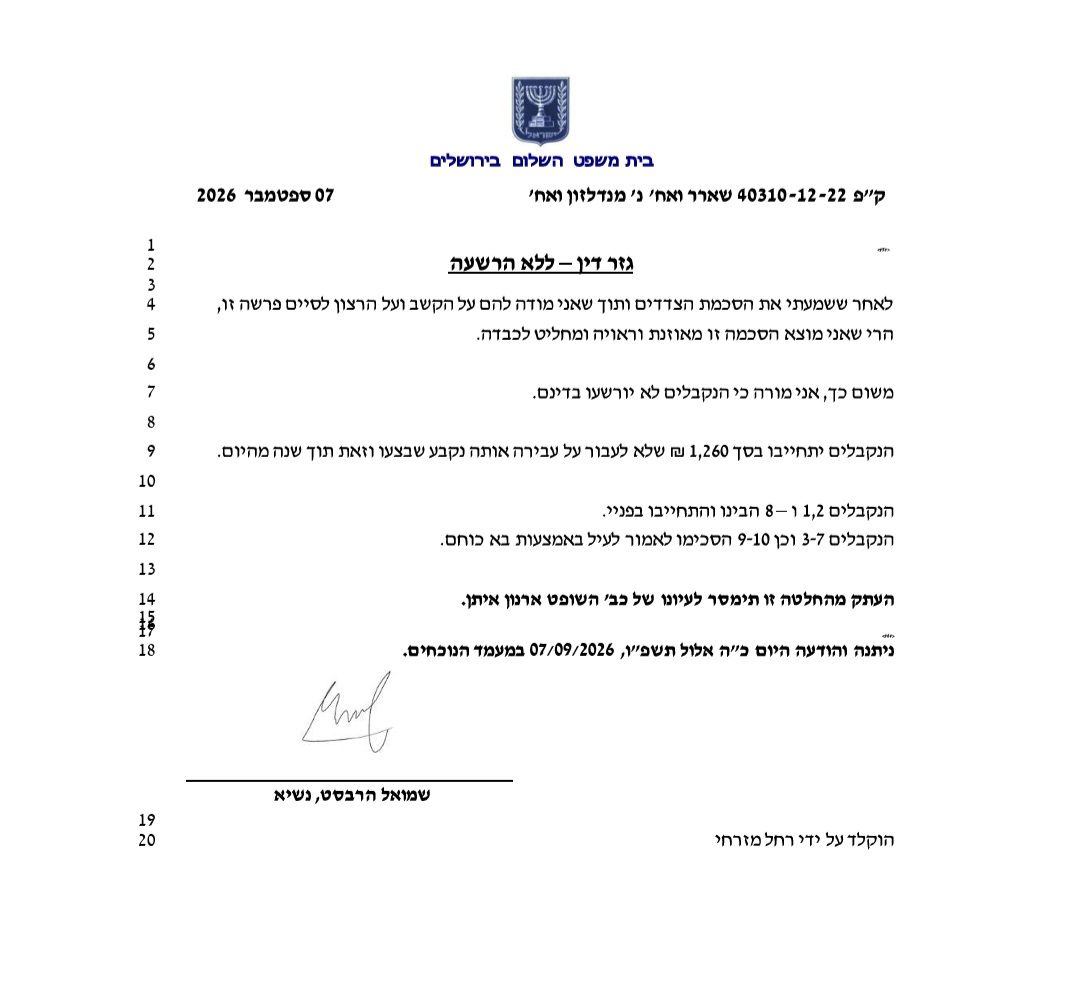
Judge Shmuel Herbst, president of the Jerusalem Magistrate's Court, recognized the enormous potential for damage and desecration of G-d's name inherent in continuing the trial. He convened the parties in his chambers and proposed a unique settlement framework.

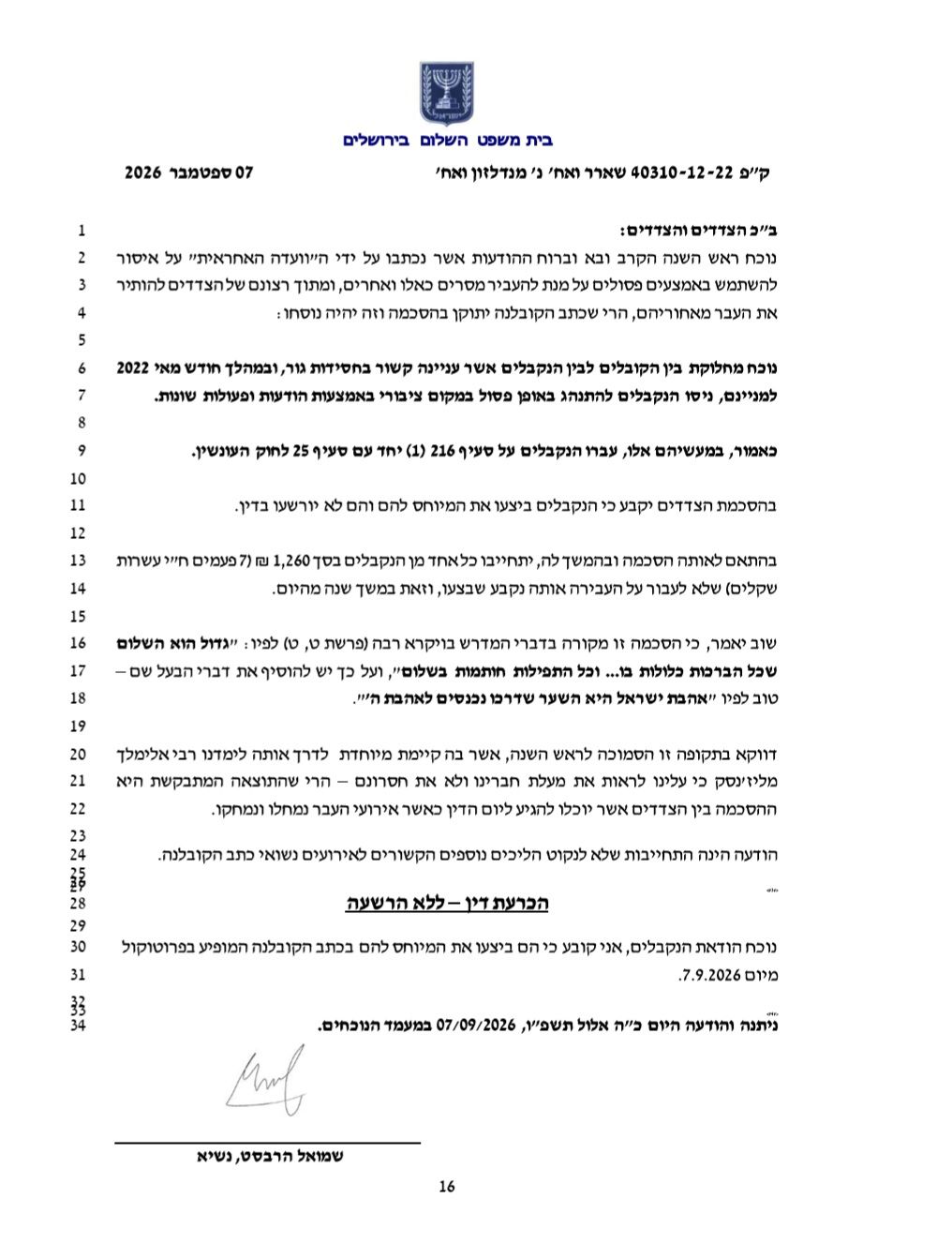
Under the agreement, which received the force of a court judgment, the defendants representing Ger hasidism accept responsibility for past events, express remorse, and commit to complete avoidance of any repetition of such actions. In response, the plaintiffs agreed to the judge's request, consenting to forgo their financial claims and open a new page.

In his moving ruling, Judge Herbst incorporated quotations from rabbinic sources and hasidic teachings: "This agreement has its source in the words of the Midrash that 'great is peace, for all blessings are included in it,' and to this must be added the words of the Baal Shem Tov that 'love of Israel is the gate through which one enters to love of G-d.'"

The judge added that specifically during the days of mercy and forgiveness, as taught by Rabbi Elimelech of Lizhensk "to see the virtues of our fellows and not their deficiencies," it is fitting to arrive at the Day of Judgment with past events forgiven and erased.

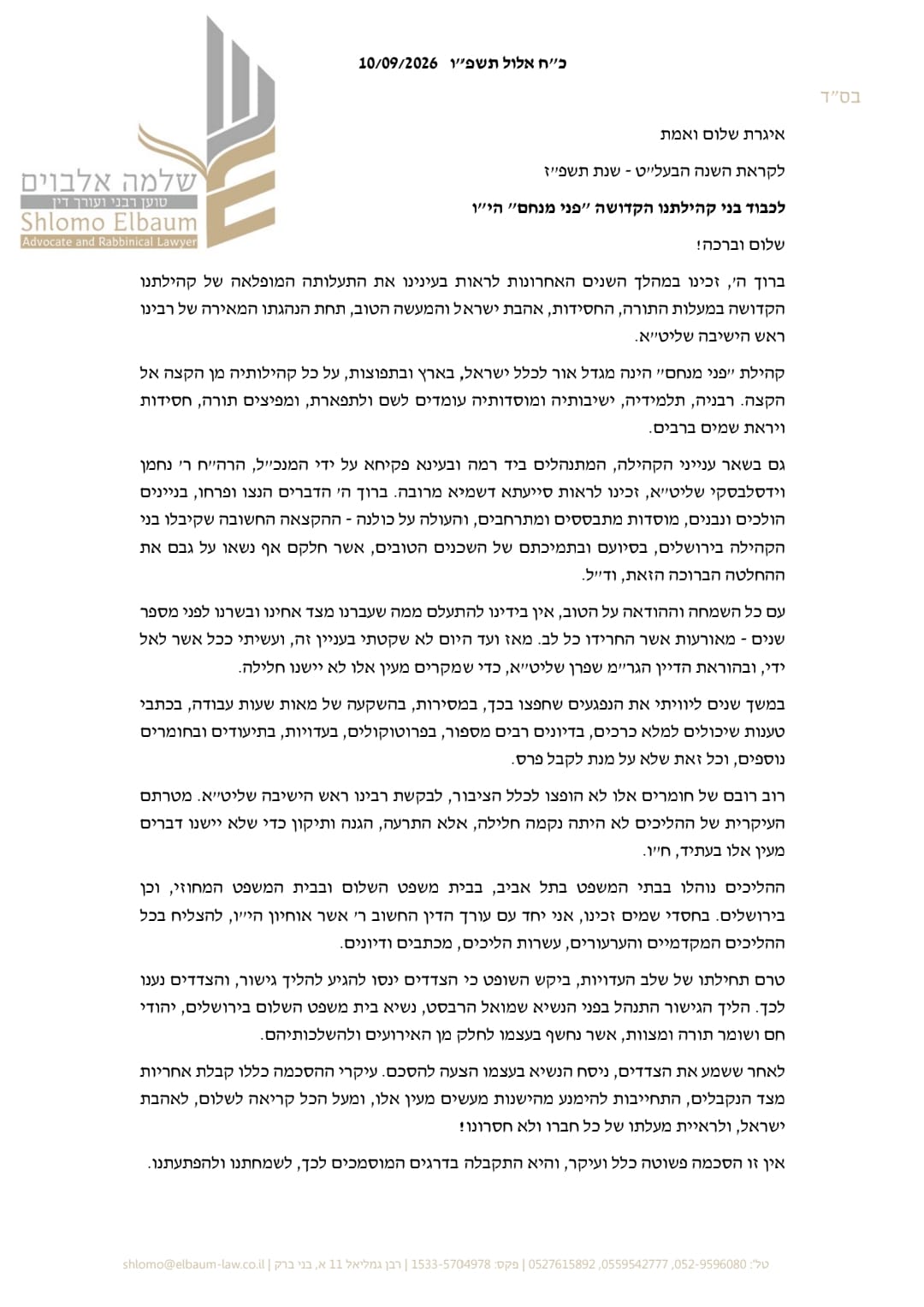
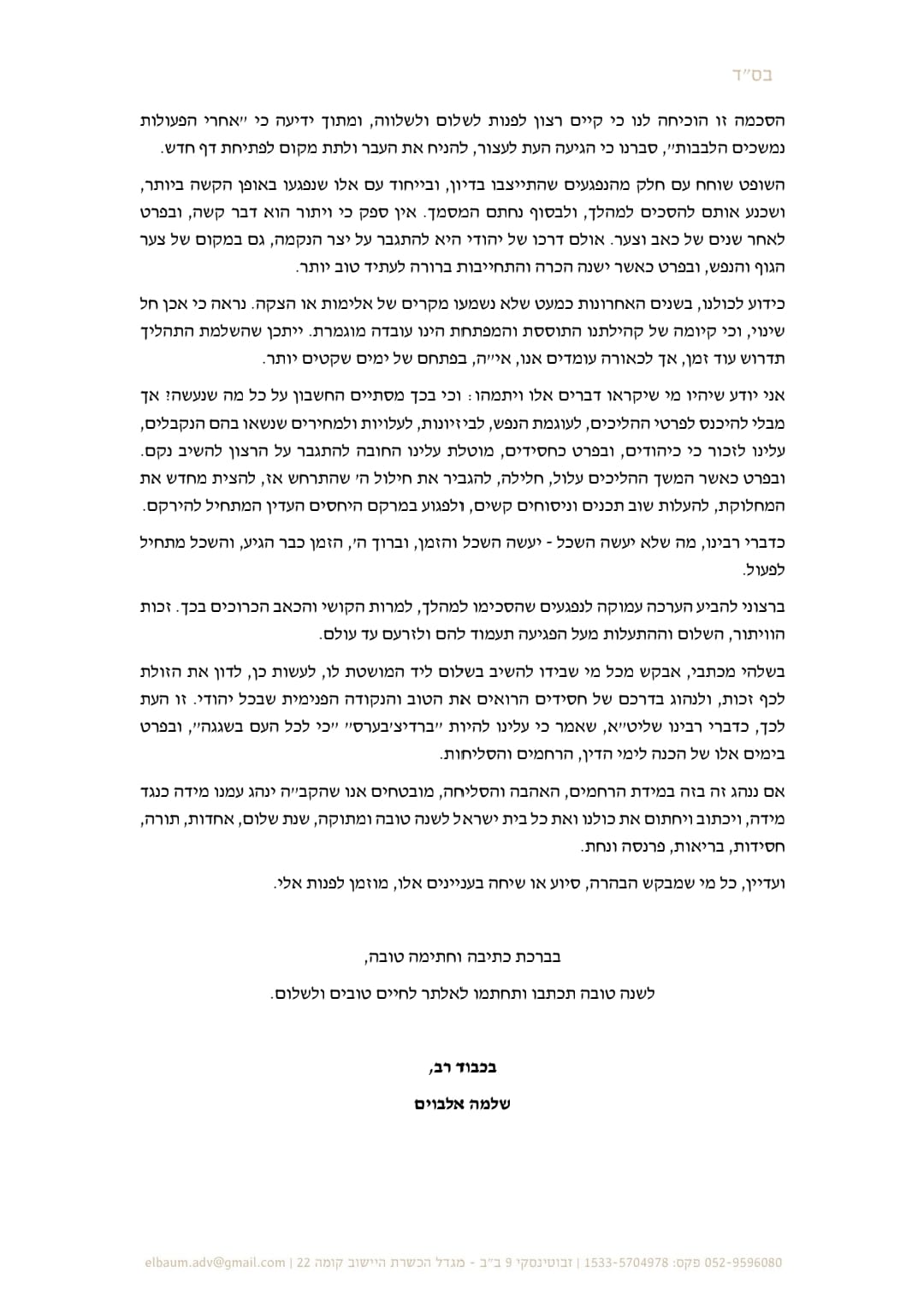
Following the signing, attorney Shlomo Elboim published a special letter titled "Words of Peace and Truth." In his letter, Elboim notes that in recent years, since the 'Association for Prevention of Violence' began operating, there has indeed been a dramatic decrease in harassment on the ground.

Attorney Shlomo Elboim's letter

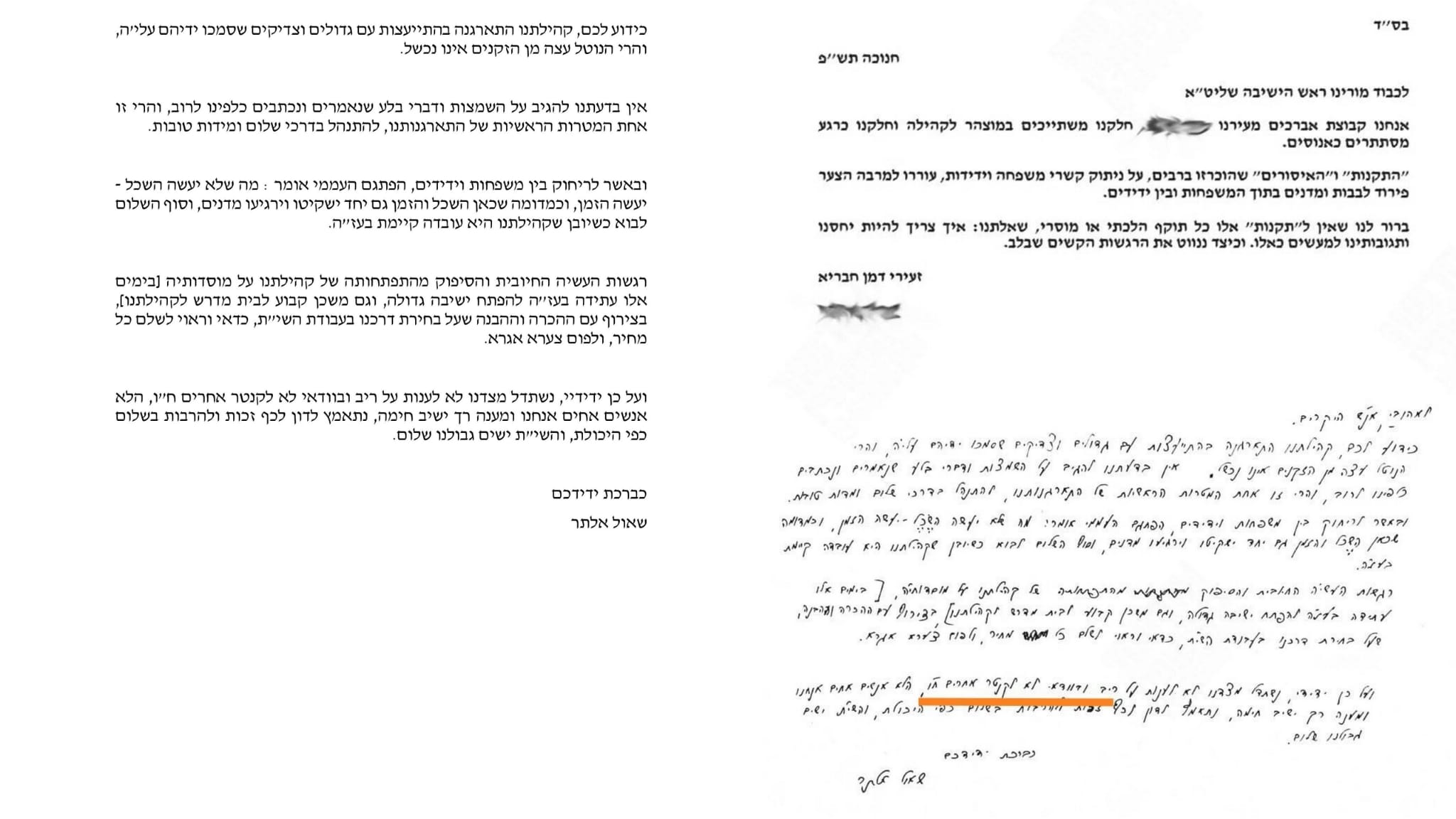
Elboim recalls Rabbi Shaul Alter's well-known letter from the height of the conflict, in which he wrote that "what reason will not accomplish, time will," and calls on the hasidic community to rise above the residue: "I ask anyone who can respond peacefully to an outstretched hand to do so. This is the time to conduct ourselves in the way of hasidim and to see the inner point in the heart of every Jew, as the head of the yeshiva demands of us to be students of Rabbi Levi Yitzchak of Berditchev."

Rabbi Shaul Alter's letter

Does this represent a new direction that will bring an end to the violence and mutual excommunications? Time will tell. But on the haredi street, many hope that the winds of peace that blew through the judge's chambers in Jerusalem will influence all the courts.

Ready for more?

Join our newsletter to receive updates on new articles and exclusive content.

We respect your privacy and will never share your information.

Enjoyed this article?

Yes
No
Follow Us:

Unmissable content


Loading comments...

Also of Interest