Israeli Ambassador Calls J Street 'Cancer' in American Jewish Community
Israeli envoy delivers scathing rebuke of progressive advocacy group at Washington conference • Condemns calls for arms embargo starting 2028 | Sharp escalation in diplomatic rhetoric (Jewish World)

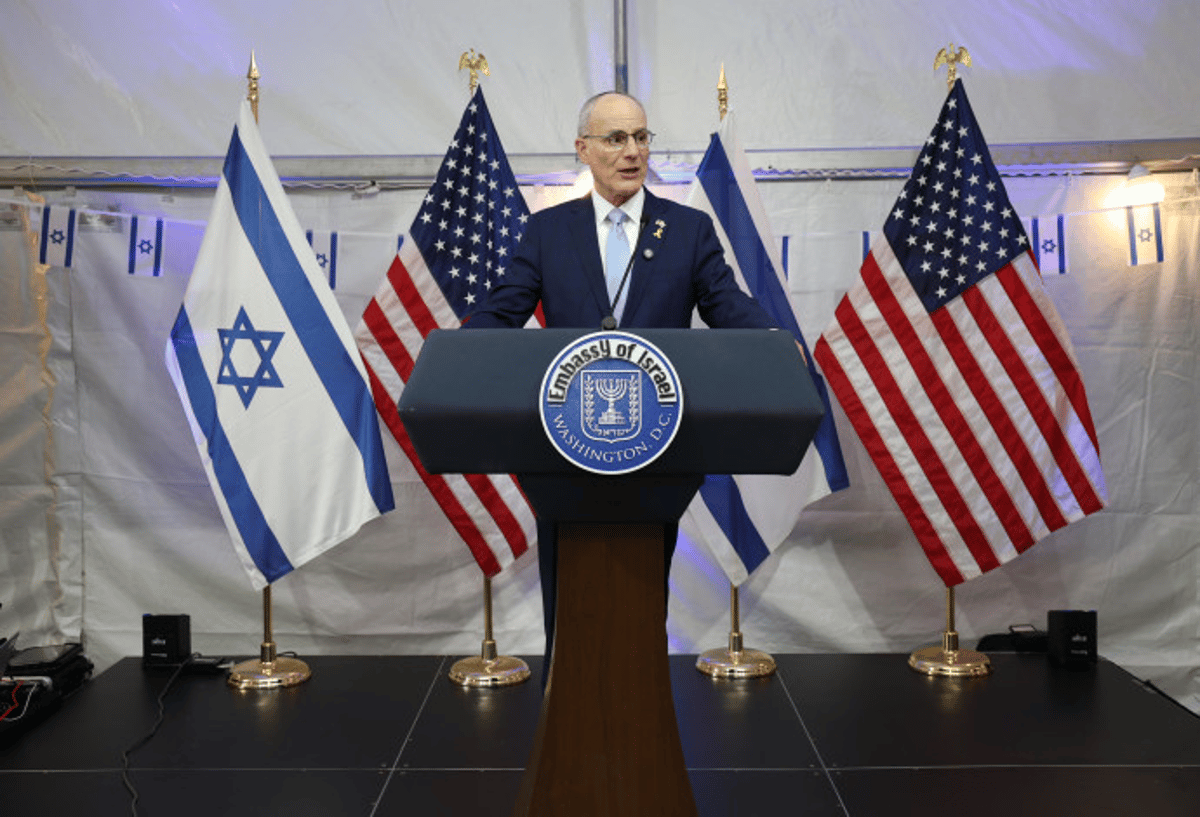
Israeli Ambassador to the United States Yechiel Leiter unleashed an unprecedented verbal assault on the progressive advocacy organization J Street during a Tuesday address at a Washington conference, employing language rarely heard in diplomatic circles. Leiter characterized the group as "a cancer in the body of the American Jewish community," marking one of the sharpest public rebukes ever delivered by an Israeli envoy against a Jewish-American organization.
The ambassador's remarks centered on J Street's advocacy for imposing an arms embargo on Israel, a position that has placed the organization at odds with mainstream pro-Israel groups and the Israeli government. Leiter specifically criticized the group's stated intention to pursue a cessation of American military assistance beginning in 2028, arguing that such policies fundamentally contradict J Street's self-identification as a pro-Israel organization.

The timing of Leiter's comments reflects broader tensions over American military support for Israel during the ongoing conflict. The ambassador's strong language comes as Israel has worked to rebuild its strategic relationship with Washington following what Prime Minister Netanyahu has characterized as a Biden-era arms embargo that cost Israeli lives. Netanyahu previously stated that ammunition shortages resulting from delayed weapons transfers contributed to casualties among IDF soldiers during critical phases of the Gaza operation.
J Street has positioned itself as a progressive alternative to traditional pro-Israel advocacy groups, supporting a two-state solution and criticizing certain Israeli government policies. However, the organization's recent push for conditioning military aid has drawn fierce opposition from Israeli officials and many American Jewish leaders who view such measures as undermining Israel's security during wartime.

The Arms Embargo Debate
The controversy over weapons transfers has become a defining fault line in American Jewish politics. Recent Senate votes on blocking arms sales to Israel revealed deep divisions within the Democratic Party, with 40 Democratic senators supporting measures to halt weapons transfers, though the resolutions ultimately failed. Senator Bernie Sanders led the effort to block sales of bulldozers and precision munitions, arguing that such equipment could be used in ways that violate international humanitarian law.
Ambassador Leiter's harsh characterization of J Street represents a calculated gamble. While Israeli officials have long expressed private frustration with progressive Jewish groups, such explicit public condemnation from a sitting ambassador is extraordinarily rare. The move signals Jerusalem's determination to draw clear lines regarding which American Jewish organizations it considers legitimate partners in advocacy efforts.
The ambassador's comments also reflect Israel's broader shift toward reducing dependence on foreign military suppliers. Prime Minister Netanyahu recently announced a NIS 350 billion investment over the next decade to build an independent domestic arms industry, explicitly stating the goal is to "reduce our dependence on every factor, including friends."

J Street has not yet issued a formal response to Ambassador Leiter's remarks. The organization has consistently maintained that its advocacy for conditioning aid represents a pro-Israel position aimed at promoting long-term security through diplomatic solutions. However, critics argue that calls for arms embargos during active conflict effectively align with positions held by Israel's adversaries.