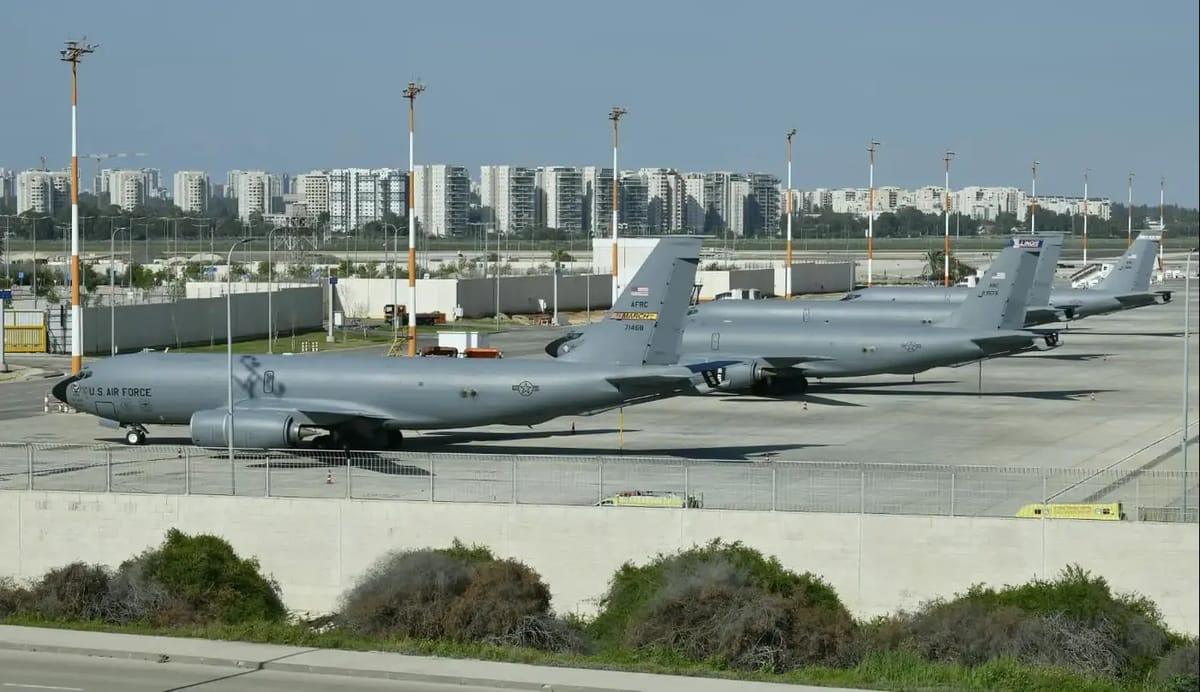
A massive fleet of United States military refueling aircraft stationed at Israel's premier civilian airports will remain deployed until at least the end of the year, bringing commercial travel to a standstill and signaling long term military operations. The presence of dozens of American refueling aircraft at Ben Gurion International Airport and Ramon Airport in the south has created severe logistical complications for civilian aviation.
The heavy military aircraft are currently utilizing almost every available parking space across the facilities, leading aviation officials to issue dire warnings regarding the breakdown of normal operations. Shmuel Zakai, the head of the Civil Aviation Authority, recently dispatched an urgent letter to the Minister of Transportation detailing the severe nature of the crisis. Zakai stated that Ben Gurion Airport is currently operating as a military base rather than a civilian airport, emphasizing that the situation is no longer sustainable for standard commercial traffic.
The decision by the United States to extend the deployment of its refueling fleet indicates that Washington is preparing for a prolonged campaign. Security officials view the presence of these specific logistics assets as a clear statement of intent regarding the timeline of regional hostilities. By keeping these aerial tankers close to the potential theater of operations, the American military ensures it can sustain continuous, long range aerial operations without delay.
This development strongly suggests that the temporary lull in hostilities will not lead to a permanent resolution, but is rather a preparation period for extended warfare. The long term placement of these military assets is expected to severely disrupt plans to restore normal commercial flight schedules ahead of the busy summer season. International airlines, which were considering increasing their flight frequencies and opening new routes to Israel, are now expected to pull back due to the lack of airport infrastructure.
This lack of civilian access is projected to drive up ticket prices significantly and leave the country isolated from major global travel corridors. For the public, the crowded tarmacs offer a visible reminder that behind the scenes diplomatic maneuvering, the machinery of war is being positioned for an extended and heavy deployment.