Get our mobile app
Download on the App StoreGet it on Google Play

Ahead of High Holidays

Beit Din Bans Get Refuser From Synagogues

Crown Heights rabbinical court issues sweeping sanctions against resident who refuses to grant his wife a divorce, barring him from prayer services, Shabbat meals, and all communal roles until he complies

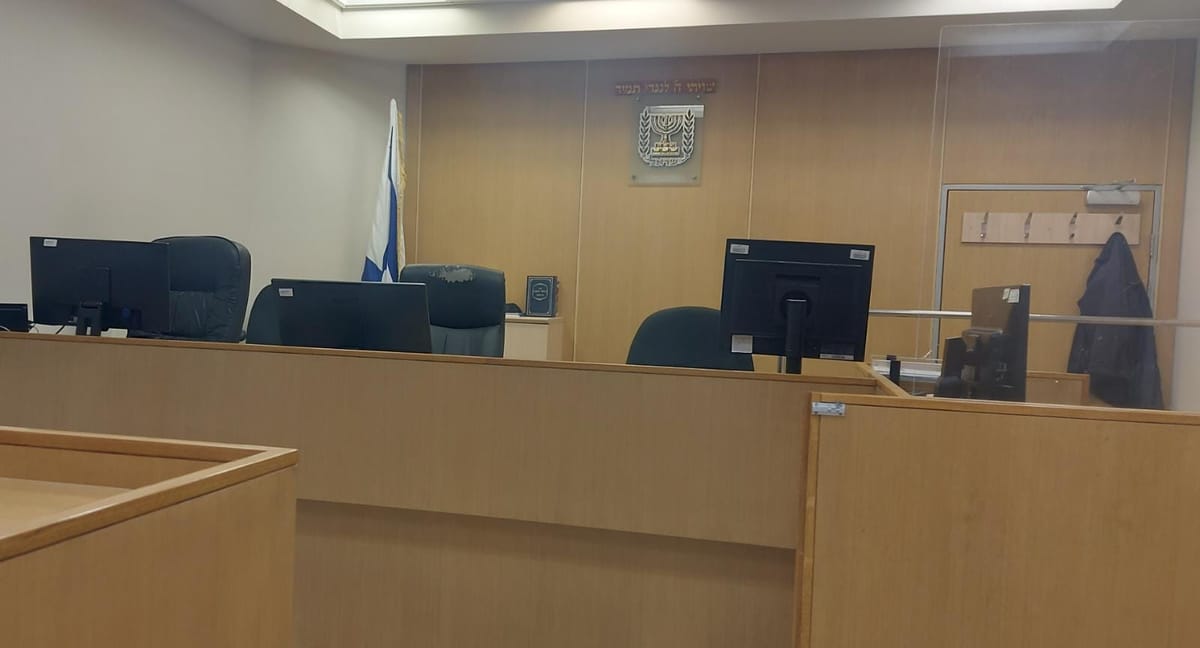
Illustration

The rabbinical court of Crown Heights, Brooklyn, the largest and most central hub of Chabad Hasidic families, has issued an unusually severe letter against a neighborhood resident who has refused for years to grant his wife a halachic divorce.

The extraordinary letter, signed by rabbinical judges Rabbi Avraham Osdaba and Rabbi Yosef Yeshaya Braun, calls on residents not to invite the man to Shabbos or holiday meals and to cease normal social contact with him.

The letter was published just before the Yomim Noraim. A neighborhood source explained that this is standard practice in such cases, designed to create pressure on the get refuser to release his wife from her agunah status.

"To the honored residents of our neighborhood, where Hashem commanded the blessing, may you live," the letter opens. "We hereby inform you that Mr. [name redacted] was summoned to appear before the rabbinical court and refused to appear before them." The judges go on to describe their extensive and ongoing efforts to resolve the matter, noting: "Although a certificate of refusal has already been issued regarding him, he was given the opportunity to bring the matter before the rabbinical court of our neighborhood, and even before another rabbinical court acceptable to him, but he did not respond to this either."
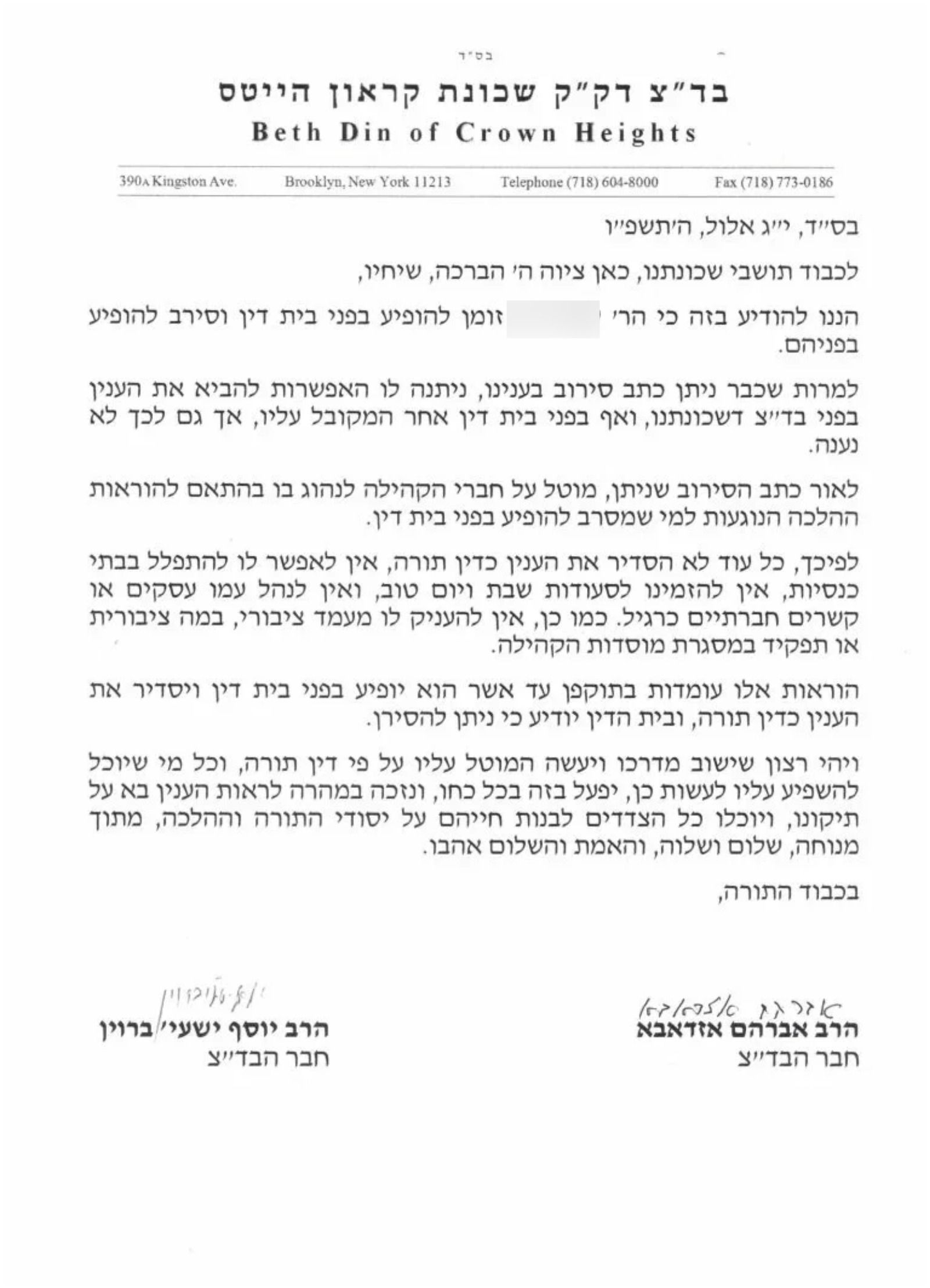

The rabbinical court's letter

The court then clarifies the community's obligation under Torah law: "In light of the certificate of refusal that was issued, community members are obligated to treat him in accordance with the halachic rulings pertaining to one who refuses to appear before a rabbinical court. Therefore, as long as he has not resolved the matter according to Torah law, he may not be permitted to pray in synagogues, he should not be invited to Shabbat and holiday meals, and business or social relations should not be conducted with him as usual. Likewise, he should not be granted public standing, a public platform, or any role within community institutions."

At the same time, the rabbis make clear in their letter that the door remains open and the solution rests entirely in his hands: "These directives remain in force until he appears before a rabbinical court and resolves the matter according to Torah law, and the rabbinical court announces that they may be lifted."

The letter concludes with an impassioned call to the community and anyone who can exert influence: "May it be His will that he return from his ways and do what is required of him according to Torah law, and anyone who can influence him to do so should act with all his strength, and may we soon merit to see the matter come to its proper resolution, and may all parties be able to build their lives on the foundations of Torah and halacha, with tranquility, peace and serenity, and may you love truth and peace."

The dramatic publication has generated significant response among neighborhood residents in recent days, with organizations working on behalf of agunot expressing satisfaction with the decisive step, hoping that direct public and communal pressure will finally break through his obstinacy and bring the longed-for remedy and the release of the agunah before the new year.

Ready for more?

Join our newsletter to receive updates on new articles and exclusive content.

We respect your privacy and will never share your information.

Enjoyed this article?

Yes
No
Follow Us:

Unmissable content


Loading comments...

Also of Interest