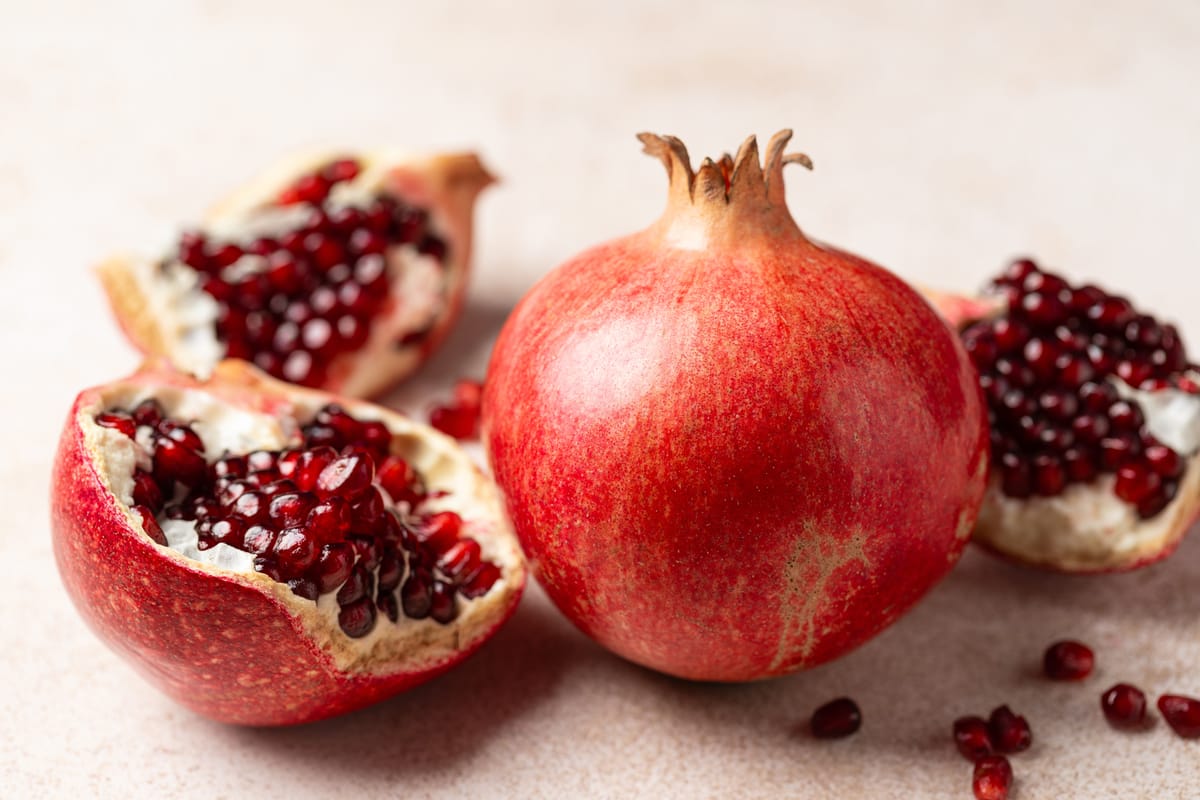
On the Rosh Hashanah table, it holds a place of honor as a symbol of abundance and merit. But beyond its spiritual significance, the pomegranate has emerged in recent decades as one of the most researched and valued fruits in modern nutrition science. Beneath its thick, tough rind lies an extraordinary biochemical composition that delivers a long list of scientifically proven health benefits.
A Powerhouse of Antioxidants: Punicalagins and Anthocyanins
The deep red color of pomegranate seeds isn't just visually striking, it signals a high concentration of anthocyanins, natural pigments with powerful antioxidant activity.
Alongside them, pomegranate contains a unique compound called punicalagin, a potent polyphenol found primarily in the juice and the fruit's white membrane. Numerous studies have shown that punicalagins possess antioxidant activity nearly three times greater than that of green tea or red wine. These antioxidants neutralize free radicals, reduce oxidative stress, and help protect DNA and cellular integrity from cumulative damage.
Targeted Protection for Blood Vessels and the Heart
Cardiovascular health is one of the primary areas where impressive clinical findings have been recorded regarding pomegranate consumption:
Prevention of cholesterol oxidation: The polyphenols in pomegranate actively inhibit the oxidation of LDL ("bad cholesterol"), a key process in the formation of atherosclerotic plaque on artery walls.
Blood pressure regulation: Studies have shown that controlled consumption of natural pomegranate juice may reduce the activity of the ACE enzyme (responsible for blood vessel constriction), leading to arterial relaxation and a decrease in systolic blood pressure.
Improved blood flow: The antioxidants help maintain nitric oxide levels in the endothelium, the cell layer lining the interior of blood vessels, thereby supporting their flexibility and healthy blood flow.
Systemic Anti-Inflammatory: The Contribution of Punicic Acid
Within the tiny pomegranate seeds is stored an oil rich in a rare polyunsaturated fatty acid called punicic acid, sometimes referred to as "pomegranate fatty acid." Many researchers point to this acid, alongside the polyphenols, as actively inhibiting inflammatory pathways in the body (such as the NF-kB pathway) and reducing inflammatory markers like CRP (C-reactive protein). This activity may help prevent chronic inflammatory processes that underlie various metabolic diseases.
The Internal Laboratory: Gut Bacteria and the Production of Urolithin A
One of the most exciting discoveries in recent years about pomegranate relates to its interaction with the microbiome (the gut bacteria population). When we consume pomegranate, specific gut bacteria break down the polyphenols into an active compound called urolithin A.
This molecule is currently being studied as a factor that promotes mitophagy, a natural cellular process in which the body breaks down and recycles damaged cellular components. This process is vital for maintaining muscle function, slowing cellular aging processes, and preserving metabolic energy over time.
Whole Seeds Versus Juice: Which Is Better?
To get the most from the fruit, it's important to distinguish between consuming whole seeds and drinking juice: Whole seeds are the complete nutritional choice. They provide soluble and insoluble dietary fiber that slows blood sugar absorption, improves digestive system motility, and supports satiety. Additionally, they contain vitamin C, vitamin K, and folate. Juice, on the other hand, contains a very high concentration of antioxidants (especially if pressed together with some of the white membrane), but it lacks fiber and contains concentrated fruit sugar. It's recommended to consume it in measured portions (half a cup to one cup per day) without added sugar.