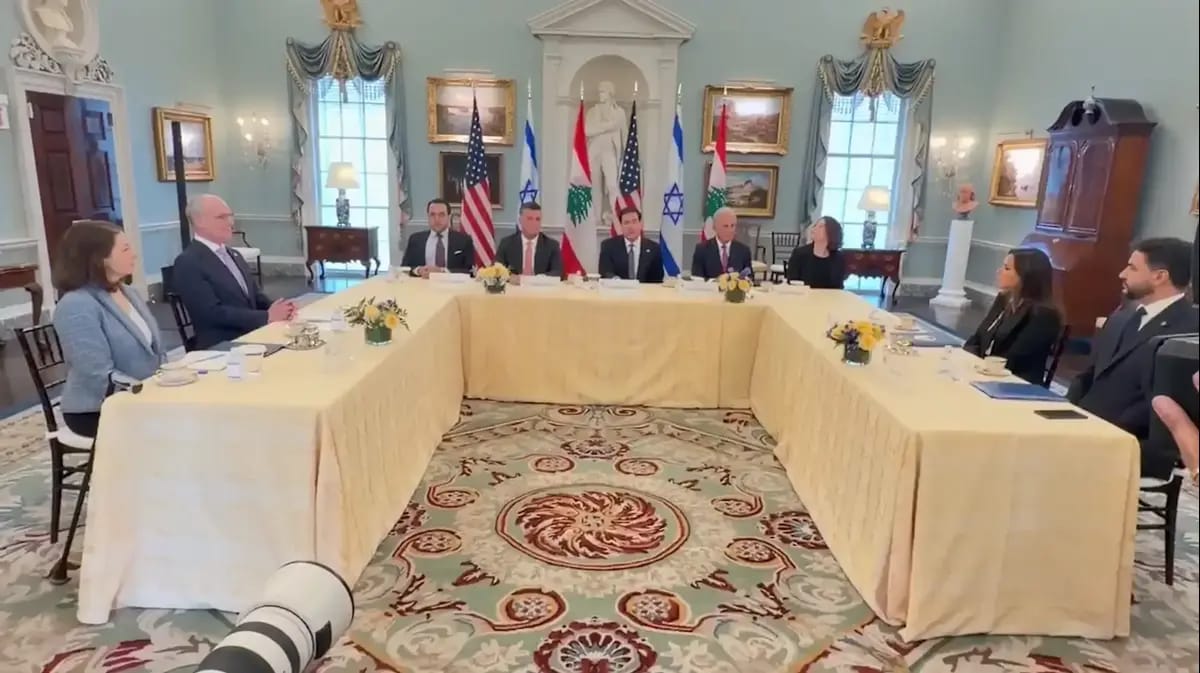
The first direct negotiations between Israel and Lebanon in 43 years concluded on Tuesday with surprisingly positive rhetoric from both delegations. Israeli Ambassador to the U.S., Yehiel Leiter, described the talks as "excellent," claiming that both nations have discovered they are on the same side of the equation: the desire to liberate Lebanon from the yoke of Hezbollah. The talks, led by U.S. Secretary of State Marco Rubio, focused on long term visions for a clearly defined border and the permanent disarmament of terrorist organizations within Lebanese territory. This diplomatic breakthrough marks a potential turning point for a region that has been defined by war for nearly half a century.
A Shared Vision for Sovereignty
Leiter hailed the meeting as a victory for peace and responsibility, stating that the goal is a stable future where both governments can coexist without the interference of Iranian proxies. "We discovered that Israel and Lebanon are on the same side of the equation, the desire to free Lebanon from the burden of Hezbollah," Leiter said following the meeting. He also took the opportunity to criticize France, suggesting that Paris has not been a helpful factor in the negotiations and that Israel prefers to keep the French government away from the current diplomatic track. The United States has backed this sentiment, with State Department officials confirming that 58.8 million dollars has been approved for humanitarian aid in Lebanon to help the government regain its sovereignty.
Secretary of State Marco Rubio reiterated that the mission is not just about a temporary ceasefire but about ending thirty years of Iranian influence. He noted that while all complexities cannot be resolved in a single day, a framework for permanent change has finally been established. The joint statement released by the U.S., Israel, and Lebanon emphasizes that any final agreement must be signed directly between the two governments, bypassing terrorist factions entirely. While the Lebanese President, Joseph Aoun, reportedly forbade a formal handshake between the ambassadors for now, the progress made behind closed doors suggests that both nations are looking toward a future of mutual investment and economic recovery.