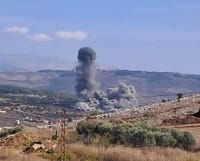
Beirut is entering a highly sensitive week as preparations finalize for a third round of indirect talks with Israel, scheduled to begin this Thursday in Washington. The Lebanese delegation, which includes senior diplomats and military representatives, is heading to the U.S. capital under the mediation of the Trump administration. The talks represent a rare diplomatic opening in a war that has seen the most significant destruction in Lebanon in decades, with both sides now looking for a sustainable exit strategy.
Behind the scenes, Lebanese President Joseph Aoun is working feverishly to secure an extension of the current fragile ceasefire before the talks officially open. The Lebanese side intends to present a series of demands, including a full Israeli withdrawal from southern positions and the return of displaced citizens to their villages. Aoun has described the American involvement as a "great opportunity" that Lebanon must exploit to restore its national sovereignty and stop the cycle of violence.
However, the primary obstacle remains the status of Hezbollah. The United States and Israel are reportedly focusing their pressure on the effective disarmament of the terror organization and the establishment of a robust security mechanism in the south. Secretary of State Marco Rubio has been blunt in his assessment, stating that "the problem is not Lebanon, it's Hezbollah," and insisting that any lasting deal must involve the group being stripped of its weapons.
Hezbollah’s leadership has reacted to the diplomatic push with open hostility. Mahmoud Qamati, a member of the group’s political council, warned that there will be "no security for Israel" until Lebanon’s security is fully guaranteed on their terms. He declared that the period of "strategic patience" is over and threatened that any Israeli violation of the current status quo would be met with an immediate and violent military response from the group’s armed wing.
The Lebanese government is attempting a delicate balancing act, seeking to continue the talks without appearing to move toward full public normalization with Israel. For President Aoun, the goal is a security agreement that stops the strikes, whereas the U.S. administration is pushing for a more comprehensive shift in Lebanon's internal power structure. Washington believes that strengthening the Lebanese Armed Forces is the only way to eventually dismantle Hezbollah’s state-within-a-state.
As the Thursday deadline for the new round of talks approaches, the tension in Beirut is palpable. Israel continues to monitor the border with high vigilance, wary of any attempt by Hezbollah to sabotage the diplomatic track through a fresh barrage of rockets. The success of the Washington summit will likely depend on whether a mechanism can be found to empower the Lebanese state while effectively neutralizing the Iranian-backed threat that has dominated the country's south for years.