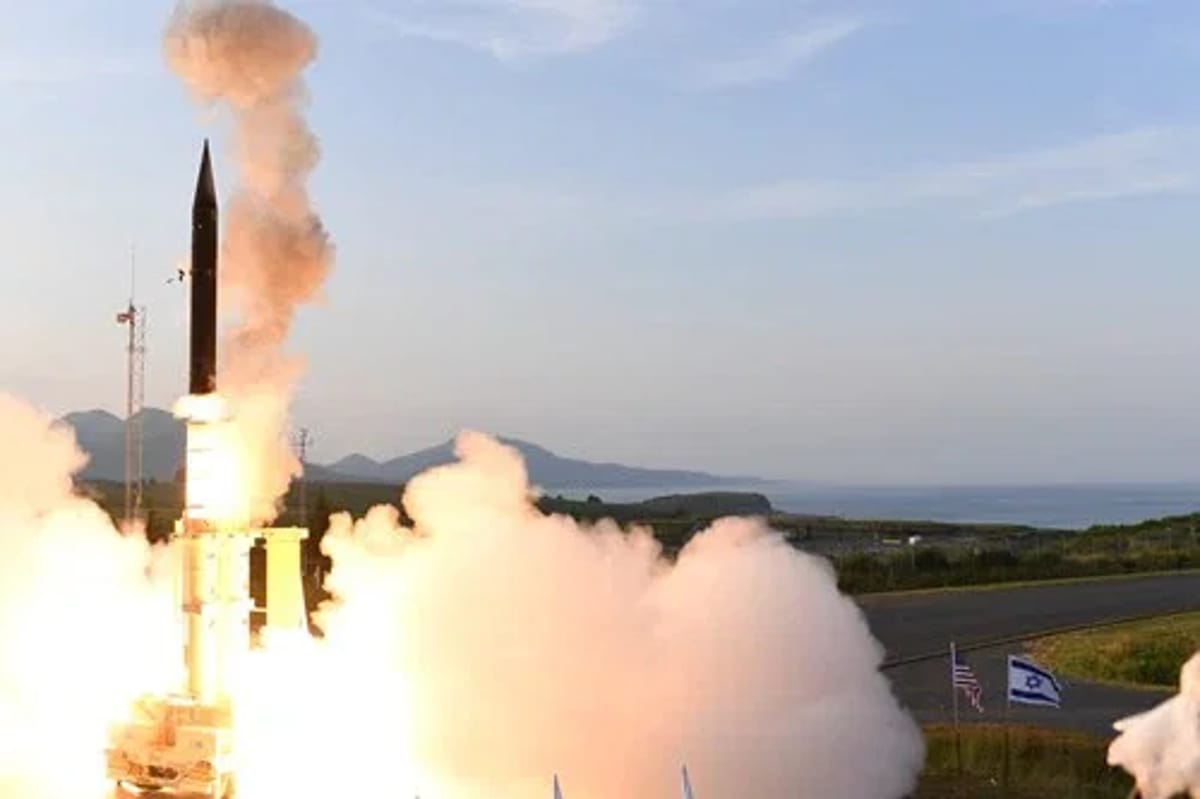
A report in the Jerusalem Post has sparked an intense debate, claiming that the Israeli security establishment prioritized strategic ties and German funding over maintaining an immediate stockpile of interceptors for domestic use.
According to the report, Israel continued to supply Arrow defense missiles to Germany in the midst of the war with Iran, despite a severe shortage of interceptors on the ground in Israel. This decision to prioritize export obligations over immediate defense needs has caused an outcry, with various sources claiming the move cost the lives of five civilians and led to the injury of hundreds more in Dimona and Arad.
The Failure of "David’s Sling"
During the strikes on these cities, the IDF reportedly opted to use the David’s Sling system against incoming ballistic missiles instead of the Arrow system, the only system specifically designed to intercept such threats outside the atmosphere.
In both instances, the David’s Sling system missed its targets. Experts emphasize that while the Arrow was built precisely for these missions, the ongoing shipments to Germany reduced the inventory available for operational use within Israel.
The Defense Justification: "Berlin Funded the Production"
Defense officials have justified the move citing budgetary and strategic considerations. They argue that the $6.7 billion in German funding was exactly what financed the ten-fold increase in production capacity.
The funding from Berlin allowed the Ministry of Defense to bypass budget delays from the Israeli Ministry of Finance, which only approved armament funds toward the end of the fighting. Additionally, there was a significant fear in Jerusalem that delaying shipments would damage relations with Germany, one of the few nations that did not impose a military embargo on Israel during the conflict.
Strategic Stakes
Colonel Dennis Kruger, a senior air defense commander in Germany, noted that "the deployment of Arrow 2 and 3 systems in Berlin paves the way for other European nations to purchase the system." Security officials admitted that the fear of opening a "Pandora's Box" with the Germans outweighed the perceived need to freeze shipments during wartime.
On the other hand, some Israeli analysts argue the criticism is not necessarily justified. "One must be intimately familiar with the details of the contract with Germany to know if there is even a legal 'exit' or freeze clause for such a complex situation," they noted. "At the end of the day, a contract is a contract."