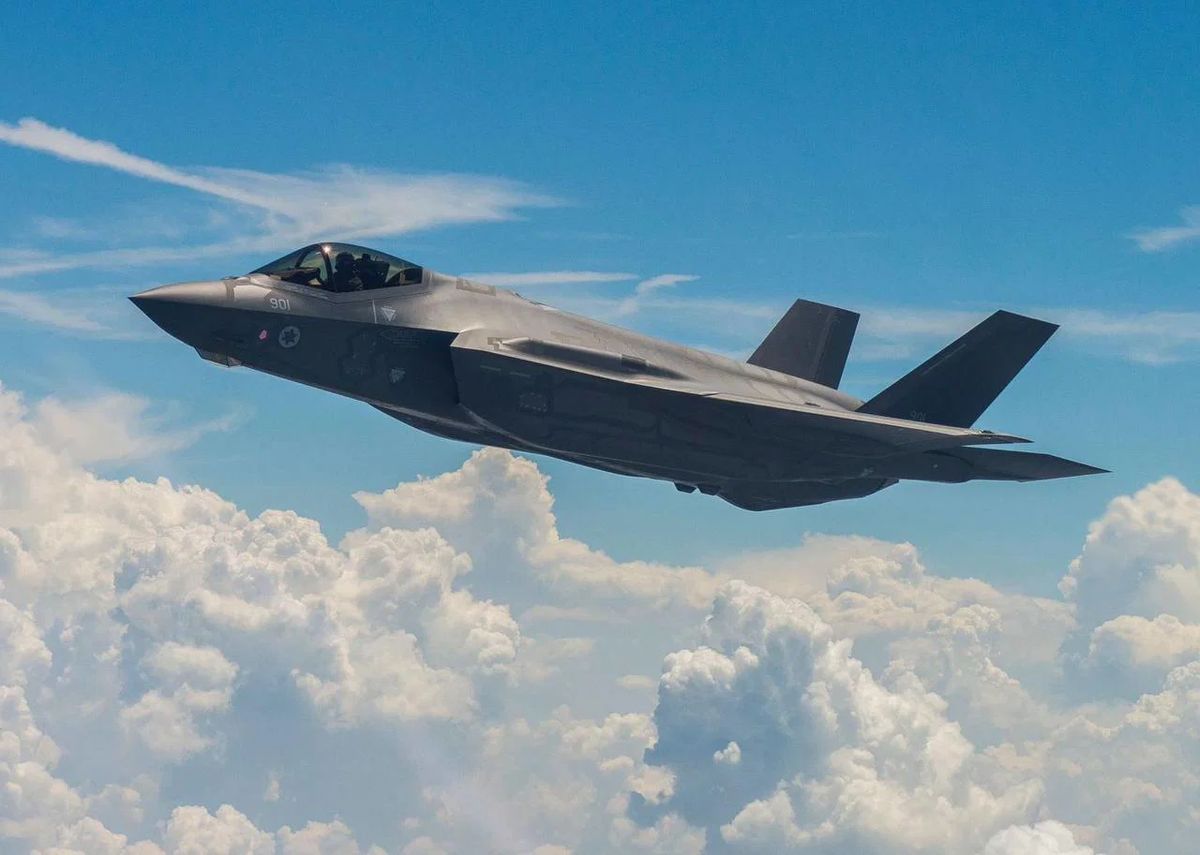
Israel's Defense Ministry has signed a contract worth over 100 million shekels (approximately $27 million) with Elbit Systems' Cyclone division to develop external fuel tanks for its fleet of F-35 stealth fighters, known locally as the "Adir."
The deal comes in the midst of Operation Roaring Lion and reflects lessons drawn directly from that campaign. Defense Minister Israel Katz and Ministry Director-General Maj. Gen. (res.) Amir Bar'am have been spearheading a broader push toward Israeli defense self-sufficiency, and this contract is a centerpiece of that effort.
The new fuel tanks will be based on existing Cyclone designs already proven on F-16 aircraft, though adapting them to the F-35 presents significant engineering challenges, the Adir's stealth requirements and complex aerodynamic constraints demand a far more sophisticated solution. Development will take place entirely at Elbit-Cyclone's facilities in Israel.
The practical payoff is considerable. Extended range means the IAF can execute long-distance missions, including strikes on Iranian targets of the kind conducted during Operation Lion's Roar, with less dependence on aerial refueling, itself a limited and vulnerable asset.
The contract is part of a sweeping procurement wave the Defense Ministry describes as preparation for what it calls a "momentous security decade." In a recent senior-level assessment, Bar'am told industry leaders bluntly: "We are in a state of ongoing emergency and in a race to strengthen immediate readiness and to secure Israel's long-term production independence."
The numbers behind this buildup are striking. In 2024 alone, the Ministry executed purchases totaling 220 billion shekels, with 150 billion going to domestic "blue and white" production. Its air and naval logistics operation ran 670 flights and 130 sea shipments, delivering over 10,000 tons of military equipment to Israel. The Elbit deal itself joins recent orders of $200 million in aerial munitions and a separate 600-million-shekel procurement from Elbit Systems.
For Israel's air force, the ability to keep the Adir airborne longer without external support translates directly into strategic reach — and in an era of expanding regional threats, that reach may prove decisive.