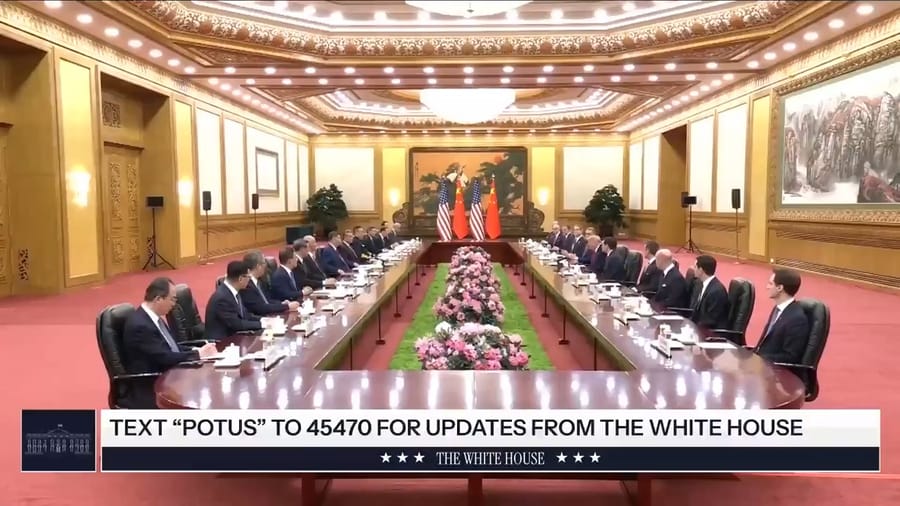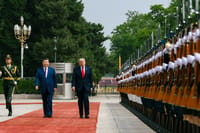
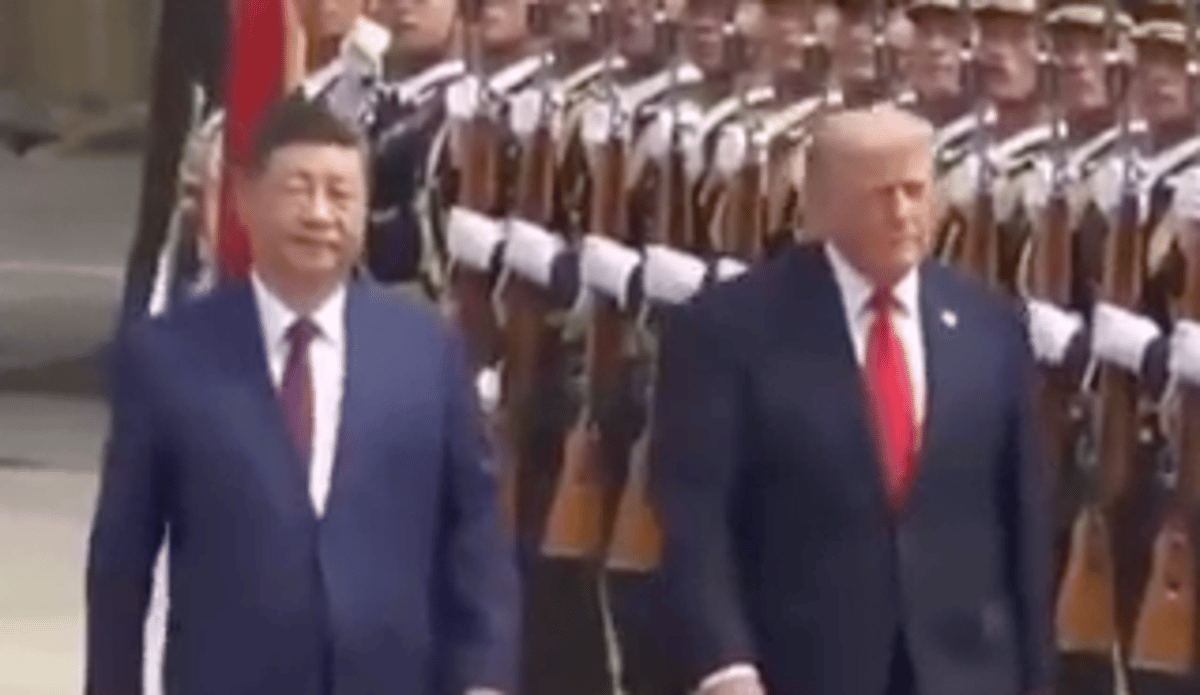
The most consequential bilateral summit in years got underway Thursday morning in Beijing's Great Hall of the People and within minutes, Chinese President Xi Jinping made clear what was at the top of his agenda.
As the summit kicked off, Xi warned Trump directly that US-China relations "will enjoy great stability" if the Taiwan question is handled well, but if mishandled, the two nations could face "clashes and even conflicts," pushing the entire relationship into a "highly perilous situation."
It was a blunt opening to what is expected to be a tense two days.
Trump and Xi opened the two-day summit in Beijing with trade and security as the headline items, but Taiwan, Iran, and artificial intelligence also featured prominently on the agenda alongside tariffs and rare earths. The meeting marks the first visit by a US president to China since 2017, when Trump last made the trip during his first term.
Why Taiwan, Why Now
Beijing's insistence on raising Taiwan is not new, but the stakes feel higher than usual. China's embassy in Washington named Taiwan as the first of "four red lines" that "must not be challenged," while Chinese Foreign Minister Wang Yi had already told Secretary of State Marco Rubio last month that Taiwan represented "the biggest risk in the China-US relationship."
At the center of the dispute is a weapons package. The US authorized an $11 billion arms deal for Taiwan in December, the largest ever approved for the island, but has not yet begun fulfilling it. Trump openly told reporters before departing that he would discuss the sales with Xi, saying: "President Xi would like us not to. And I'll have that discussion."
That candid admission sent alarm bells ringing in Taipei and Washington alike. Bonnie Glaser of the German Marshall Fund warned that any rhetorical softening from Trump, even an ambiguous one, would be "the most destabilizing outcome" of the summit, arguing that a tacit concession of US influence over Taiwan could embolden China to take more assertive steps against the island's autonomy.
A bipartisan group of US senators sent a letter ahead of the trip urging Trump to make crystal clear that "American support for Taiwan is not up for negotiation."