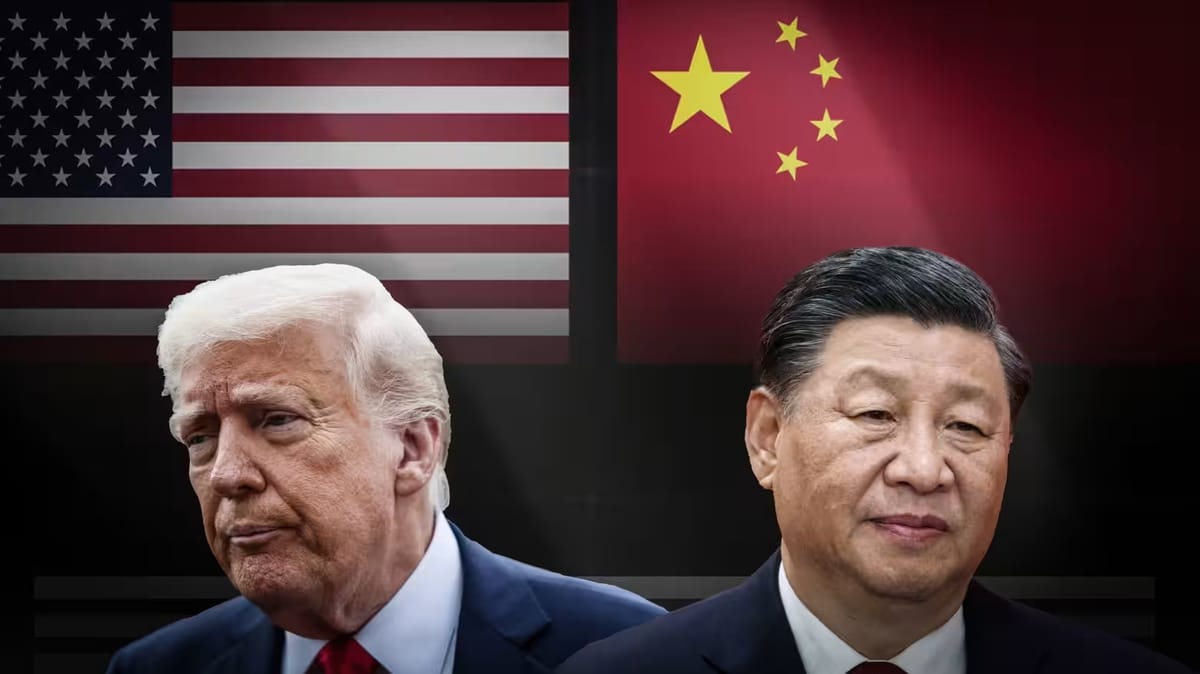
President Donald Trump opened a high stakes summit with Chinese President Xi Jinping in Beijing on Thursday, receiving a red carpet welcome at the Great Hall of the People as the two powers sought to project warmth despite deep disagreements over trade, Taiwan, artificial intelligence and the war in Iran.
The visit marks Trump’s first trip to China since 2017 and the first visit by a U.S. president to China in nearly a decade. The ceremony outside the Great Hall included honor guards, a military band and children welcoming the American delegation, before the two leaders moved into formal talks with senior officials from both sides.
Xi opened the meeting with a broad strategic message, saying the world had reached a new crossroads and urging the United States and China to avoid the so called Thucydides Trap, the idea that conflict can emerge when a rising power challenges an established one. He said the two countries should be “partners, not rivals,” and argued that stable relations between Washington and Beijing would benefit the world.
Trump struck a personal and optimistic tone, calling the relationship with Xi “fantastic” and saying ties between the two countries could become “better than ever.” He also praised the Chinese leader directly, calling him a “great leader,” while emphasizing that his delegation came to discuss reciprocal trade and business opportunities. (ynet)
The American delegation underscored the economic weight of the visit. Trump was joined by senior officials including Secretary of State Marco Rubio, Treasury Secretary Scott Bessent and Defense Secretary Pete Hegseth, as well as major business figures including Elon Musk, Apple CEO Tim Cook and Nvidia CEO Jensen Huang. Huang’s presence drew particular attention because advanced AI chips and export restrictions remain one of the most sensitive issues in U.S. China relations.
Trade is expected to be one of the central issues. Washington wants broader access for American companies and possible Chinese purchases of Boeing aircraft, agricultural products and energy, while Beijing is seeking relief from U.S. restrictions on advanced semiconductor equipment and chip exports. Reuters reported that Huang’s participation raised hopes in China for movement on Nvidia’s H200 chip sales, though the issue remains politically sensitive in Washington.
The summit also comes amid the continuing war in Iran, which has disrupted global markets and placed new pressure on energy routes and trade. U.S. officials have said they want China, a major buyer of Iranian oil with significant economic influence in Tehran, to play a more active role in efforts to ease the crisis.
Taiwan remains another major flashpoint. Beijing opposes American arms sales to the island, which it claims as part of China, while Washington has continued to support Taiwan’s defense. It remains unclear what will happen to a major weapons package for Taiwan awaiting U.S. approval, and Trump’s decision to discuss the issue directly with Xi has raised concern among supporters of Taiwan in the United States.
Despite the ceremonial warmth, the summit is not expected to erase the strategic rivalry between the two countries. The meeting is being watched closely for signs of whether Trump and Xi can stabilize relations, ease trade tensions and manage the growing competition over AI, chips, energy and regional security without triggering a new escalation.