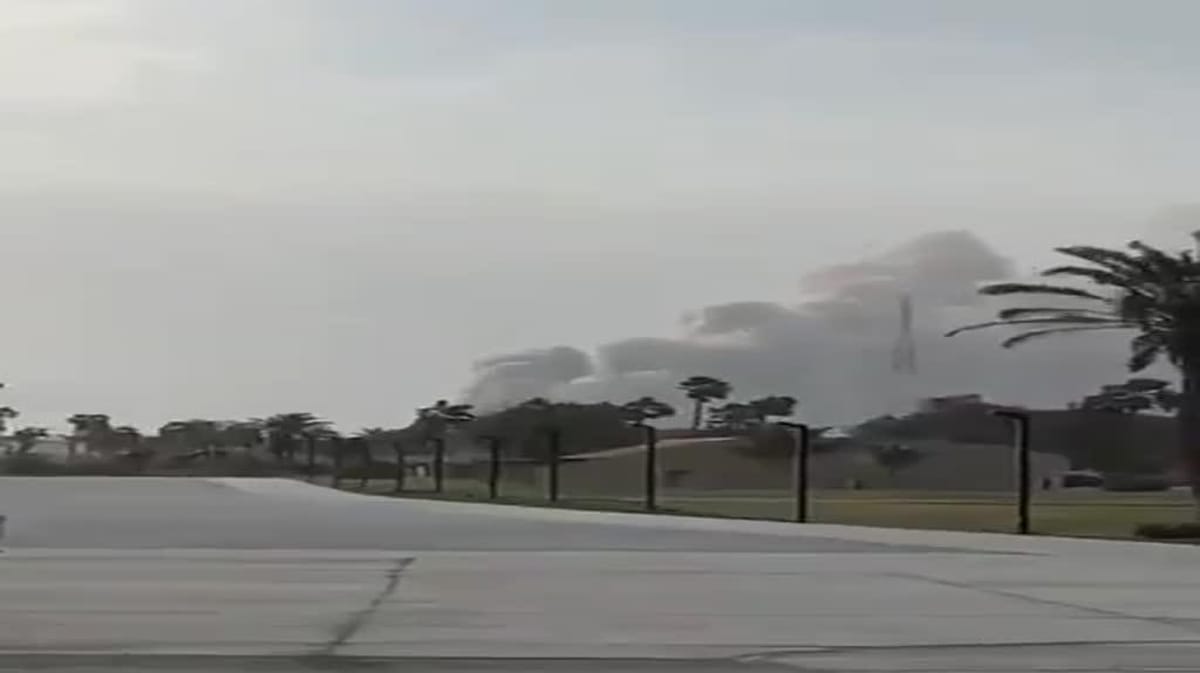
The war against the Islamic Republic and its regional proxies has officially expanded into a multi-national conflict, with reports emerging that Saudi Arabian fighter jets have bombed targets in Iraq. Western officials and military sources in Baghdad confirmed on Wednesday that Saudi aircraft targeted Shiite militias supported by Tehran near the northern Saudi border. These strikes were aimed at locations used by terrorists to launch drones and missiles at Saudi Arabia and other Gulf nations.
This escalation marks a dramatic shift in Saudi policy, as the Kingdom had previously sought to lower tensions through diplomatic channels. However, the constant barrage of hundreds of drones launched from Iraqi territory during the war appears to have exhausted the patience of Riyadh and Kuwait City. Sources indicate that at least two rocket attacks were also launched from Kuwaiti territory toward militia positions in southern Iraq during April.
One specific strike in April targeted a facility used by the Kata'ib Hezbollah terrorist group for communications and drone operations, resulting in the deaths of several fighters. While it remains unclear if the rockets from Kuwait were fired by local forces or the U.S. military stationed there, the involvement of Kuwaiti territory represents a significant development in the regional war. The Kuwaiti and Iraqi governments have so far declined to comment on the incidents.
The tension between the Gulf states and Iraq is rooted in decades of suspicion, dating back to the 1990 invasion of Kuwait by Saddam Hussein. The 2003 U.S. invasion further complicated these ties by empowering pro-Iranian factions, effectively turning Iraq into a central hub for Iran's regional terror network. Despite a 2023 Chinese-mediated deal to improve relations between Riyadh and Tehran, the current war has tested those gains to their breaking point.
Saudi and Kuwaiti officials reportedly warned Baghdad through diplomatic channels in March to rein in the terror groups, but the attacks continued. Iraqi security forces claimed to have foiled some attempts, such as seizing a rocket launcher intended for Saudi energy facilities, but pro-Iranian militias continue to fly surveillance drones along the borders to gather intelligence for future strikes.
A source briefed on the situation noted that these militias are constantly monitoring what targets are still functional to prepare for the next wave of aggression. While Saudi Arabia's foreign ministry officially maintains that it is working toward "de-escalation" and regional stability, the reality on the ground suggests that the Kingdom is now willing to use direct military force to protect its sovereignty from Iraqi-based threats.