
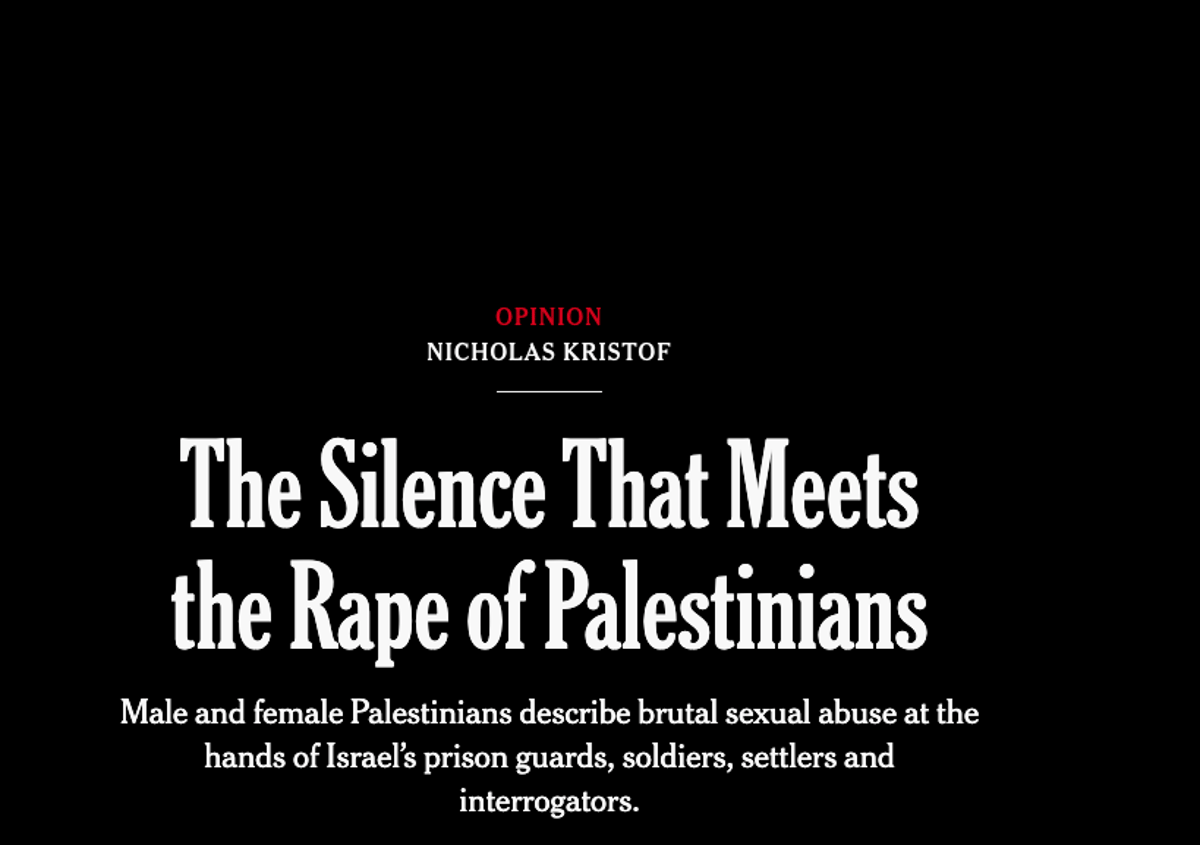
The New York Times defended a controversial opinion piece by columnist Nicholas Kristof on Wednesday, saying the article was extensively fact-checked and based on corroborated accounts, after Israel accused the paper of publishing a modern blood libel.
Kristof’s op-ed, published Monday, alleged serious sexual abuse of Palestinians by Israeli security forces and settlers. The Times said the piece drew on on-the-record accounts, analyses and documented claims regarding sexual violence and abuse.
The newspaper said Kristof’s article opened with the argument that “whatever our views of the Middle East conflict, we should be able to unite in condemning rape.” It said the accounts of 14 men and women interviewed for the piece were corroborated where possible with other witnesses, relatives, lawyers and people the alleged victims had confided in.
The Times said details were checked against news reporting, independent research from human rights groups, surveys and, in one case, UN testimony. It added that independent experts were consulted during the reporting and fact-checking process.
Israel’s Foreign Ministry sharply criticized the op-ed, both for its content and its timing. The ministry noted that the article appeared just before the release of a report by Israel’s Civil Commission on Hamas’s sexual and gender-based crimes during the October 7 massacre and against hostages in Gaza.
The ministry accused the Times of ignoring the commission’s findings while publishing what it called a “shameful attack on Israel.” In a separate statement, it called Kristof’s article “one of the worst blood libels ever to appear in the modern press,” accusing him of reversing victim and perpetrator.
The criticism has also focused on some of the sources and organizations cited in the op-ed. Gazan-born anti-Hamas activist Ahmed Fouad Alkhatib wrote that while he believes sexual abuse has occurred in Israeli prisons, some sources cited in the article have troubling records on accuracy and associations. He said anonymous Palestinian testimony can be difficult to verify, though that does not automatically invalidate it.
NGO Monitor criticized the use of material connected to Euro-Med Human Rights Monitor, arguing that its founder, Ramy Abdu, has had ties to Hamas figures and has used extreme anti-Israel rhetoric. The group also objected to the treatment of claims involving detained minors, saying some may have been recruited or trained by Hamas and other terrorist organizations.
The debate places the Times at the center of another dispute over coverage of Israel, Hamas, Palestinian allegations and wartime sexual violence. The paper is standing by Kristof’s column as a vetted opinion piece, while Israeli officials and critics argue that it relied on problematic sources and appeared just as Israel was seeking international attention for documented Hamas atrocities.