
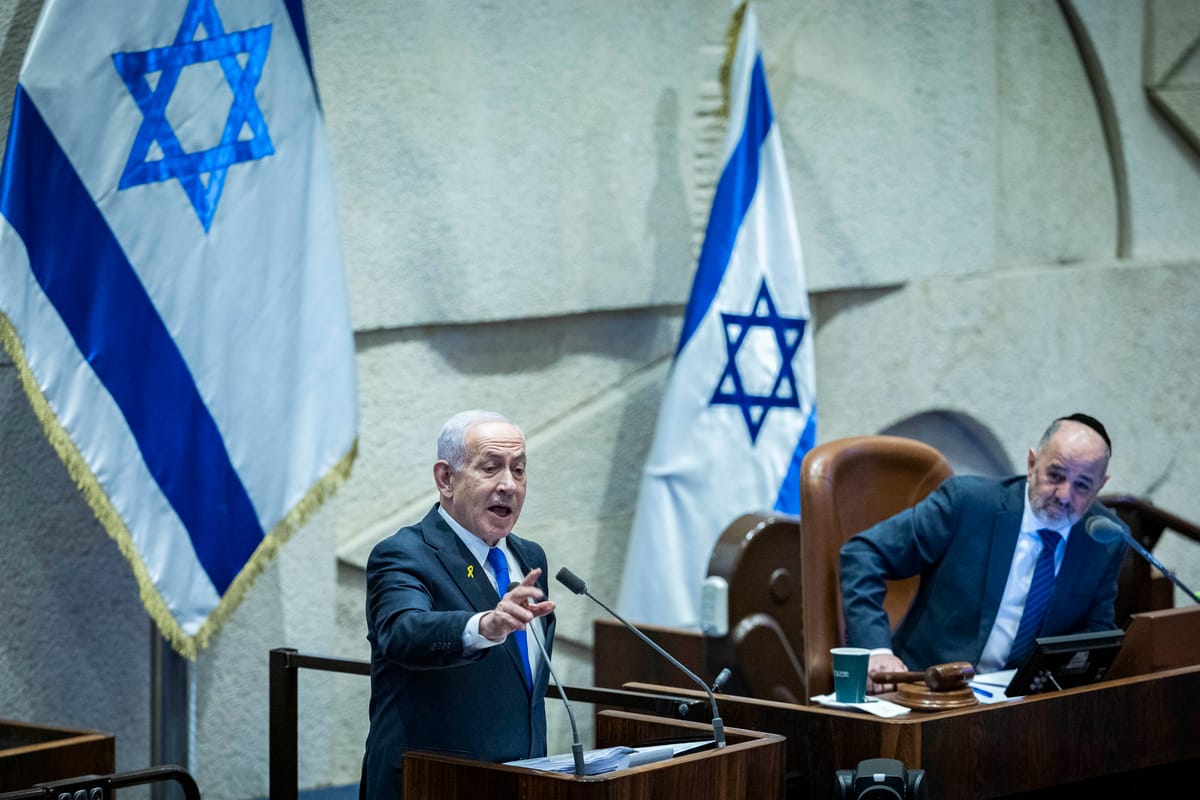
Prime Minister Benjamin Netanyahu said Monday evening that his government’s proposed draft law marks the beginning of a “historic process” to increase military service within the Haredi community while reducing the burden carried by Israel’s reservists. He delivered the remarks during a 40 signature debate in the Knesset plenum, offering his first formal response to the new conscription framework advanced by Knesset Foreign Affairs and Defense Committee chair Boaz Bismuth.
Netanyahu said the legislation is designed to regulate the status of yeshiva students while setting higher enlistment targets for the ultra Orthodox public. According to him, each new regular battalion formed from Haredi recruits would enable the release of ten reserve battalions. He argued that this cumulative effect would ease the pressure on reservists who have shouldered an exceptionally heavy load during the Gaza war and continuing security challenges.
“This is the beginning of a historic process to integrate Haredim into the IDF,” Netanyahu told lawmakers. He added that the proposal would yield enlistment numbers “three to four times higher” than those envisioned under the short lived Bennett Lapid government. He accused opposition leaders of promoting a “draft evasion law” during their tenure and said the current coalition’s initiative represents a more serious attempt to address what has long been one of Israel’s most fraught policy debates.
Netanyahu also framed the legislation in ideological terms. “The law regulates the status of yeshiva students. The world of Torah has protected us for thousands of years and will continue to protect us while conscripting the Haredi public,” he said, insisting that greater military participation and support for Torah study can coexist.
The draft law is emerging as a central test for the coalition, which must balance commitments to Haredi parties with growing public pressure for a more equitable distribution of service obligations. Israel’s High Court has repeatedly ruled that blanket exemptions for yeshiva students are unlawful without a statutory framework, and the government has faced mounting criticism from reservists and civilian protest groups demanding sweeping reform.
The proposal will continue moving through the Knesset process as negotiations intensify over its scope, timelines, and enforcement mechanisms. Lawmakers on both sides signaled that the debate over Haredi conscription is far from over.