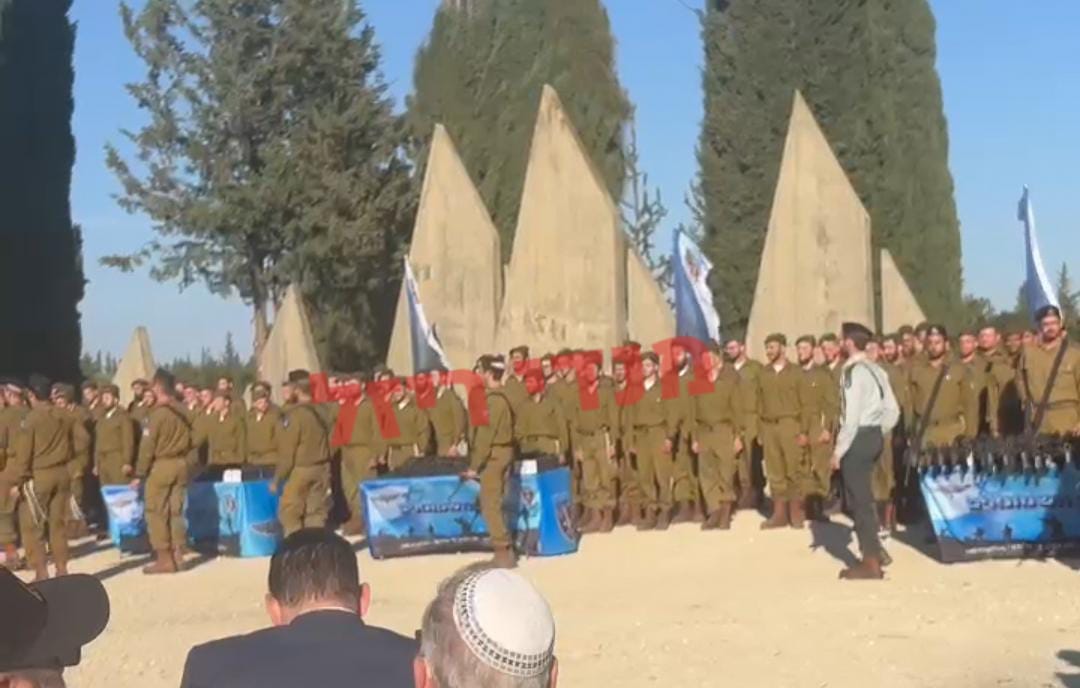
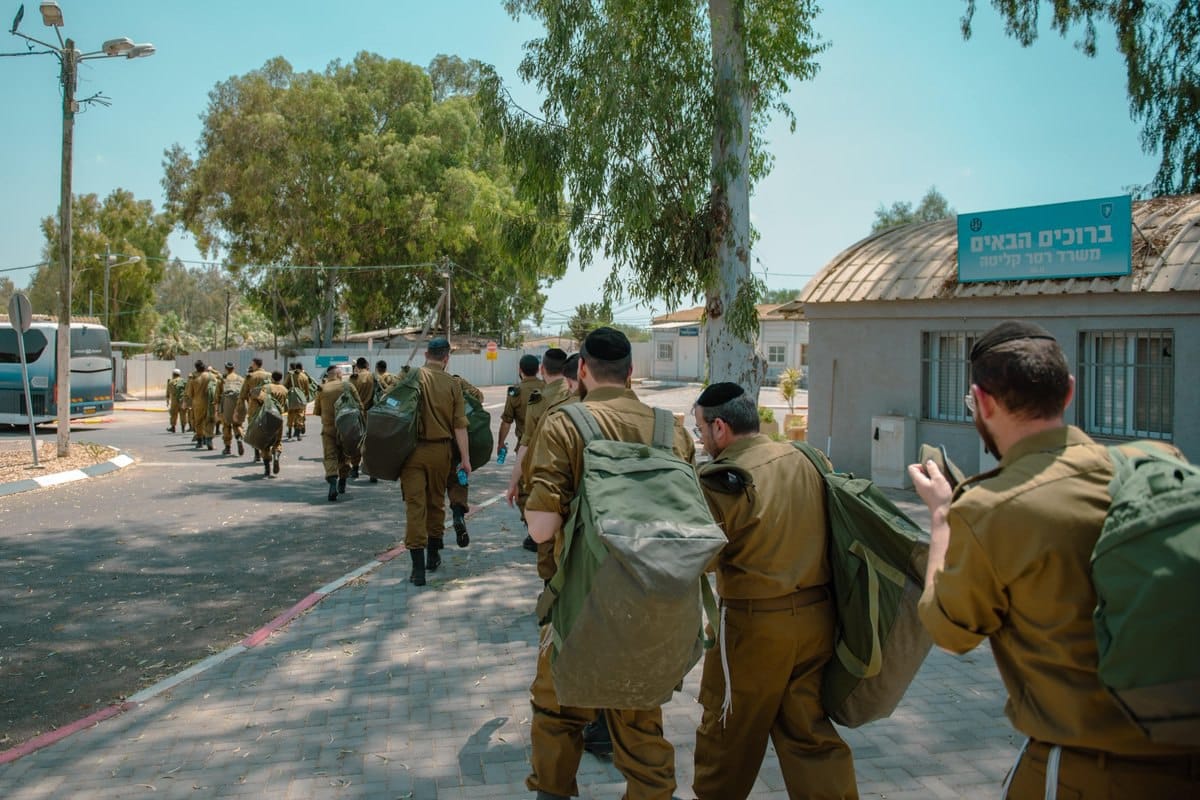
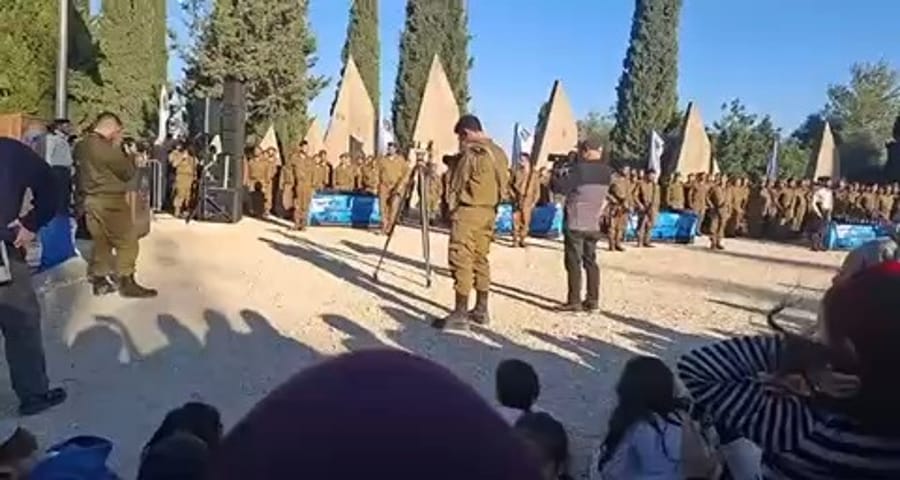
In a striking departure from military tradition, dozens of soldiers from the Israeli Defense Forces’ first all-Haredi combat unit, the Hashmonaim Brigade, gathered yesterday (Thursday) at the Maccabees’ Tombs for their inaugural ceremony, opting for a “declaration” over the standard oath to honor their ultra-Orthodox beliefs. The event, held in the late afternoon glow near this historic site, saw the recruits—many of whom received their brigade insignia earlier this week—step into a role tailored to their religious lifestyle, a milestone for a community long at odds with mandatory conscription.
In a typical IDF swearing-in, recruits take an oath known as the “Shevuat Ha’aliyah” (Oath of Allegiance), where they “swear” (nishba) loyalty to the State of Israel, its laws, and its commanders, often concluding with a dramatic moment of receiving a rifle and a Tanakh (Hebrew Bible). The term “swear” carries a formal, binding connotation in Hebrew, often linked to invoking God’s name or a sacred covenant, as seen in biblical contexts like Genesis 24:3.
For many ultra-Orthodox Jews, however, this act of swearing an oath—especially in a secular military framework—raises halachic (Jewish legal) concerns. The Torah (e.g., Deuteronomy 6:13, 10:20) instructs that oaths should only be taken in God’s name for sacred purposes, and the Talmud (e.g., Nedarim 8b) warns against frivolous oaths, which could profane the divine. Haredi rabbis often interpret this to mean that swearing an oath to a secular entity like the IDF risks violating these principles, a stance reinforced by historical Haredi resistance to conscription as a perceived threat to religious purity.
For the Hashmonaim Brigade’s ceremony, the IDF replaced the traditional oath with a “declaration” (hakhraza), where soldiers say “I promise” (ani matzhir) rather than “I swear” (ani nishba). This linguistic shift, while subtle, is significant. “Matzhir” implies a solemn commitment or pledge without the sacred weight of an oath, avoiding the halachic issue of invoking a divine vow in a non-religious context. The declaration still binds the soldiers to their duty—to defend Israel and obey lawful orders—but frames it as a personal undertaking rather than a metaphysical bond
The audience was divided by gender with a physical partition, and the air rang with male-sung religious melodies instead of martial band tunes, setting a distinctly devotional tone. Rabbi Moshe Korkus, the brigade’s spiritual leader, blessed the soldiers, invoking the Maccabees’ legacy: “Each one of you holds a sword and shield in one hand, while calling out with the other, ‘Who is for God, come to me.’”