Against the backdrop of escalating unrest inside Iran, Israel’s political and military leadership is accelerating preparations for the possibility of a sudden, multi-front conflict, viewing the protests not only as an internal Iranian crisis but as a potential regional trigger.
Senior Israeli officials say the demonstrations sweeping across Iranian cities are being monitored in real time by the IDF, the intelligence community, and the Prime Minister’s Office. Prime Minister Benjamin Netanyahu has been holding ongoing consultations from Miami, where he is currently located, to assess whether the internal pressure on the Iranian regime could spill outward in the form of military escalation against Israel.
At the core of Israeli concern is a familiar pattern. When the Islamic Republic faces sustained domestic unrest, particularly unrest that cuts across economic, social, and political lines, the regime has historically sought to reassert control by externalizing the crisis. Israeli defense officials believe Tehran could attempt to redirect public anger toward a confrontation with Israel, either directly or via proxy forces, in order to rally nationalist sentiment and justify intensified repression at home.
This assessment has prompted the IDF to fast-track readiness for what officials describe as a “burst scenario” — a rapid, unanticipated outbreak of hostilities across multiple arenas. According to defense sources, three primary theaters are now being treated as interconnected: Iran itself, Lebanon, and Judea and Samaria.
The preparations are unfolding within the framework of a new multi-year military plan extending through 2030, led by IDF Chief of Staff Lt. Gen. Eyal Zamir. While the plan is still in development, the military is deliberately running two tracks in parallel: long-term force building and immediate operational readiness. The assumption is that Israel may not have the luxury of waiting for the plan to be finalized before facing its next major confrontation.
Iran sits at the top of the threat hierarchy. Israeli officials believe that sustained protests could push Tehran toward either direct action or the activation of regional proxies, particularly Hezbollah. Lebanon remains a central concern, as the IDF assesses that Hezbollah’s capabilities, while degraded by ongoing tensions and Israeli strikes, still pose the most immediate large-scale conventional threat on Israel’s borders.
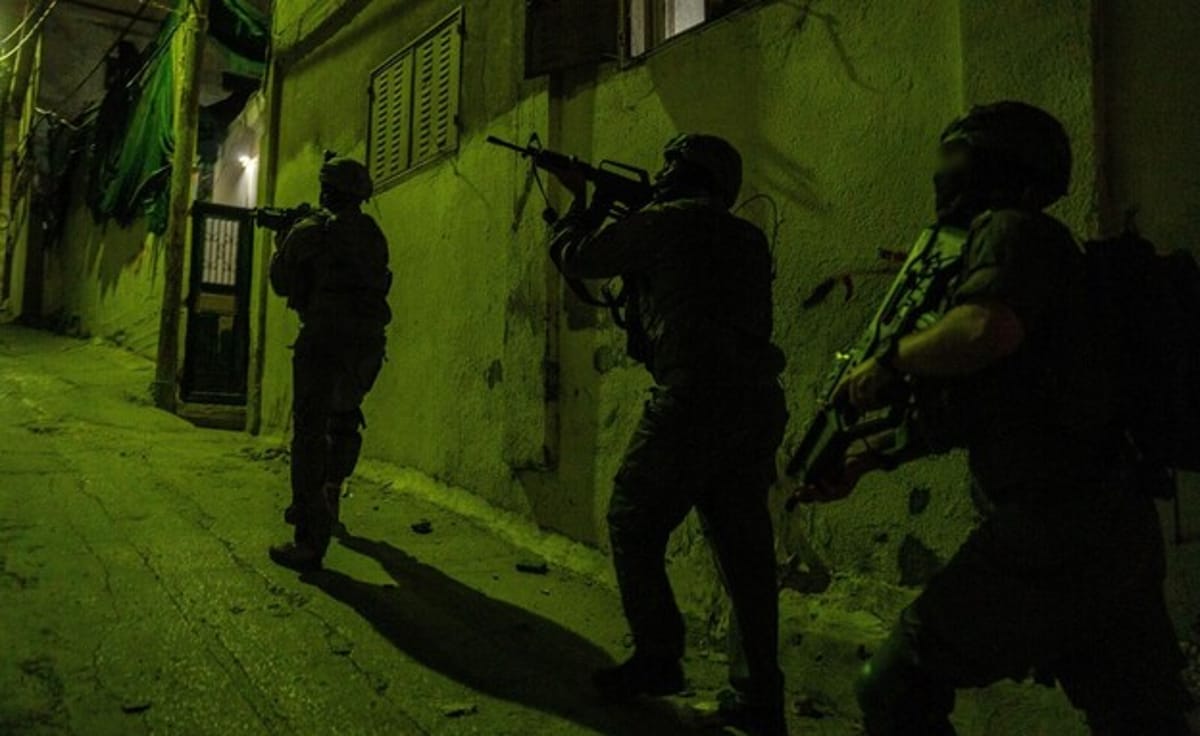
At the same time, Judea and Samaria is viewed as a potential flashpoint that could ignite quickly, especially if Iranian or regional actors attempt to inflame the area as part of a broader escalation strategy. The IDF’s planning now treats these arenas less as isolated fronts and more as mutually reinforcing components of a single regional conflict.
Israeli officials have been careful to limit public commentary on the Iranian protests. According to sources close to the Prime Minister, this restraint is deliberate. Any overt Israeli endorsement of the demonstrations or explicit statements about regime vulnerability could be used by Tehran to justify retaliation against Israel under the pretext of foreign interference. “We are identifying a dramatic internal event unfolding in Iran,” one senior Israeli official said, “but it is still too early to determine how it will translate into action.”
Within the multi-year plan itself, two strategic priorities have emerged as defining features.
The first is human capital. After more than two years of intense fighting across multiple fronts, the IDF is grappling with strain on personnel, reservist fatigue, and the long-term sustainability of its force. The plan places heavy emphasis on readiness, training, leadership development, and the ability to mobilize quickly without exhausting the same units repeatedly. Senior officers involved in the planning process have described this as a necessary recalibration after an unprecedented operational tempo.
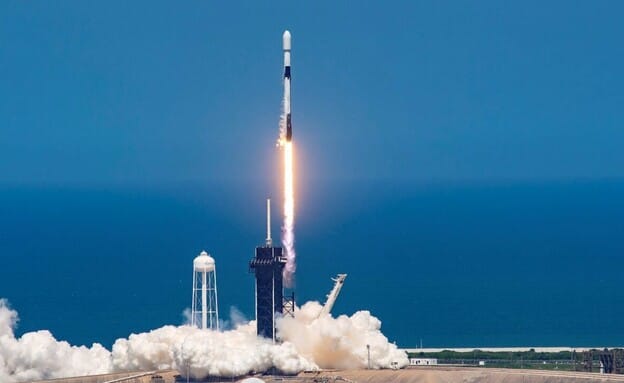
The second, and more transformative, pillar is the space domain. For the first time, the IDF is explicitly planning for both defensive and offensive operations in space. Israeli military planners now treat space as a full-fledged operational arena alongside land, air, sea, and cyber.
This includes enhanced satellite defense, expanded intelligence collection capabilities, and preparations for the ability to target adversary satellites if necessary. Officials have also confirmed that future planning envisions the capacity to conduct strikes from space-based systems against ground targets, a significant expansion of Israel’s military doctrine.
Defense officials describe space as critical to early warning, battlefield awareness, and maintaining technological superiority in an increasingly contested environment. The expansion reflects a broader recognition that future conflicts will hinge not only on firepower but on control of information, communications, and strategic depth beyond Earth’s atmosphere.
The planning process itself is being structured to allow flexibility and adaptation. In the coming weeks, the IDF will establish dedicated teams tasked with drafting the plan in detail. These teams are expected to include serving generals, retired senior officers not currently in command positions, and external experts, including senior reservists and specialists from outside the traditional military hierarchy.
One team will focus specifically on organizational culture, norms, and values, reflecting lessons drawn from the prolonged war period and internal critiques of decision-making processes before and during recent conflicts. This component is seen as essential to restoring public confidence and ensuring institutional resilience under sustained pressure.
Israeli officials stress that the aim is not to predict the exact shape of the next conflict, but to ensure that the military is capable of absorbing shocks and responding decisively across multiple fronts at once. The protests in Iran have underscored how quickly regional dynamics can shift, and how internal instability in one country can reverberate far beyond its borders.
For Israel’s security establishment, the message is clear: whether or not the Iranian unrest leads to immediate escalation, the margin for strategic complacency has narrowed. The IDF is preparing for a future in which crises erupt faster, span more arenas, and demand responses that extend from city streets to outer space.