Israel's State Attorney's Office filed indictments Tuesday at the Beersheba District Court against 12 individuals, including military reservists, accused of smuggling prohibited goods into the Gaza Strip during wartime while posing as engaged in legitimate security operations, as reported by Channel 12.
According to the indictments, the smuggled goods, worth millions of shekels, indirectly reached Hamas and other groups, aiding their economic and military survival. The Shin Bet security service warned the activities constitute a serious threat to state security and amount to providing assistance to the enemy during wartime.
The accused include Eliran Algarbali (38) from Kiryat Gat, his brother Avi Algarbali (41) from Kiryat Ata, Imad al-Din Abu Mokh (55) from Baqa al-Gharbiyye, Ofer Sankar (41), Yosef Yohannanov (39), Yuri Yaakov (42), Menachem Abutbul (39), Nadav Halfon (30) from Kiryat Gat, Meir Levi (26) from Beitar Illit, Oshri Dahan (39) from Tlalmi Eliyahu, Yaron (Benny) Peretz (52) from Noam, Atar Even (37) from Shaked, and a company owned by Avi and Yaron.
The defendants, some of whom are reservists, allegedly worked systematically to smuggle prohibited goods into the Strip, exploiting weaknesses in the crossing points and military activity in the area while presenting false pretenses of entering Gaza as part of legitimate security operations.
The State Attorney's Office stated: "The defendants carried out their actions knowing the prohibited goods could reach the Hamas organization and its operatives, foreseeing as near certain that this would help the enemy, Hamas, n its war against Israel, given its strengthening, including economically, as a result of their actions, and therefore they are charged with providing assistance to the enemy during wartime."
According to the indictments filed by attorneys Hila Drimer-Yair and Eliya Fox from the Southern District Prosecutor's Office, the smuggled goods included cigarettes, mobile phones, batteries, communication cables, vehicle spare parts, and more, worth millions of shekels.
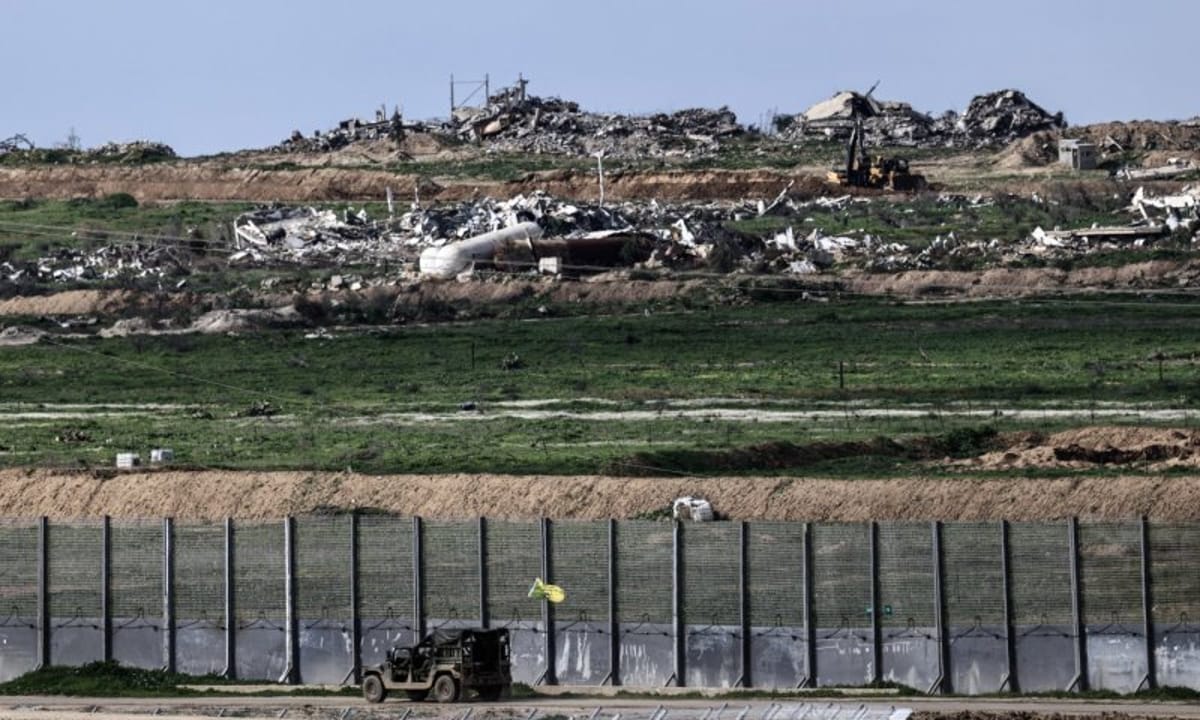
"Since summer 2025, the Gaza Strip area was still at war, declared a closed military zone, and entry was permitted by security authorities for operational purposes only," the prosecutor's statement noted.
According to prosecutors, in the security reality that developed in Gaza, control over incoming goods was of supreme importance to Hamas, which sought to seize goods entering Gaza and "tax" them in various ways as part of efforts to preserve its survival and restore its rule and power.
"Additionally, Hamas worked to smuggle prohibited products, both for its own use and for sale to Gazans," prosecutors added. "This caused exorbitant price increases, with profits from selling the products enabling it to, among other things, pay salaries to its operatives and recruit new activists."
According to prosecutors, a major prohibited commodity smuggled into the Strip was tobacco and cigarettes, which brought Hamas hundreds of millions of shekels since the start of the war, helping it preserve economic survival and governance control on the ground.
How the System Worked
Channel 12 explained that according to the indictment, in early stages the type of goods and price were coordinated. After obtaining the required goods, the defendants coordinated execution with operatives, some of whom were serving in reserve duty at the time.
After delivering goods to a meeting point, they were transferred for repackaging and concealment, loading, and transport on a predetermined route. These operations were done using concealment methods, including military clothing and the pretense of IDF-related activity. After crossing the border, goods were left at an agreed drop-off point inside the Gaza Strip, coordinated with the Gazan party, and the operatives returned to Israeli territory. In some cases, goods were brought into the Strip in exchange for payment to defendants serving in active reserve duty, who are charged with receiving bribes.
Bezalel Zini's Role in the Smuggling
The defendants also approached Amir Halperin, who was responsible for transporting goods into Gaza, to assist in bringing in the goods. Additionally, Menachem approached and offered bribes to Bezalel Zini and Aviel Ben David, who were serving in reserves with the "Uriah Team" and had authorization to bring equipment convoys into the Strip, offering them a share of profits. On one occasion, Menachem transferred a carton of cigarettes to Bezalel Zini's vehicle, and from there Bezalel and Aviel transferred the goods into Gaza.
In all smuggling operations, the defendants or others on their behalf entered Gaza with goods while using false pretenses to IDF forces that entry was for security purposes. The defendants and others knew the smuggled goods could reach terrorist elements including Hamas or its representatives, and serve to strengthen their power and advance and finance their operations.
The defendants, together with others, committed the acts detailed in the indictment for monetary gain, knowing they were circumventing restrictions imposed by the State of Israel on bringing goods into Gaza as part of the war effort, despite the clear security damage inherent in their actions.
All defendants were charged with providing assistance to the enemy during wartime, prohibited activity with property for terrorist purposes, obtaining something by fraud under aggravated circumstances, and bribery. Tax offenses and offenses under the Counter-Terrorism Law were also attributed to the defendants.
The arrests were made based on intelligence gathered in the security system indicating that various parties, including Israeli citizens, are exploiting the new reality on the ground that began with the ceasefire agreement between Israel and Hamas and the entry of large-scale humanitarian aid into the Strip, to smuggle goods prohibited from entering Gaza in various ways.
According to the Shin Bet statement, investigations of those involved by the Shin Bet and the Southern District Military Police Investigation Unit revealed extensive information about organized smuggling of prohibited goods and equipment into the Strip, involving dozens of Israelis, Judea and Samarian residents, and Gaza Strip residents, who carry out the activity while turning a blind eye to its direct contribution to strengthening terrorist organizations in the Strip, primarily Hamas.
Channel 12 contributed to this article.